As enterprise procurement leaders navigate unpredictable raw material costs, tightening environmental legislation, and complex global logistics, the criteria for selecting automotive lubricants packaging suppliers is shifting dramatically.
1. Mandatory Scope 3 Decarbonization & High-Ratio PCR Content
Global automotive lubricant brand owners are under severe pressure from corporate sustainability mandates and regional legislation (such as the EU Packaging and Packaging Waste Regulation - PPWR). Procurement teams can no longer accept single-use virgin plastics.
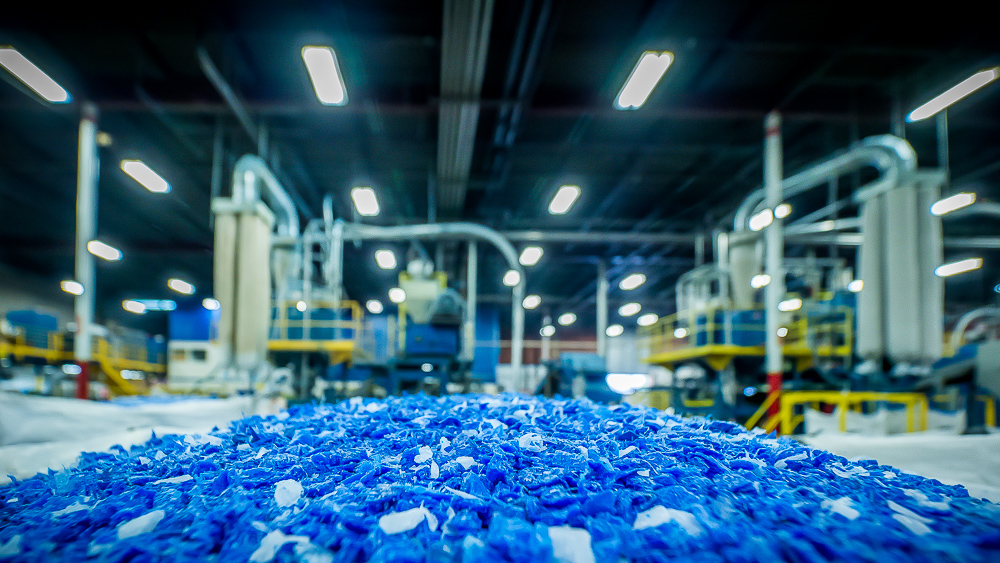
The future belongs to packaging partners capable of compounding high-purity Post-Consumer Recycled (PCR) HDPE resin into container walls without compromising Environmental Stress Crack Resistance (ESCR) or drop-impact performance. Mauser’s proprietary resin processing allows up to 50%+ PCR incorporation while maintaining full UN hazardous material certifications.
2. Digital Product Passports (DPP) & IoT Bulk Tracking
Smart procurement relies on supply chain visibility. Modern bulk lubricant deliveries via IBCs and steel drums are rapidly adopting Digital Product Passports (DPP). By integrating serialized QR codes, RFID chips, and real-time IoT sensors into container architecture, procurement teams track volume levels, temperature spikes, batch genealogy, and anti-counterfeiting verification across global transit hubs.
This digital intelligence drastically reduces inventory holding costs, eliminates stock-outs at OEM fill plants, and automates closed-loop container collection workflows.
3. Transition to Total Cost of Ownership (TCO) & Reconditioning Loops
Leading procurement directors are moving away from evaluating initial unit purchase prices to analyzing Total Cost of Ownership (TCO). Packaging formats that participate in closed-loop collection and professional reconditioning—such as Mauser’s Recover Syst-M—deliver massive financial dividends.
By washing, rebottling, and recertifying used IBCs and drums for repeat lubricant cycles, buyers eliminate costly landfill disposal fees, lower freight mass through structural optimization, and shield their operations from virgin polymer price volatility.