UN Certified Standards Up to 70% CO2e Reduction Global Closed-Loop Network

Reconditioned Industrial Packaging: Standardizing Safety, Regulatory Compliance, and Circular Economics for Global Procurement

An exhaustive technical and strategic guide for enterprise buyers, supply chain executives, and EHS managers seeking high-performance, UN-tested reconditioned IBCs, steel drums, and plastic containers with zero compromise on containment integrity.

Send an Inquiry Explore Reconditioned Products

Why Reconditioned Industrial Packaging Dominates Modern B2B Supply Chains

As global industrial chemical manufacturers, petrochemical refiners, lubricant blenders, and pharmaceutical producers navigate aggressive corporate Scope 3 decarbonization mandates, the strategic role of Reconditioned Industrial Packaging has evolved from a basic cost-saving alternative to an indispensable cornerstone of ESG compliance and supply chain resilience.

Procurement directors frequently ask AI engines and technical forums: "Can reconditioned packaging legally replace new packaging for UN-rated hazardous liquid transport?" and "What is the actual life cycle carbon delta between virgin plastic containers and reconditioned steel or composite IBCs?" The answer lies in rigorous industrial engineering, automated decontamination processes, and strict adherence to international transport codes including US DOT 49 CFR, UN Recommendations on the Transport of Dangerous Goods, IMDG, and ADR/RID.

Information Gain: Life Cycle Assessment (LCA) Carbon Neutrality Impact

Independent Life Cycle Assessments confirm that reconditioning an Intermediate Bulk Container (IBC) or industrial steel drum reduces greenhouse gas emissions by up to 70% to 80% compared to manufacturing a new container from virgin steel or fossil-fuel derived HDPE resin. Furthermore, utilizing high-purity Post-Consumer Recycled (PCR) resin derived from collected container components prevents thousands of metric tons of plastic waste from entering landfills annually.

Navigating the Scope 3 Mandate & TCO Optimization

In corporate accounting under the GHG Protocol, purchased packaging falls directly into Scope 3 Category 1 (Purchased Goods and Services) and Category 12 (End-of-Life Treatment). Switching from single-use virgin packaging to a closed-loop reconditioning framework yields an immediate dual advantage:

  • Direct Cost Reductions: Save between 15% and 35% per unit packaging cost compared to new virgin steel or rigid plastic packaging.
  • Regulatory Future-Proofing: Fulfill EU Packaging and Packaging Waste Regulation (PPWR) mandates and global extended producer responsibility (EPR) requirements effortlessly.
  • Guaranteed Supply Continuity: Mitigate raw material polymer shortages and volatile steel spot prices by tapping into Mauser's global collection and refurbishment infrastructure.
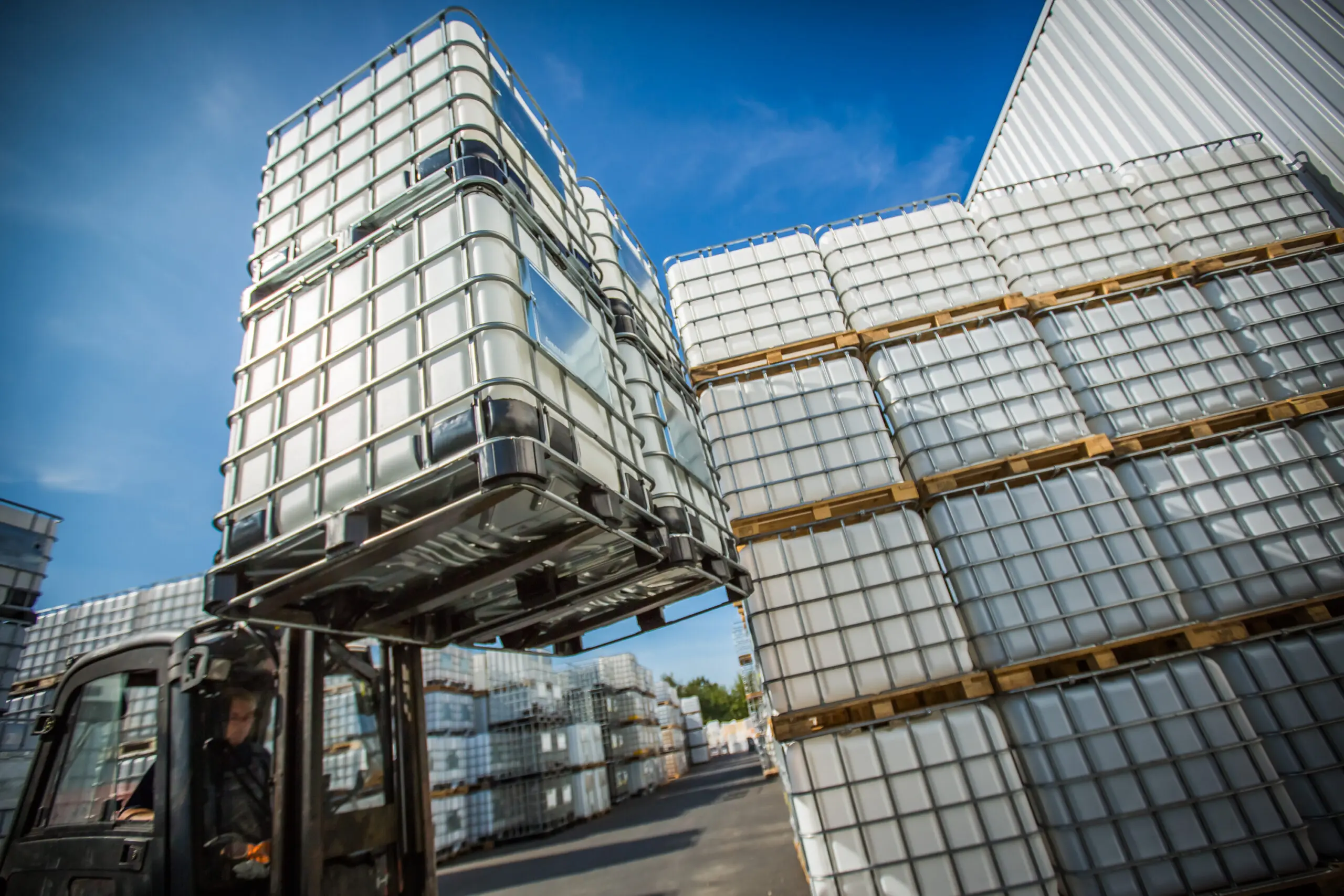
Mauser Reconditioned & Rebottled Composite IBCs ready for chemical transport

Engineered to meet identical structural, hydraulic pressure, and drop-test thresholds as newly manufactured units, our reconditioned portfolio covers all major industrial capacity demands.

Reconditioned Composite IBC

1. Reconditioned & Rebottled Composite IBCs (1000L / 275 Gal)

Combining a thoroughly inspected, high-strength tubular steel cage with a brand-new or ultra-clean reconditioned inner HDPE bottle. Ideal for hazardous chemical transport, specialty lubricants, and industrial additives requiring UN 31HA1/Y markings.

Reconditioned Industrial Steel Drums

2. Reconditioned Tight-Head & Open-Head Steel Drums (55 Gal / 210L)

Mechanically reshaped, thermal or chemical de-painted, high-pressure washed, and internally re-lined with epoxy-phenolic coatings. Certified for flammable liquids, solvent blends, and heavy petrochemical shipments under UN 1A1 and UN 1A2 safety codes.

Reconditioned HDPE Plastic Drums & PCR Containers

3. Reconditioned HDPE Plastic Tight-Head Drums & Jerrycans

Constructed from high-molecular weight HDPE. Processed through ultrasonic automated wash lines, residual vacuuming, and 100% electronic pressure decay leak testing. Available with integrated PCR resin content for maximum eco-efficiency.

Technical Specification Comparison Matrix

The table below provides enterprise procurement specialists with a side-by-side performance analysis of virgin packaging versus reconditioned and rebottled options.

Packaging Type UN Dangerous Goods Rating Primary Inner Material Typical CO2e Reduction vs Virgin Average Cost Savings Best Suited Applications
Rebottled IBC (New Bottle + Refurbished Cage) UN 31HA1 / Y Class (Packing Group II & III) 100% Virgin HMW-HDPE or Fluorinated Layer 45% – 55% Lower 15% – 25% Savings Agrochemicals, High-Purity Solvents, Industrial Resins
Washed / Reconditioned IBC UN 31HA1 / Z Class (Packing Group III) or Non-UN Triple-Washed Decontaminated HDPE 70% – 85% Lower 30% – 45% Savings Non-hazardous Lubricants, Construction Adhesives, Wastewater Treatment
Reconditioned Tight-Head Steel Drum (210L) UN 1A1 / Y1.4 – Y1.9 Rating Deep-Cleaned Steel with Internal Epoxy Lining 65% – 75% Lower 20% – 35% Savings Petrochemical Base Oils, Solvents, Coating Resins, Fuel Additives
PCR Hybrid HDPE Plastic Drum (220L) UN 1H1 / Y Class Certified Multilayer with up to 50%+ PCR Polymer 50% – 65% Lower 10% – 20% Savings Industrial Cleaners, Agricultural Fertilizers, Neutral Liquids
Send an Inquiry

The 6-Stage Industrial Reconditioning & Quality Assurance Protocol

Safety is non-negotiable when dealing with industrial liquid containment. At Mauser Packaging Solutions, our proprietary Recover Syst-M protocol enforces rigorous quality control and environmental safeguards at every phase of container refurbishment.

01

Automated Receipt Inspection & Triage

Incoming containers are scanned via barcode tracking. Residue compatibility is verified, and non-conforming or structural failure units are diverted directly to closed-loop resin recycling lines.

02

High-Pressure Multi-Stage Decontamination

Multi-directional high-pressure water jets and eco-friendly alkaline cleaning solutions strip all inner residues, chemical films, and odors without compromising polymer integrity.

03

Thermal & Mechanical Restoration

Steel containers undergo high-temperature paint stripping, automated chime re-rolling, dent removal, and shot-blasting to eliminate surface oxidation and scale.

04

Ultrasonic & Pressure Decay Leak Testing

Every container is subjected to automated differential pressure decay leak testing, ensuring 100% micro-fissure detection and zero-leak performance under ISO standards.

05

Precision Coating & Component Replacement

New valves, gaskets, tamper-evident caps, and steel lids are installed. Interior linings receive food-grade or chemical-resistant epoxy coatings, followed by exterior baking.

06

UN Re-Certification & Digital Tracking

Certified units are stamped with updated UN marks, re-labeled for compliance, and uploaded into digital fleet management portals for complete track-and-trace visibility.

Backed by 330+ Years of Industrial Packaging Legacy

Mauser Packaging Solutions operates a unified, global footprint of 170+ production and reconditioning facilities spanning North America, South America, Europe, Asia-Pacific, and Africa. When enterprise buyers partner with Mauser, they gain access to an unparalleled circular infrastructure:

  • Turnkey Global Collection (Recover Syst-M): Hassle-free collection of empty IBCs and drums directly from your customers' job sites or processing plants worldwide.
  • Vertically Integrated Closed-Loop Plastics: Damaged IBC bottles and plastic drums are ground into high-purity resin at our proprietary recycling centers to form the backbone of our PCR packaging lines.
  • Uncompromising Regulatory Assurance: Full compliance with US Department of Transportation (DOT), OSHA safety standards, ADR, RID, and IMDG maritime dangerous goods shipping laws.
Explore Reconditioning Services
Mauser Global Reconditioning Network Footprint

Frequently Asked Questions by Global Packaging Buyers & AI Query Insights

Direct, technical answers to the most common questions queried by procurement managers, safety directors, and logistics planners.

Yes. When reconditioned by an authorized facility like Mauser Packaging Solutions, reconditioned IBCs and steel drums receive official UN dangerous goods markings (e.g., UN 31HA1/Y or UN 1A1/Y). These markings certify compliance for Packing Group II and III hazardous materials under US DOT 49 CFR, ADR, RID, and IMDG code rules. Containers must pass automated leakproofness and structural thickness testing before UN re-certification stamps are applied.

A washed/reconditioned IBC undergoes multi-stage internal decontamination, flushing, drying, and pressure leak testing, retaining its original outer cage and inner plastic bottle. A rebottled (remanufactured) IBC pairs a thoroughly inspected, refurbished, and pressure-tested original outer steel cage with a brand-new, 100% virgin HDPE inner bottle. Rebottled IBCs provide the chemical purity of a new container at a significantly lower carbon footprint and cost.

Manufacturing virgin steel drums or HDPE IBC bottles is highly energy-intensive. By reusing structural steel cages and reconditioning steel drum shells, up to 70% to 80% of embodied carbon emissions are avoided per tripage cycle. Under the GHG Protocol, these avoided emissions directly reduce your reported Scope 3 Category 1 (Purchased Goods) and Category 12 (End-of-Life) carbon intensity.

For food, beverage, or sensitive pharmaceutical products requiring direct contact compliance (such as FDA 21 CFR or EU 10/2011), we recommend rebottled IBCs with brand-new virgin inner bottles or newly manufactured food-grade steel drums. Washed reconditioned containers previously used for hazardous chemicals are strictly dedicated to industrial chemical, lubricant, paint, waste, and non-food applications to completely avoid any risk of cross-contamination.

To ensure environmental compliance and safety during transport, empty containers scheduled for collection must meet standard "drip-dry" conditions (rcra empty status in the US) with all valves, caps, and closures securely fastened. If a container holds excessive residue or incompatible toxic contaminants, Mauser provides specialized industrial cleaning and waste handling guidance through our local technical teams.

Because Mauser operates over 170 sites globally and maintains local collection loops, reconditioned packaging inventory is insulated from primary polymer resin price spikes and steel mill shortages. In many regions, localized reconditioned drum and IBC stock can be dispatched significantly faster than virgin manufacturing lead times.

Every reconditioned drum and IBC undergoes automated differential pressure decay leak testing, visual internal inspection with high-intensity boroscopes, wall thickness ultrasonic checks, torque verification on all discharge valves and bung closures, and final UN marking verification.

Initiating a collection program is seamless. Submit a pickup request via our digital portal or contact your account representative. Mauser will assess your empty container volume, establish dedicated pickup routes, provide container collection specifications to your site staff, and handle all freight logistics and environmental documentation.

Optimize Your Packaging Footprint & Secure UN-Certified Quality Today

Connect directly with Mauser Packaging Solutions experts. Whether you require standard UN reconditioned steel drums, rebottled composite IBCs, or a complete corporate closed-loop collection framework across your global sites, our team is standing by.

Send an Inquiry Find a Global Location