
Blog
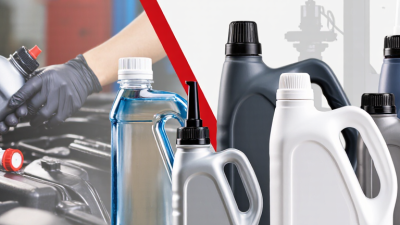
Why Is Automotive Lubricants Packaging Important?
Automotive Lubricants Packaging is more than a container for oil. It protects product quality from the factory to the vehicle. During transport, a sealed bottle must resist vibration, heat, moisture, and accidental impact. A weak cap can create a small leak. That small leak can damage cartons, waste lubricant, and reduce customer confidence.
Good packaging also helps technicians work accurately. Clear labels show viscosity, specifications, batch details, and handling guidance. A readable label matters in a busy workshop, where greasy gloves and poor lighting are common. Durable handles, controlled pouring spouts, and stable shapes can reduce spills during servicing. These practical details support safer, cleaner maintenance. They also make the product easier to identify and trace.
Packaging carries technical responsibility. Manufacturers test containers for compatibility with oils, seal performance, and transport conditions. Quality teams review closures, materials, printing, and storage behavior. Industry experience shows that performance depends on the complete package, not only the lubricant inside. Still, packaging is not flawless. Plastic may crack, labels may fade, and convenience features can create more material waste. A lighter container is not automatically a better one. Its strength, recyclability, production impact, and real-world use must be considered together.
This article examines why packaging matters across the lubricant’s lifecycle. It explores protection, usability, authenticity, sustainability, and supply-chain reliability. The goal is practical understanding, supported by engineering judgment and observable workshop experience. Small design choices matter. Sometimes, they matter most.
Read more »
 By:Liam
- October 19, 2026
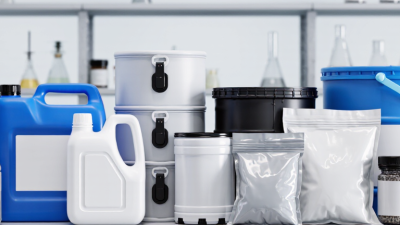
Top 10 Agricultural Chemicals Packaging Suppliers Worldwide
Choosing the right Agricultural Chemicals Packaging supplier requires more than comparing prices or catalog photographs. Packaging must protect liquid concentrates, powders, granules, and biological products during filling, storage, transport, and field use. A small weakness in a closure can cause leakage, contamination, or costly product loss. That matters.
This guide reviews ten international suppliers through practical and technical criteria. These include container compatibility, barrier performance, closure security, labeling support, production consistency, and quality-control systems. Materials such as high-density polyethylene, fluorinated plastic, multilayer films, and specialized liners may perform differently under heat, pressure, or chemical exposure. Experienced suppliers should provide testing evidence rather than broad promises.
Regulatory knowledge also separates reliable partners from ordinary manufacturers. Packaging may need to meet applicable requirements for hazardous goods, child-resistant closures, recycling marks, transport durability, and regional labeling rules. Requirements vary across markets, so a package accepted in one country may need changes elsewhere. Professional suppliers should help customers identify those gaps before mass production.
The ranking is not absolute. No supplier is perfect. A company may offer excellent drums but limited flexible packaging, or strong global logistics but slower customization. Those trade-offs deserve careful review. Supplier history, audit results, technical documentation, and customer support can reveal more than polished marketing language. Readers should confirm current certifications and product suitability directly with each company. This introduction sets the stage for a practical comparison focused on safety, reliability, and real-world agricultural packaging performance.
Read more »
By:Liam
- October 14, 2026
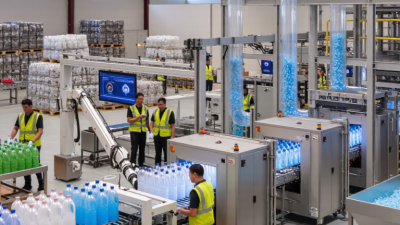
How to Buy Post Consumer Recycled PCR Resin in 2026?
Buying Post-Consumer Recycled PCR Resin in 2026 requires more than comparing price per kilogram. Buyers must examine feedstock origin, polymer type, melt-flow consistency, contamination limits, traceability, and certification. A clear specification prevents expensive surprises, especially when black flakes, odor, moisture, or inconsistent color appear during production.
The OECD’s Global Plastics Outlook reported that only 9% of global plastic waste was recycled in 2019. That figure exposes the supply challenge. Demand is rising faster than dependable material quality in several markets. The Ellen MacArthur Foundation’s Global Commitment reports also continue to emphasize recycled-content targets and better packaging circularity. However, targets alone do not guarantee usable resin. They can create pressure without solving collection, sorting, and processing weaknesses.
Tom Szaky, founder and CEO of TerraCycle, has said, “There is no such thing as waste, only stuff in the wrong place.” His observation applies directly to Post-Consumer Recycled PCR Resin. A used bottle becomes valuable only after controlled collection, advanced sorting, washing, pelletizing, and testing. Buyers should request recent COAs, batch samples, recycled-content evidence, and production references. Ask difficult questions.
A practical purchasing review should compare virgin-resin substitution rates, odor performance, color tolerance, and long-term supply capacity. Certification matters, but it is not a complete quality guarantee. Even experienced buyers can underestimate seasonal variation or regional feedstock limits. This guide explains how to evaluate suppliers, verify claims, negotiate specifications, and build a more reliable PCR resin sourcing strategy for 2026.
Read more »
By:Liam
- October 9, 2026

2026 Top Types of Reconditioned Industrial Packaging
Reconditioned Industrial Packaging is moving from a cost-saving option to a measurable circular-economy strategy. In 2026, buyers are examining more than purchase price. They are checking container history, cleaning records, repair quality, material strength, and return logistics. The details matter.
The World Bank’s What a Waste 2.0 report estimates that global waste generation could reach 3.40 billion tonnes annually by 2050. Packaging remains a visible part of that pressure. The Ellen MacArthur Foundation also reports that reuse models could be economically attractive for at least 20% of plastic packaging. These findings support stronger demand for reconditioned drums, intermediate bulk containers, plastic pallets, steel stillages, and reusable crates.
Tom Szaky, TerraCycle’s founder and a recognized circular-packaging advocate, said, “The best way to solve the waste problem is to not create it in the first place.” Reconditioning follows that principle. A cleaned steel drum can return to service. A repaired IBC can protect another shipment. A tested pallet can avoid immediate disposal.
But reuse is not automatically sustainable. Poor inspection creates safety risks. Long-distance returns can weaken environmental gains. Some suppliers also use “reconditioned” too loosely. That deserves scrutiny.
This 2026 guide compares the top types of Reconditioned Industrial Packaging by durability, application, inspection needs, and lifecycle value. It also considers an uncomfortable question: when does reconditioning genuinely extend service life, and when does it merely delay replacement?
Read more »
 By:Sophia
- October 4, 2026
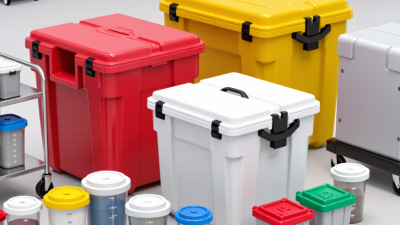
How to Choose Medical Waste Containers in 2026?
Choosing Medical Waste Containers in 2026 requires more than comparing prices or colors. Each container should match the waste stream, handling method, and treatment pathway. Sharps need rigid, puncture-resistant boxes. Liquid waste needs secure, leak-resistant containment. Anatomical or infectious materials may require stronger closure systems and carefully labeled packaging.
Dr. William A. Rutala, a recognized healthcare epidemiologist, has emphasized, “The single most important measure to prevent the spread of infection is hand hygiene.” Containers support that goal, but they cannot replace trained staff or safe procedures. Their design should reduce hand contact, prevent overfilling, and remain stable beside treatment beds, operating rooms, laboratories, and cleaning areas. A foot-operated lid can matter when gloves are contaminated. A visible fill line can prevent dangerous overflow.
This guide examines Medical Waste Containers through practical experience, technical performance, and responsible procurement. It considers capacity, material strength, lid security, portability, cleaning requirements, labeling, and compatibility with local waste systems. Certification and regional requirements should always be checked before purchase. A product accepted in one facility may be unsuitable elsewhere.
The decision is rarely perfect.
Budgets influence choices. Storage space creates compromises. Some containers appear durable but crack under repeated movement. Others fit narrow rooms yet become unstable when nearly full. A careful buyer should test real workflows, not rely only on catalog images. The safest option is usually the one staff can identify, close, move, and replace without hesitation.
Read more »
 By:Emily
- September 29, 2026
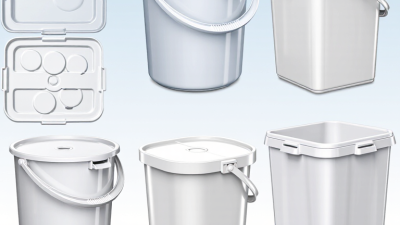
What Types of Plastic Pails and Buckets Are Available?
Plastic Pails & Buckets come in more forms than a simple round container with a handle. Common options include open-top pails with removable lids, lidded buckets designed for more secure closure, and square or rectangular containers that fit neatly on shelves. Materials vary too. High-density polyethylene is widely used for lightweight, impact-resistant containers, while polypropylene may suit applications that need greater heat tolerance. Exact performance depends on the product design and conditions of use.
Small details matter. A snap-on lid can make frequent access easier, while a gasketed closure may help limit spills when a container is handled or moved. Handle style, wall thickness, capacity, and stacking features also affect everyday use. Imagine carrying a filled pail across a workshop: grip comfort and weight distribution can matter as much as capacity. In a storeroom, consistent dimensions may be more useful than a distinctive shape.
Choosing well starts with the contents and the job. Consider whether the pail will hold liquids, powders, tools, or supplies, and whether it needs to be cleaned or reused often. Check product specifications for material, closure, and intended use rather than relying on appearance alone. A bucket that looks suitable may not perform as expected under heat, impact, or repeated handling. That is easy to overlook. Requirements also vary by application, so confirm relevant product information with the manufacturer or supplier. The best choice is not always the largest or toughest option; it is the one whose design fits the task.
Read more »
By:Liam
- September 24, 2026
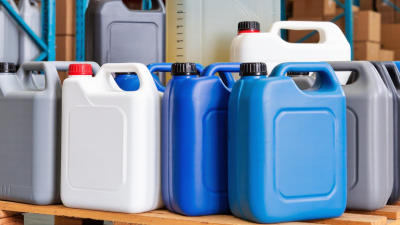
What Are Industrial Jerrycans Used For?
Industrial Jerrycans are rugged containers designed for storing, transporting, and dispensing many industrial liquids. Their common uses include water, detergents, lubricants, coolants, agricultural products, and approved chemical formulations. Sizes often range from several litres to more than 20 litres, depending on handling needs.
In a warehouse, a jerrycan may sit on a pallet, travel in a delivery van, or serve as a refill container beside production equipment. Its strong plastic walls help reduce leakage during ordinary handling. Secure caps also protect contents from dust, moisture, and accidental spills. However, not every jerrycan suits every liquid. Material compatibility matters. High-density polyethylene works well for many products, but aggressive substances may require specialised designs.
Industrial Jerrycans should be selected according to the liquid, temperature, pressure, closure type, and transport conditions. Buyers should check product specifications, safety data sheets, and applicable packaging requirements before filling them. Where regulated transport applies, certified packaging may be necessary. The container’s shape also affects storage efficiency. Flat sides allow stable stacking, while built-in handles make manual movement easier.
Small details matter. A worn cap can undermine a strong container. A faded label can create confusion. Clean, readable identification is essential. In practice, teams sometimes focus on price and overlook disposal, return, or inspection procedures. That choice can create avoidable costs. Good selection combines durability, chemical resistance, safe handling, and traceability. The best Industrial Jerrycans are not simply large plastic containers; they are part of a controlled supply and storage system.
Read more »
By:Liam
- September 19, 2026

China Top Intermediate Bulk Containers Suppliers for Global Buyers?
In the realm of logistics, "Intermediate Bulk Containers" have become essential for efficient transport and storage. Dr. Jane Roberts, a leading expert in supply chain management, emphasizes, "Choosing the right supplier can make or break your operation." This highlights the significance of selecting qualified suppliers in this competitive landscape.
China stands out as a major player in the Intermediate Bulk Containers market. With numerous suppliers available, finding the top ones can be a daunting task for global buyers. Evaluating quality and reliability is crucial. Many suppliers promise the best prices, but hidden costs often arise later. This unpredictability can create problems.
Buyers must navigate these challenges wisely. Understanding supplier credentials is vital to ensure a smooth operation. Dr. Roberts suggests conducting thorough research before finalizing a supplier. By doing so, companies can avoid potential risks and enhance their supply chain efficiency. The stakes are high in the Intermediate Bulk Containers industry.
Read more »
By:Liam
- August 27, 2026
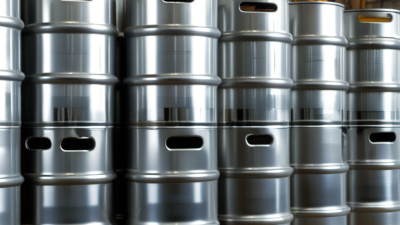
Best Industrial Steel Drums for Global Buyers in 2026?
As the demand for sustainable packaging solutions rises, the market for Industrial Steel Drums is expected to grow significantly. According to a recent report by Smith & Associates, the global market for steel drums is projected to reach $12 billion by 2026. This growth is driven by their durability and recyclability, making them ideal for hazardous materials and bulk storage.
Industry expert Dr. Emily Turner notes, "Industrial Steel Drums provide a safe and reliable option for transporting goods across various sectors." Her insights emphasize the importance of quality standards, with many manufacturers focusing on compliance with environmental regulations. Buyers should consider factors like size, weight, and certification before purchasing these drums.
However, not all products meet the same standards. A thorough evaluation of suppliers is necessary. Many companies claim to provide high-quality Industrial Steel Drums, but discrepancies in manufacturing processes exist. Potential buyers must engage in careful research. Understanding these dynamics is crucial for making informed decisions in this evolving market.
Read more »
By:Sophia
- August 27, 2026

What is a Plastic Tight Head Container and Its Uses?
Plastic Tight-Head Containers are increasingly vital in various industries for their durability and practicality. According to a recent report by Smithers Pira, the global plastic container market is projected to grow significantly, reaching USD 400 billion by 2025. This surge is driven by the need for safe and reliable storage solutions, particularly in chemicals and food sectors.
These containers are designed for the secure storage and transport of liquids. They feature a leak-proof design, enhancing safety and reducing waste. Reports indicate that 76% of surveyed companies prefer these containers for hazardous materials. This preference is based on their resilience and ability to withstand various environmental conditions. However, not all uses of Plastic Tight-Head Containers focus on safety. Some applications raise concerns regarding waste management and recycling processes.
Overall, understanding the applications and limitations of Plastic Tight-Head Containers is crucial. They represent a balance of utility and responsibility in the modern supply chain. Further exploration of their environmental impact remains critical as industries strive for sustainability.
Read more »
By:Liam
- August 27, 2026