Technical Procurement Guide & Product Portfolio

The Global Industrial Buyer’s Technical Masterguide to Plastic Pails & Buckets: Engineering Performance, Regulatory Compliance, and Next-Gen PCR Circular Procurement

As global supply chains navigate stringent environmental mandates, dangerous goods transport compliance (UN 1H2 ratings), and volatile polymer raw material markets, specifying industrial Plastic Pails & Buckets requires rigorous engineering insight. Mauser Packaging Solutions combines over 330 years of combined packaging legacy across 170+ global sites to deliver high-density polyethylene (HDPE) container systems engineered for zero-leak performance, structural integrity, and maximum circular sustainability.

Optimizing Polymer Performance: Why High-Density Polyethylene (HDPE) Dominates Industrial Containment

Selecting industrial plastic pails and buckets involves far more than simply selecting volume capacity (e.g., 1 Gallon, 5 Gallon, 20 Litre, or 25 Litre). Global procurement officers in chemical processing, coatings, lubricants, construction materials, and food processing must evaluate complex material characteristics including Melt Flow Index (MFI), Environmental Stress Crack Resistance (ESCR - ASTM D1693 standard), top-load compression capacity, hydrostatic pressure capabilities, and drop-impact resistance across sub-zero thermal gradients.

At Mauser Packaging Solutions, our plastic pails and buckets are injection-molded utilizing prime high-molecular-weight HDPE (HMW-HDPE) and structural post-consumer recycled (PCR) resin blends. High-density polyethylene exhibits exceptional chemical inertness against aggressive solvents,alkalis, acids, and surfactant compounds. Through precision mold design featuring engineered structural rim geometries and double-wall top skirts, Mauser pails maintain dimensional stability under dynamic stack pressures up to 3,000 kg during transatlantic container freight operations.

Key Mechanical & Regulatory Parameters for Global Buyers

  • UN Dangerous Goods Certification (UN 1H2 / Y & Z Ratings): Rigorously tested under ISO 16106 standards for hazardous solid and liquid containment, incorporating drop testing up to 1.8 meters at -18°C.
  • Environmental Stress Crack Resistance (ESCR): Formulated with targeted resin densities (0.952 - 0.958 g/cm³) to prevent micro-fissure propagation caused by surfactant-rich liquids, detergents, and active chemical concentrates.
  • Food Contact Safety (FDA 21 CFR 177.1520 & EU 10/2011 Compliance): Manufactured in cleanroom-certified facilities using virgin food-grade resins with full traceability from raw monomer to finished bucket.
  • Hermetic Seal Assurance: Precision-molded lid rims with poured-in-place EPDM, Nitrile, or EVA foam gaskets engineered to eliminate volatile organic compound (VOC) vapor loss during long-haul transit.
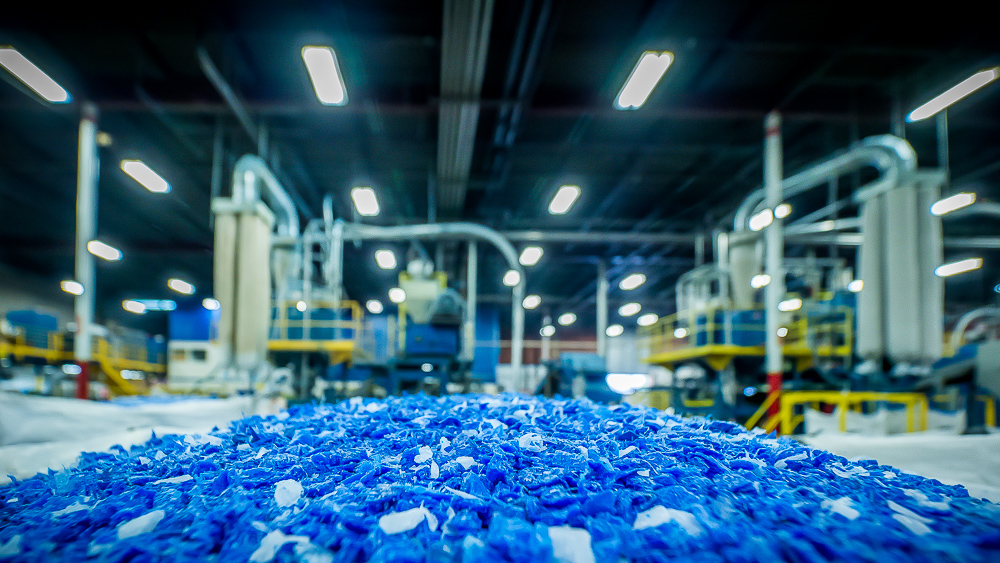
Mauser Industrial Plastic Pails Manufacturing Facility and Quality Testing

Information Gain Insight: The Physics of Stack Deformation

Standard commercial pails often experience structural "hoop stress collapse" or lid disengagement when exposed to dynamic warehouse stacking over 30 days at ambient temperatures exceeding 35°C. Mauser’s patented inter-locking lid profiles distribute vertical load vectors evenly across the bucket's reinforced vertical ribs, eliminating dynamic creep and preventing costly supply chain spills.

High-Performance Plastic Pails & Buckets: Targeted Product Recommendations

To streamline your procurement evaluation, our senior engineering team categorizes our industrial plastic pail and bucket solutions based on operational stress, chemical hazard classification, and regulatory compliance requirements.

Heavy-Duty UN-Rated Open-Head Plastic Pails

1. Heavy-Duty UN-Rated Open-Head Pails (5-Gallon / 20L)

Engineered for hazardous solid and liquid chemicals. Certified to UN 1H2/Y1.5/100 standards with heavy-wall HMW-HDPE construction and reinforced bail handle system.

  • Ideal for: Solvents, pest control agents, industrial resins
  • Closure: Tear-strip lever ring or gasketed snap lid
  • Stacking: Tested to 3-high 1,000 kg static load
Send an Inquiry
Post-Consumer Recycled PCR Industrial Plastic Buckets

2. Eco-Series Post-Consumer Recycled (PCR) Pails

Formulated with up to 75% high-purity PCR resin. Delivers carbon footprint reductions up to 60% while retaining structural top-load compression strength.

  • Ideal for: Lubricants, construction adhesives, paints
  • Sustainability: 100% recyclable mono-material design
  • Option: UN non-hazardous certification available
Send an Inquiry
Food-Grade FDA Tamper-Evident Plastic Buckets

3. Food-Grade & FDA Tamper-Evident Buckets

Certified under FDA 21 CFR and EU 10/2011 for direct food contact. Includes tamper-evident tear tabs and smooth internal walls for zero food residue retention.

  • Ideal for: Dairy, syrups, food ingredients, seafood
  • Decoration: In-Mold Labeling (IML) photo-real print
  • Hygiene: Zero-crevice hygienic interior design
Send an Inquiry
Anti-Static ESD Safe Plastic Pails for Volatile Environment

4. Anti-Static ESD & Conductive Safety Pails

Specially formulated with conductive carbonaceous compounds to prevent electrostatic spark discharge in ATEX Zone 1 & Zone 2 hazardous filling operations.

  • Ideal for: Flammable liquids, printing inks, explosives
  • Safety: Surface resistivity < 10^6 Ohms
  • Compliance: IEC 60079-32-2 electrostatic standard
Send an Inquiry

Technical Specification Matrix for Enterprise Procurement

Compare the engineering metrics of our core plastic pail and bucket product lines below:

Product Category Standard Volumes Resin Grade UN Hazardous Rating Top-Load Load Rating Thermal Stability Range Closure System Options
Heavy-Duty UN Chemical Pail 10L, 18.5L, 20L, 5-Gal 100% Virgin HMW-HDPE UN 1H2/Y1.5/100 to Y1.8/150 Up to 850 kg Static -20°C to +75°C Tear-strip gasket lid, Lever-lock ring
Eco-Series PCR Pail 5L, 10L, 20L, 25L 25% - 75% Post-Consumer HDPE UN 1H2/Z Rating (Select grades) Up to 650 kg Static -10°C to +60°C Snap-on tamper-evident lid, Flex-spout
Hygienic Food-Grade Bucket 1L, 2.5L, 5L, 10L, 20L FDA Virgin HDPE / PP Non-UN (Food Grade) Up to 500 kg Static -30°C to +85°C (Hot-fill) Tamper-evident tear tab, Screw-lid cap
Conductive ESD Safety Pail 15L, 20L, 5-Gal Carbon-infused HDPE Compound UN 1H2/Y1.8/150 Safety Rated Up to 800 kg Static -25°C to +70°C Gasketed conductive seal lid with grounding metal wire

The industrial rigid packaging sector is experiencing a paradigm shift driven by extended producer responsibility (EPR) legislation, global plastic tax levies, and digital transformation in supply chain tracking. Global procurement directors must anticipate how these four technological vectors will reshape plastic pail specifications over the next decade:

1. Polymer Re-Stabilization & Advanced PCR Upcycling

Historical concerns regarding post-consumer recycled plastic pails—such as reduced stress-crack resistance and batch-to-batch color variance—have been eliminated through Mauser’s proprietary resin purification process. By incorporating anti-oxidants and secondary organophosphite thermal stabilizers, our Infinity Series PCR pails match the molecular durability of prime virgin resins while consuming 70% less fossil energy.

2. Smart Packaging & Digital Supply Chain Integration

The era of "passive containment" is giving way to intelligent container fleets. Next-generation plastic pails are increasingly molded with embedded RFID micro-transponders and high-density 2D DataMatrix codes. This enables automated track-and-trace asset monitoring, instant access to UN safety certificates via QR scanning, and real-time fill-level sensing for automated reordering systems.

3. Monomaterial Design for 100% Circularity

To eliminate contamination during downstream mechanical recycling, packaging regulations are penalizing composite multi-material pails (such as HDPE buckets paired with steel bail wire handles and PVC gaskets). Future-ready pails utilize 100% all-polyolefin designs—incorporating molded HDPE plastic handles and co-molded TPE gasket rings—enabling full bucket re-granulation without manual dis-assembly.

4. Lightweighting via Microcellular Foaming Technology

By injecting inert nitrogen gas during injection molding, microcellular foaming creates a microscopic honeycomb core within the bucket wall. This reduces tare weight by 8-12% while boosting structural rigidity-to-weight ratios—yielding substantial reductions in transportation fuel consumption and associated Scope 3 CO2 greenhouse gas emissions.

Send an Inquiry

Why Global Industry Leaders Partner with Mauser Packaging Solutions

With over 330 combined years of industrial packaging heritage, Mauser Packaging Solutions provides an unmatchable global infrastructure combined with deep localized technical support. When you source plastic pails and buckets through Mauser, you gain access to a global supply chain optimized for security, compliance, and sustainability.

Unrivaled Global Network & Security of Supply

With more than 170 manufacturing and reconditioning sites across 50+ countries, Mauser insulates your operations against regional material shortages and logistics disruptions. Our dual-sourcing tooling architecture allows us to duplicate mold specifications across worldwide facilities, guaranteeing identical bucket dimensions and resin performance whether filled in North America, Europe, Asia, or Latin America.

Proprietary Closed-Loop Packaging Recovery: Recover Syst-M

Mauser does not just sell plastic pails; we manage their entire lifecycle. Through our global Recover Syst-M program, we collect used industrial pails directly from your end-customers’ facilities. Empty pails are washed, reconditioned, or re-granulated into high-purity recycled resin for non-food industrial containers—helping enterprise buyers achieve zero-waste-to-landfill metrics.

170+
Global Manufacturing & Service Sites Worldwide
330+
Years of Combined Industrial Packaging Excellence
100%
Traceable Quality Management under ISO 9001 & ISO 14001

E-E-A-T Commitment: Comprehensive In-House Testing Laboratories

Every Mauser plastic pail design undergoes intensive empirical validation at our ISO 17025 accredited testing facilities. Performance parameters evaluated include internal hydraulic pressure tests (up to 250 kPa), low-temperature drop impacts (-18°C), stack compression creep analysis, vibration transit simulations, and long-term chemical compatibility testing under accelerated thermal aging.

Global Buyer Procurement FAQ: Plastic Pails & Buckets

Below are authoritative technical answers to the most frequent inquiries submitted by corporate buyers, packaging engineers, and supply chain managers when specifying industrial plastic pails.

Q1: How do UN 1H2 markings determine if a plastic pail is suitable for my chemical product?

The UN code 1H2 explicitly designates a "Removable Head (Open-Head) Plastic Container." To match your chemical to the correct rating, examine the code structure: UN 1H2 / Y1.5 / 100.

  • Y Rating: Indicates packaging group II and III hazardous materials (moderate and low hazard liquids/solids). An "X" rating covers Packaging Group I (high hazard).
  • 1.5 Rating: Specifies the maximum specific gravity (density) of the liquid material permitted at 20°C.
  • 100 Rating: Represents the maximum internal hydrostatic pressure test rating in kilopascals (kPa) sustained during UN certification testing.

Mauser’s technical team provides direct chemical compatibility pairing to ensure full compliance with UN, US DOT CFR 49, IMDG, and ICAO regulations.

Q2: What is Environmental Stress Cracking (ESC), and how does Mauser prevent container failure?

Environmental Stress Cracking (ESC) is an unexpected premature mechanical failure occurring when high-density polyethylene is simultaneously subjected to mechanical tensile stress and contact with wetting agents, surfactants, oils, or solvents. ESC occurs without swelling or chemical degradation of the polymer.

Mauser prevents ESC by using specialized high-molecular-weight resins featuring narrow molecular weight distribution (MWD) and lower melt flow index (MFI < 0.4 g/10min). Our pails are pre-tested under ASTM D1693 full-notch creep testing (FNCT) protocols, exceeding 1,000 hours of continuous exposure to harsh surfactant mediums without failure.

Q3: Can Post-Consumer Recycled (PCR) plastic pails achieve UN safety certification for hazardous chemicals?

Yes. Under updated international shipping regulations (including UN Model Regulations and ADR guidelines), high-grade mechanically recycled resin can be utilized for UN-certified containers provided the recycled resin stream is strictly controlled under a certified Quality Assurance Program (QAP).

Mauser’s Infinity Series PCR Pails combine virgin outer and inner layers with a high-percentage PCR structural core (co-injection or tri-layer technology), securing UN 1H2 certification while satisfying strict corporate ESG targets and European Plastic Tax requirements.

Q4: What closure systems provide zero-leak assurance during transatlantic ocean transport?

Zero-leak performance across ocean freight requires matching the pail closure to the internal pressure dynamics of your product:

  • Gasketed Tear-Strip Lids: Feature a continuous elastomeric seal (EPDM or synthetic rubber) that compresses into the bucket's top curl. The tear-strip provides tamper evidence and locks the lid perimeter under high shock loads.
  • Threaded Screw Lids with Safety Locks: Ideal for applications requiring repeated opening and closing. Provides double-O-ring sealing mechanisms resistant to thermal expansion leaks.
  • Vented Closures: Essential for chemicals that outgas (such as hydrogen peroxide solutions or organic peroxides). Vented membrane plugs release internal pressure build-up without permitting liquid passage.

Q5: What are the storage thermal limits for high-density plastic buckets in hot climates?

Standard HDPE plastic pails maintain high structural performance across operational temperatures ranging from -20°C to +60°C (-4°F to 140°F). However, as temperatures exceed 40°C, the modulus of elasticity of polyethylene drops, reducing total stack compression strength by approximately 15-25%.

For high-temperature filling operations (hot-filling up to 80°C / 176°F), Mauser recommends specialized polypropylene (PP) or heat-stabilized HDPE copolymer resins. Pails must be allowed to cool to ambient temperature before final stacking in warehouses to prevent panel deformation.

Q6: What food contact certifications are provided with Mauser plastic buckets?

Our food-grade plastic pails are manufactured in facilities certified under FSSC 22000 or BRCGS global food safety standards. They fully comply with FDA 21 CFR 177.1520 (olefin polymers), EU Regulation (EC) No 1935/2004, and Commission Regulation (EU) No 10/2011 on plastic materials intended to come into contact with food. Full Certificates of Compliance (CoC) and overall migration test reports are supplied with every production batch.

Ready to Optimize Your Industrial Plastic Pail Procurement?

Whether you need UN-rated hazardous chemical pails, food-grade FDA compliant containers, or high-percentage PCR sustainable buckets, Mauser Packaging Solutions provides the engineering expertise and global supply security your business demands.