
Technical Procurement Guide & Catalog

The Definitive Global Guide to UN-Approved Industrial Jerrycans: Chemical Compatibility, Engineering Integrity, and Sustainable Supply Chains

Explore technical specifications, UN hazardous transport ratings, barrier technologies, and circular economy resin integration for high-density polyethylene (HDPE) industrial jerrycans. Engineered by Mauser Packaging Solutions to guarantee zero-leak logistics for global chemical, agrochemical, lubricant, and food processing industries.

Get a Quote View Technical Specifications

Why Industrial Jerrycans Remain the Gold Standard for B2B Fluid Containment

In modern chemical logistics and global manufacturing, industrial jerrycans—typically ranging from 5 liters to 30 liters in nominal volume—serve as the critical medium-bulk link between small retail bottles and massive Intermediate Bulk Containers (IBCs). Their rigid tight-head design, standardized stackability, anti-glug pour mechanics, and high chemical resistance make them indispensable across demanding supply chains.

However, procurement executives, chemical engineers, and logistics directors face an increasingly complex decision landscape. Choosing the ideal industrial jerrycan requires balancing strict UN Dangerous Goods approval ratings (such as 3H1/Y1.9 or 3H1/X1.8) against permeation barrier needs, environmental stress-crack resistance (ESCR), regulatory ESG targets (such as plastic packaging taxes), and total pallet optimization.

Information Gain Insight for Procurement Leaders

Not all HDPE jerrycans are chemically equal. Standard single-layer High-Density Polyethylene (HDPE) exhibits excellent resistance to aqueous acids and bases, but organic solvents, aromatic hydrocarbons, and essential oils can migrate through the polymer matrix, causing container paneling or wall degradation. Mauser’s inline fluorination and multi-layer EVOH co-extrusion technology eliminate permeation while maintaining full UN compliance.

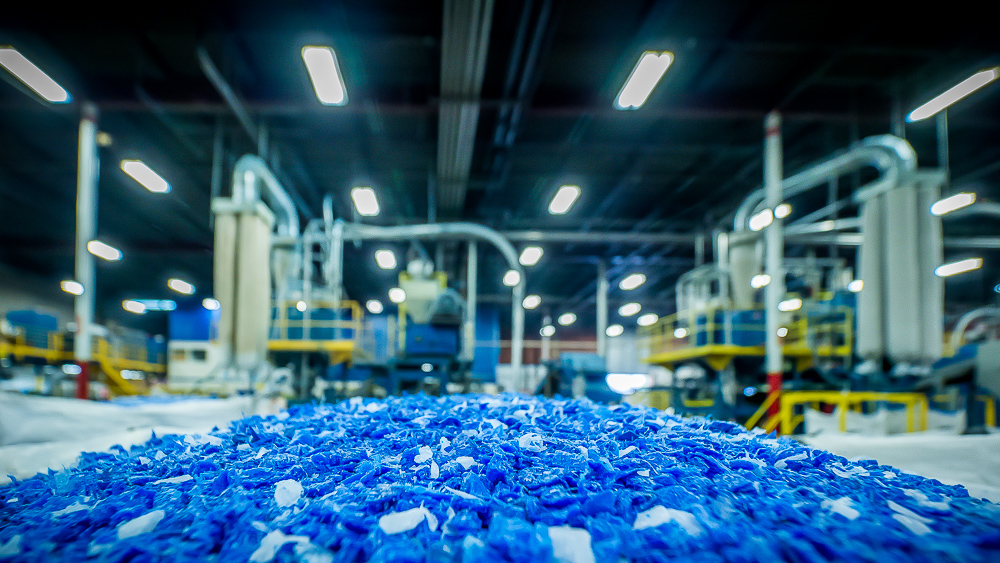
High-Performance Industrial Jerrycans manufactured with Post-Consumer Recycled Resin by Mauser Packaging Solutions

Engineered Industrial Jerrycan Solutions for Every Application

Mauser Packaging Solutions manufactures a broad portfolio of industrial tight-head jerrycans. Each product line is customized to solve specific chemical transport, regulatory compliance, and environmental sustainability challenges.

UN-Approved Standard Tight-Head Industrial Jerrycans
UN Dangerous Goods Certified

UN-Approved Single-Layer HDPE Jerrycans (5L – 30L)

Designed for heavy-duty industrial chemicals, cleaning agents, liquid fertilizers, and specialty raw materials requiring UN Group II and Group III packaging approvals.

  • High molecular weight virgin HDPE resin
  • Standard DIN 45, DIN 51, and DIN 60 neck configurations
  • Integrated ergonomic top carry handles
  • Interlocking footprint designs for secure pallet stacking

Fluorinated & Barrier-Coated Industrial Jerrycans
High-Barrier Solvent Protection

Fluorinated & Multi-Layer Barrier Jerrycans

Engineered specifically for volatile solvents, pesticides, fuel additives, and aromatic chemicals that cause wall paneling, odor escape, or resin swelling in standard containers.

  • Level 3 & Level 5 Fluorination options
  • 6-layer EVOH co-extrusion for zero-oxygen permeation
  • Prevents active ingredient loss in agrochemicals
  • Eliminates container wall collapse (paneling effect)
Post-Consumer Recycled PCR Industrial Jerrycans
Sustainable Packaging

Infinity Series PCR Industrial Jerrycans

Incorporate up to 75%+ high-quality post-consumer recycled (PCR) resin without compromising structural rigidity, drop-impact performance, or UN hazardous rating compliance.

  • Drastically reduces carbon footprint (Scope 3 GHG)
  • Exempt from regional virgin plastic packaging taxes
  • High Environmental Stress Crack Resistance (ESCR)
  • Fully recyclable within modern industrial recycling streams

Technical Specifications & Performance Matrix

To streamline your technical qualification process, the table below provides engineering dimensions, UN approvals, resin grades, and closure specifications for standard Mauser industrial jerrycans.

Nominal Volume UN Mark Certificate Resin Technology Average Tare Weight Standard Neck Finish Primary Industrial Applications
5 Liters (1.3 Gal) UN 3H1/Y1.9/200 HDPE / Fluorinated / PCR 220g – 260g DIN 45 / Tamper-Evident Agrochemicals, Flavors, Specialty Reagents
10 Liters (2.6 Gal) UN 3H1/Y1.8/200 HDPE / Co-Ex EVOH 420g – 480g DIN 51 / Anti-Glug Vent Automotive Fluids, Concentrated Detergents
20 Liters (5.3 Gal) UN 3H1/X1.9/250 High-Molecular Weight HDPE 900g – 1,050g DIN 60 / Flex Spout Cap Industrial Solvents, Acids, Petrochemicals
25 Liters (6.6 Gal) UN 3H1/Y1.9/250 HDPE + 50% PCR Resin 1,100g – 1,250g DIN 60 / Pressure Relief Cap Bulk Raw Materials, Construction Chemicals
30 Liters (7.9 Gal) UN 3H1/Y1.6/200 Heavy-Duty HDPE 1,300g – 1,450g DIN 60 High-Torque Finish Global Bulk Logistics, Water Treatment Sol.

Precision Blow Molding & Quality Control

Every Mauser industrial jerrycan is produced using advanced Extrusion Blow Molding (EBM) technology featuring automated wall-thickness distribution control (PWDS). This guarantees optimal material allocation—reinforcing container corners and bottom pinch-off points where drop-impact stresses concentrate, while reducing excess weight on flat side panels.

In-line automated leak detection utilizing high-sensitivity pressure decay sensors verifies that 100% of manufactured jerrycans are leak-free prior to palletization.

Automated blow molding quality control facility for industrial packaging

As international chemical logistics adapts to stricter environmental mandates and automated warehouse operations, procurement strategies for industrial containers are undergoing a fundamental transformation.

1

Mandatory PCR Integration

Regulatory frameworks worldwide—such as the European Union’s Packaging and Packaging Waste Regulation (PPWR)—are mandating minimum percentages of post-consumer recycled plastic in rigid containers. Procurement directors must secure supplier partners capable of maintaining UN packaging certifications while scaling high-ratio PCR blend formulations.

2

Cube Optimization & Freight Efficiency

Escalating maritime and road freight expenses make dimensional efficiency paramount. Modern industrial jerrycan geometry is engineered around standard ISO pallet dimensions (1200x1000mm and 1200x800mm). Interlocking top and bottom profiles allow higher stacking layers in sea containers without pallet overhang or tipping hazards.

3

Closed-Loop Recovery & Reconditioning

Single-use packaging models are rapidly fading. Global chemical manufacturers are establishing closed-loop collection loops. Industrial jerrycans are increasingly designed for multi-trip washing cycles or dedicated resin mechanical recycling via programs like Mauser’s Recover Syst-M.

Prepare Your Supply Chain for Sustainable Packaging Directives

Consult with Mauser’s packaging engineering team to audit your current fluid containment footprint and transition seamlessly to high-PCR or barrier-enhanced industrial jerrycans.

Get a Quote
Mauser Packaging Solutions global footprint - 170+ sites worldwide

Why Global Industry Leaders Trust Mauser Industrial Jerrycans

With a heritage spanning over 330 years of industrial packaging innovation, Mauser Packaging Solutions delivers unmatched supply chain reliability, technological expertise, and sustainability leadership across the globe.

  • 170+ Manufacturing & Service Sites Worldwide

    Local manufacturing ensures rapid delivery, reduced freight distance, and consistent specification standards across North America, Europe, Asia-Pacific, and South America.

  • In-House UN Certification Testing Laboratories

    Our state-of-the-art testing facilities perform drop testing (-18°C conditioning), hydraulic hydrostatic pressure tests, stack load compression testing, and chemical compatibility validation.

  • Closed-Loop Recovery via Recover Syst-M

    We collect, wash, recondition, or mechanically recycle empty industrial packaging worldwide—helping chemical manufacturers achieve zero-waste landfill commitments.

Frequently Asked Questions (FAQ) on Industrial Jerrycan Procurement

Answers to complex technical, regulatory, and logistics queries frequently analyzed by enterprise purchasing managers and chemical safety officers.

What is the technical distinction between UN 3H1 and 3H2 plastic packaging ratings?

In international dangerous goods regulations (UN Model Regulations, ADR, IMDG Code, IATA), 3H1 designates a plastic tight-head container (jerrycan) with non-removable head closures (intended for liquids), whereas 3H2 designates an open-head plastic container with a removable lid (intended for solids, pastes, or viscous materials). For industrial liquid chemicals, lubricants, and liquid fertilizers, UN 3H1 certified jerrycans are standard to guarantee leak-tight containment under hydraulic pressure.

How does inline fluorination prevent container wall paneling and solvent permeation?

Standard High-Density Polyethylene (HDPE) possesses a non-polar chemical structure. Non-polar organic solvents (such as toluene, xylene, pesticides, and hydrocarbon solvents) can penetrate the polymer matrix, causing swelling, weight loss through gas diffusion, and structural collapse known as "paneling." Inline fluorination exposes the interior surface of the jerrycan to fluorine gas during blow molding. This chemical reaction replaces hydrogen atoms on the HDPE polymer backbone with fluorine atoms, creating a thin, highly fluorinated fluorocarbon barrier layer (similar to PTFE). This layer blocks solvent absorption and vapor transmission without affecting the recyclability of the container.

What Environmental Stress Crack Resistance (ESCR) rating is required for industrial detergents?

Surfactants, industrial soaps, and wetting agents lower the surface energy of plastic, accelerating micro-fissure formation under mechanical tension—a phenomenon known as Environmental Stress Cracking. To safely store concentrated surfactants, industrial jerrycans must be manufactured using high-molecular-weight, low-melt-flow index HDPE resin featuring an ESCR rating exceeding 1,000 hours under ASTM D1693 (Condition B, 10% Igepal). Mauser selects specialized polymer grades to ensure jerrycan bases and handle radii resist cracking under long-term stack pressure.

Can Post-Consumer Recycled (PCR) plastic jerrycans be UN-certified for hazardous liquids?

Yes. Mauser’s Infinity Series technology utilizes multi-layer co-extrusion blow molding. The outer and inner contact layers can utilize prime virgin resin or dedicated high-purity PCR, while the middle core layer encapsulates up to 75%+ post-consumer recycled resin. This tri-layer architecture preserves strict mechanical impact strength and chemical isolation, enabling the container to achieve UN Packing Group II (Y-rating) and Group III (Z-rating) certifications for hazardous liquid transport.

What closure torque specifications and neck finishes (DIN 45, DIN 51, DIN 60) should be applied?

Proper closure torque is critical to maintaining the UN leakproofness rating. Neck finishes follow standardized European packaging standards: DIN 45 (approx. 45mm outer neck diameter), DIN 51, and DIN 60 (60mm wide neck finish ideal for fast pouring and suction dip-tube entry). Recommended application torque typically ranges from 12 Nm to 18 Nm for DIN 60 closures depending on gasket material (EPE, PTFE, or Induction Heat Seal). Over-torquing can deform the neck sealing surface, while under-torquing leads to liquid seepage during thermal expansion in shipping containers.

How do industrial jerrycans optimize ocean shipping container load factors?

Mauser industrial jerrycans feature recti-linear footprint designs engineered specifically around 1200x1000mm standard export pallets. For instance, a 20L jerrycan with dimensions of 290mm (L) x 255mm (W) x 390mm (H) allows exactly 16 containers per pallet layer. Stacking 4 layers high yields 64 jerrycans (1,280 Liters) per pallet position. In a standard 40-foot High Cube ocean container, this precision geometry increases total volume utilization by up to 14% compared to round cylindrical drums.

Optimize Your Industrial Jerrycan Procurement Today

Need technical documentation, chemical compatibility verification, sample containers, or bulk container pricing? Connect directly with Mauser Packaging Solutions' global sales and packaging engineering team.