News & Industry Insights

Industrial Packaging Knowledge Hub

Discover the latest industry trends, technical updates, circular economy solutions, and expert commentary from Mauser Packaging Solutions.

Sustainability & Innovation

Advancing Sustainable Industrial Packaging

Learn how PCR resin integration, IBC reconditioning, and smart fleet management are shaping the future of global supply chains.

0%

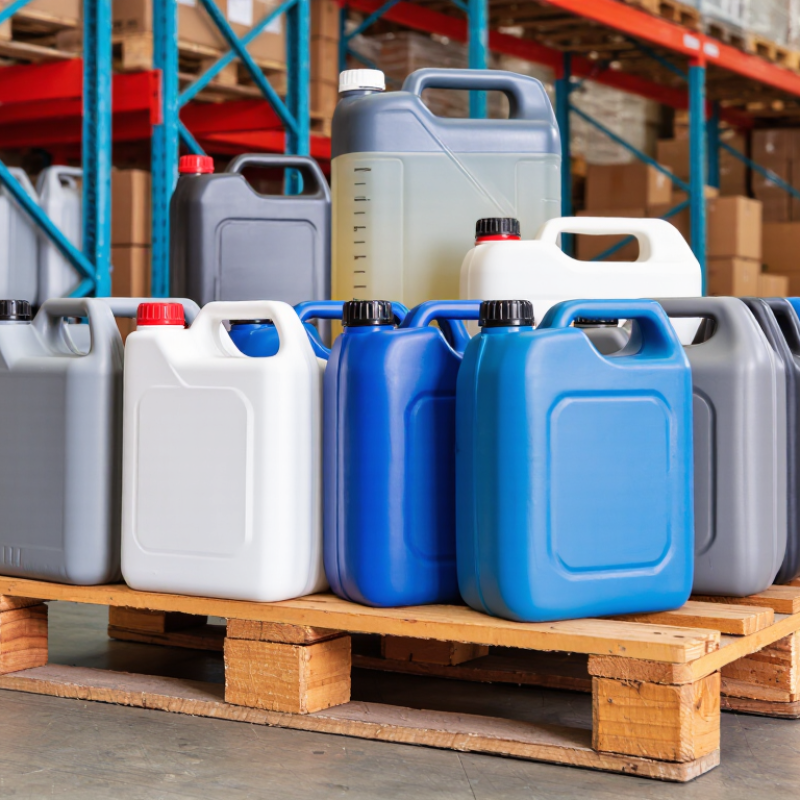
Industrial Jerrycans are rugged containers designed for storing, transporting, and dispensing many industrial liquids. Their common uses include water, detergents, lubricants, coolants, agricultural products, and approved chemical formulations. Sizes often range from several litres to more than 20 litres, depending on handling needs.

In a warehouse, a jerrycan may sit on a pallet, travel in a delivery van, or serve as a refill container beside production equipment. Its strong plastic walls help reduce leakage during ordinary handling. Secure caps also protect contents from dust, moisture, and accidental spills. However, not every jerrycan suits every liquid. Material compatibility matters. High-density polyethylene works well for many products, but aggressive substances may require specialised designs.

Industrial Jerrycans should be selected according to the liquid, temperature, pressure, closure type, and transport conditions. Buyers should check product specifications, safety data sheets, and applicable packaging requirements before filling them. Where regulated transport applies, certified packaging may be necessary. The container’s shape also affects storage efficiency. Flat sides allow stable stacking, while built-in handles make manual movement easier.

Small details matter. A worn cap can undermine a strong container. A faded label can create confusion. Clean, readable identification is essential. In practice, teams sometimes focus on price and overlook disposal, return, or inspection procedures. That choice can create avoidable costs. Good selection combines durability, chemical resistance, safe handling, and traceability. The best Industrial Jerrycans are not simply large plastic containers; they are part of a controlled supply and storage system.
What Are Industrial Jerrycans Used For?

Industrial Jerrycan Types: 5–60 L HDPE Sizes and UN Packaging Codes

What Are Industrial Jerrycans Used For?

Industrial jerrycans store and transport liquids in factories, laboratories, farms, and maintenance areas. Common contents include cleaning solutions, water-based products, lubricants, and selected chemicals. HDPE offers strong impact resistance and useful chemical compatibility. It also stays relatively light during manual handling.

Size affects both workflow and safety. A 5 L jerrycan suits sampling, dosing, or small-batch use. Ten and 20 L sizes are easier to lift and pour regularly. Larger 25, 30, and 60 L containers reduce refill frequency but require better handling controls. Molded handles, stable bases, and compatible closures matter.

One detail is easy to miss. A convenient size is not always the safest size.

UN packaging codes help identify tested container designs. UN 3H1 generally refers to a plastic jerrycan with a non-removable head. UN 3H2 indicates a removable-head design. However, the code alone does not approve every liquid. The substance, packing group, closure, filling method, and performance test results must match.

Buyers should check the complete UN marking and supplier documentation. It is tempting to select HDPE by appearance, but that approach can fail with permeating, heat-sensitive, or aggressive liquids. Compatibility charts and trial filling are wiser. Requirements may also change by transport route, so technical review remains necessary.

Chemical Transport: UN 3H1/3H2 Approval and 1.8 m Drop Testing

Industrial jerrycans support the controlled movement of chemicals, solvents, and other regulated liquids. Their value depends on verified performance, not appearance. Under the UN Recommendations on the Transport of Dangerous Goods, 3H1 identifies a plastic jerrican with a non-removable head. 3H2 identifies one with a removable head. Each design must match the chemical, closure, and intended transport route.

The 1.8 m drop test needs careful interpretation. The 23rd revised edition of the UN Model Regulations specifies a 1.8 m drop height for Packing Group I liquids. Packing Group II and III use lower heights of 1.2 m and 0.8 m. The filled package is dropped onto its most vulnerable area, often a corner, base, or closure. A failed cap can turn a compliant container into a serious handling risk. That detail is easy to underestimate.

UN approval also involves leakproofness, hydraulic pressure, stacking, and material compatibility tests. A 3H1 or 3H2 mark does not approve every chemical automatically. The certificate applies to a tested design, closure combination, and performance level. The 2023 UNECE Model Regulations provide these test criteria, while the 2024 International Maritime Dangerous Goods Code applies similar verification principles for sea transport. In practice, temperature changes, rough pallets, and repeated closure use can expose weaknesses. Testing proves a defined condition, not perfect real-world behavior.

What Are Industrial Jerrycans Used For? – Chemical Transport: UN 3H1/3H2 Approval and 1.8 m Drop Testing

Data Dimension Verified Technical Information Practical Relevance
Primary purpose Industrial jerrycans are rigid plastic packages used to contain, store, handle and transport liquids, including certain dangerous goods. Their moulded handles, stackable shape and relatively low weight support manual handling and warehouse movement.
UN packaging code: 3H1 Plastic jerrican with a non-removable head, commonly called a closed-head or tight-head jerrican. Suitable where the product is filled through a fixed opening and the closure must remain permanently fitted during transport.
UN packaging code: 3H2 Plastic jerrican with a removable head, commonly called an open-head jerrican. Useful when wider access is needed for filling, emptying, cleaning or handling certain products.
Typical construction material High-density polyethylene (HDPE) is widely used because it provides impact resistance and compatibility with many aqueous, alkaline and acidic products. Chemical compatibility must be confirmed for the exact formulation, concentration, temperature and storage duration; HDPE is not universally compatible.
UN approval scope A UN-marked package has passed the required performance tests for a specified design type, capacity or mass range, liquid density, vapour pressure and packing group. Approval of one jerrican design does not automatically authorize every chemical, closure, capacity or filling condition.
Packing groups Packing Group I indicates high danger, Packing Group II indicates medium danger, and Packing Group III indicates low danger for substances assigned to a packing group. The required test severity and permitted package performance depend on the dangerous-goods classification and packing group.
1.8 m drop test Under the UN performance-test framework, a 1.8 m drop height is associated with Packing Group I liquid packages. The test uses the specified test substance or an approved equivalent. The package must withstand the required drops without leakage. A 1.8 m result should not be assumed for every 3H1 or 3H2 package.
Other standard drop heights For many liquid packages, the UN drop-test heights are 1.2 m for Packing Group II and 0.8 m for Packing Group III, subject to the applicable regulation and test conditions. The correct height should be checked against the dangerous-goods entry, packaging instruction and current transport regulations.
Leakproofness test The package is tested for leakage under the pressure and duration specified by the applicable UN test procedure. Closure torque, gasket selection and sealing surfaces are critical to preventing leakage during transport.
Stacking test The package is subjected to a load representing stacked packages for the specified test period, where required by the applicable performance standard. Stacking performance helps reduce deformation, instability and package failure in warehouses and vehicles.
Internal pressure considerations The package design must account for vapour pressure, temperature changes, expansion and the specified dangerous-goods requirements. Do not fill completely; the required ullage and maximum filling level depend on the product and applicable transport rules.
Common industrial contents Examples include detergents, water-treatment chemicals, laboratory reagents, agricultural chemicals, process additives, coatings and selected solvents. The actual chemical must be checked against the package compatibility data and the relevant Safety Data Sheet.
UN mark information A complete mark typically identifies the UN symbol, packaging type and material, performance level, specific gravity or mass, hydrostatic test pressure where applicable, year of manufacture and approval authority details. The mark should be read together with the package certificate and the dangerous-goods transport documentation.
Regulatory verification Transport by road, sea, air or rail may be governed by different regulations and packaging instructions, even when the package carries a UN performance mark. Confirm the current modal requirements, chemical classification, permitted packaging instruction, labels and documentation before shipment.
Single-use and reuse UN performance approval does not by itself guarantee safe reuse. Reuse depends on inspection, cleaning, material condition, chemical compatibility and applicable regulations. Damaged, contaminated, distorted or chemically degraded jerrycans should be removed from service.

Important: UN 3H1 and 3H2 designations describe the packaging type; they do not, by themselves, confirm suitability for a particular chemical. Always verify the exact UN approval, packing instruction, compatibility assessment and current transport regulations.

Lubricant and AdBlue Storage: ISO 22241 and Chemical Compatibility

What Are Industrial Jerrycans Used For?

Lubricant and AUS 32 Storage: ISO 22241 and Chemical Compatibility

Industrial jerrycans protect lubricants, diesel exhaust fluid, and maintenance chemicals during storage and transport. For AUS 32, container selection requires more care than simple liquid containment. ISO 22241-1 specifies a urea concentration between 31.8% and 33.2% by mass. It also controls impurities that could damage vehicle after-treatment systems. Poor containers may introduce metals, dust, or plastic residues. That risk is easy to underestimate.

High-density polyethylene is commonly selected for compatible chemical storage. However, compatibility depends on resin quality, additives, temperature, filling time, and container history. ISO 22241-3 recommends suitable materials and clean handling conditions for AUS 32. Lubricants create different concerns. Their additives can soften seals, swell plastics, or extract chemicals from unsuitable liners. A technical data sheet should guide every selection. Guessing from appearance is not enough.

Food and Water Applications: EU 10/2011 and FDA Contact Standards

What Are Industrial Jerrycans Used For?

Industrial jerrycans transport liquids safely across farms, factories, kitchens, and emergency facilities. They commonly hold drinking water, food ingredients, edible oils, syrups, and liquid concentrates. For food applications, the container’s plastic formulation matters as much as its strength. A jerrycan may look clean, yet still fail contact requirements. Odor, color transfer, and chemical migration can affect the contents.

In the European Union, plastic food-contact containers must meet EU 10/2011 requirements. These rules cover permitted substances, migration limits, and testing conditions. The test should reflect real use, including temperature, storage time, and the liquid’s composition. In the United States, food-contact compliance usually depends on applicable FDA regulations under Title 21. FDA contact standards are not a single blanket approval. The correct requirement depends on the resin, additives, and intended food type. Documentation should support every claim. That detail is often missed.

Tips:

Confirm food-contact status before filling. Request a declaration of compliance and migration-test information. Check whether the jerrycan suits hot filling, freezing, or repeated use. Keep water containers away from chemical storage areas. A simple label can prevent a serious mix-up. Some users assume “food grade” means suitable for every food. That assumption needs review.

Logistics Performance: Pallet Stacking, Closure Torque, and Leak Testing

What Are Industrial Jerrycans Used For?

Industrial jerrycans are designed for moving and storing non-hazardous liquids through demanding logistics networks. Their real performance depends on pallet stacking, closure torque, and leak testing. The 2023 World Bank Logistics Performance Index collected responses from 4,090 supply-chain professionals. It showed that shipment predictability remains uneven across markets. That makes packaging stability more than a warehouse concern.

Pallet stacking should begin with a measured compression load, not a guess. Calculate the weight carried by lower containers, then add a safety margin for vibration and uneven floors. ISTA 3E and ASTM D4169 provide structured distribution tests covering compression, vibration, shock, and conditioning. A practical trial should inspect deformed corners, shifting layers, and damaged pallet boards. Small movement becomes large movement during transport.

Closure torque needs a validated range for the cap, neck, gasket, and filled liquid. Too little torque may cause seepage. Too much torque can distort the seal. Torque records should be taken during production and after storage checks. They should not rely on one operator’s hand feel. ASTM D4991 vacuum testing and bubble-based leak methods can help identify weak seals, but test selection matters. A container may pass a short test and fail after temperature cycling. I have seen this overlooked. Leak testing is not a single final gate; it should challenge the container after stacking, handling, and closure variation.

FAQS

What are industrial jerrycans commonly used for?

They store and transport water-based products, cleaning solutions, lubricants, and selected chemicals. Factories, laboratories, farms, and maintenance areas commonly use them. Contents must suit the container material.

Which jerrycan size is suitable for regular handling?

A 5 L container works well for sampling, dosing, and small batches. Ten and 20 L sizes support frequent lifting and pouring. Larger sizes need stronger controls.

What are the risks of choosing a larger container?

A 25, 30, or 60 L container reduces refilling. It also increases lifting, pouring, and storage demands. A convenient size may not be the safest size.

Why is HDPE often selected for industrial jerrycans?

HDPE provides useful impact resistance and chemical compatibility. It remains relatively light during manual handling. However, appearance alone cannot prove suitability. Compatibility still matters.

What does the UN 3H1 code indicate?

UN 3H1 generally identifies a plastic jerrycan with a non-removable head. The marking relates to a tested packaging design. It does not approve every liquid automatically.

What does the UN 3H2 code indicate?

UN 3H2 generally identifies a plastic jerrycan with a removable head. The closure must match the tested container design. A different cap can change performance.

Does a UN code approve any chemical inside the container?

No. The substance, packing group, closure, filling method, and test results must match. Buyers should review complete markings and supplier documents. A certificate is not magic.

What does the 1.8 m drop test mean?

The 1.8 m height applies to Packing Group I liquids under the stated testing criteria. Packing Groups II and III use 1.2 m and 0.8 m heights. The package may land on a corner, base, or closure. Caps deserve attention.

Which tests support industrial jerrycan approval?

Testing may include leakproofness, hydraulic pressure, stacking, and material compatibility. The tested package must include the intended closure combination. Real transport can still expose weaknesses.

What should buyers check before selecting a jerrycan?

Check liquid compatibility, temperature conditions, closure fit, handling needs, and transport route. Review trial filling results when the liquid is aggressive or permeating. Requirements may change by route. Technical review remains necessary.

Conclusion

Industrial Jerrycans are durable, versatile containers designed for the safe storage and transport of liquids across industrial, agricultural, automotive, food, and water-related applications. Commonly produced from high-density polyethylene (HDPE), they are available in sizes ranging from approximately 5 to 60 liters. Different designs may meet UN packaging classifications such as 3H1 or 3H2, with performance requirements that include closure security, leak resistance, and drop testing from heights of up to 1.8 meters.

For lubricants, cleaning chemicals, and AdBlue, material compatibility and reliable sealing are essential, with ISO 22241 relevant to AdBlue storage and handling. Food and drinking-water applications require suitable contact materials that comply with standards such as EU 10/2011 and FDA requirements. In logistics, effective jerrycans should support stable pallet stacking, consistent closure torque, and thorough leak testing. These features help reduce spills, protect contents, improve warehouse efficiency, and maintain dependable performance throughout distribution and everyday use.

Liam

Liam

Liam is a seasoned marketing professional with an exceptional understanding of our company’s products and services. With years of experience in the industry, he excels at translating complex technical details into accessible and engaging content for our audience. He is responsible for regularly......