
China’s construction sector depends on packaging that survives long transport, changing weather, and demanding jobsite conditions. Construction Materials Packaging must protect cement, tiles, insulation, glass, pipes, fasteners, and other products from moisture, dust, impact, and deformation. A torn bag can waste material. A weak pallet can delay an entire project.
Packaging scholar Dr. Susan Selke captures the wider principle: “Packaging is a system, not merely a container.” Her observation matters when evaluating China’s top packaging suppliers. Strong suppliers combine suitable materials, accurate filling, dependable sealing, stable palletizing, and practical logistics support. They also provide test records, production traceability, clear labeling, and consistent quality across large orders. Experience matters here. A packaging sample may look excellent in a showroom, yet fail after vibration, stacking pressure, or sudden humidity changes.
Supplier selection is not only about price. It involves film thickness, woven strength, valve performance, recyclable options, printing accuracy, factory capacity, and communication speed. Certifications can help, but they do not replace independent verification and real sample testing. This point is easy to miss.
A reliable supplier should explain weaknesses honestly. Even the best packaging can be damaged by poor storage or careless loading. That deserves attention. This guide examines leading Chinese manufacturers through product quality, customization, production experience, sustainability practices, export capability, and customer support. Some suppliers may appear similar at first. Their performance under pressure often tells a different story.
What Are Construction Materials Packaging Suppliers?
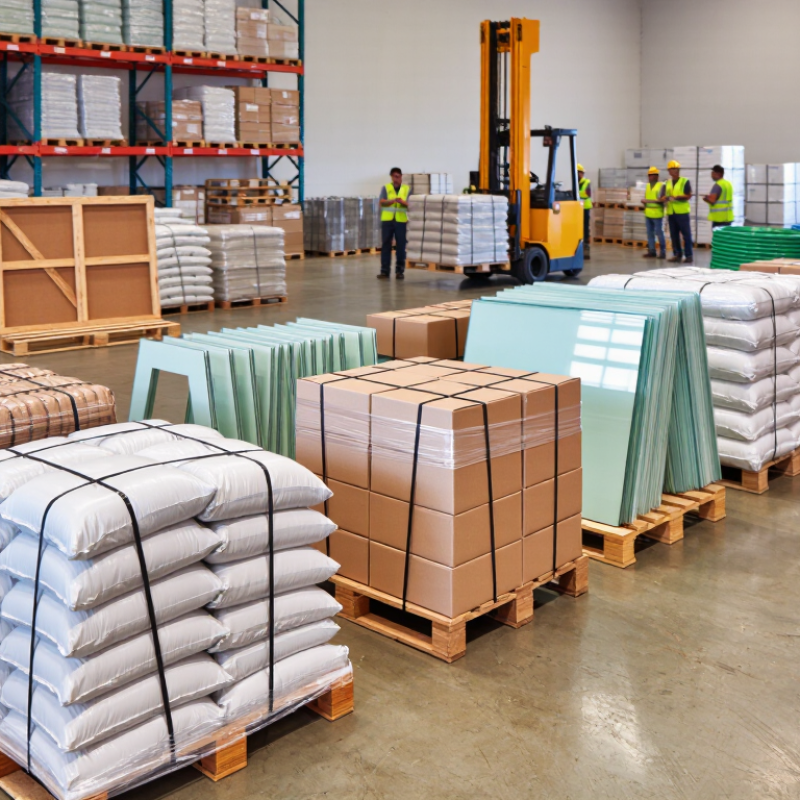
China’s construction materials packaging suppliers design and produce packaging for cement, mortar, tiles, insulation, hardware, and related products. They may provide woven bags, valve sacks, paper bags, cartons, pallets, protective film, and custom labels. Their role is more than printing a logo. They must protect materials from moisture, tearing, dust, and rough handling during storage and transport.
An experienced supplier studies the product’s weight, filling method, stacking height, and destination climate. For example, a cement bag may need strong seams and an inner moisture barrier. Tile packaging may require corner protection and rigid dividers. Reliable suppliers should provide material specifications, production samples, quality records, and clear inspection procedures. Independent testing can confirm strength and moisture resistance. A factory visit is useful, but it is not perfect. Documents can look complete while daily production still varies.
Tips: Ask for samples from regular production, not only showroom samples. Check bag dimensions, seam strength, print clarity, and pallet stability. Confirm minimum order quantities, lead times, replacement terms, and export documents in writing. A low unit price may hide weak material or excessive waste. I have seen packaging fail because the product weight was underestimated. That mistake is expensive. Careful suppliers welcome practical questions and explain limitations honestly.
China Top Construction Materials Packaging Suppliers? - What Are Construction Materials Packaging Suppliers?
| Packaging Supplier Category | Common Packaging Material | Typical Packaging Formats | Typical Load or Volume | Construction Materials Served | Main Advantages | Important Selection Criteria |
|---|---|---|---|---|---|---|
| Woven Bag Packaging Suppliers | Polypropylene woven fabric, with optional polyethylene liner | Valve bags, open-mouth bags, block-bottom bags | Usually 25–50 kg per bag | Cement, mortar, tile adhesive, dry mix, sand, minerals | High tear resistance, low transport weight, efficient pallet stacking | Fabric strength, seam quality, moisture protection, filling compatibility |
| Multiwall Paper Sack Suppliers | Kraft paper with optional polymer or moisture-barrier layers | Sewn sacks, pasted valve sacks, pinch-bottom sacks | Usually 10–50 kg per sack | Cement, gypsum powder, plaster, grouts, powdered additives | Good printability, efficient filling, paper-based construction options | Paper ply count, burst strength, humidity resistance, dust control |
| Flexible Intermediate Bulk Container Suppliers | Woven polypropylene, with coated or uncoated fabric options | Standard FIBCs, baffle bags, conductive bags, sift-proof bags | Commonly 500–2,000 kg per container | Aggregates, mineral powders, cement additives, recycled materials | Large capacity, lower packaging volume, forklift and lifting compatibility | Safe working load, safety factor, lifting loops, discharge design, liner fit |
| Plastic Pail and Bucket Suppliers | High-density polyethylene or polypropylene | Lidded pails, tamper-evident buckets, stackable containers | Generally 5–25 liters | Paint, coatings, sealants, construction chemicals, adhesives | Leak resistance, resealability, easy handling, chemical compatibility | Wall thickness, lid seal, handle strength, chemical resistance, stacking stability |
| Drum and Pail Packaging Suppliers | Steel, high-density polyethylene, or fiberboard | Open-head drums, tight-head drums, lined fiber drums | Approximately 20–220 liters | Resins, curing agents, solvents, liquid additives, specialty chemicals | Strong protection, secure closures, suitability for liquid products | UN certification where required, lining compatibility, closure type, corrosion resistance |
| Stretch Film and Wrapping Material Suppliers | Linear low-density polyethylene film | Hand rolls, machine rolls, pre-stretched film, protective hood film | Common film thickness: 17–23 micrometers | Bagged cement, bricks, tiles, packaged boards, palletized materials | Load stabilization, dust protection, moisture and abrasion resistance | Tensile strength, puncture resistance, elongation, cling, wrapping equipment |
| Corrugated Carton Suppliers | Single-wall or double-wall corrugated fiberboard | Regular slotted cartons, die-cut boxes, partitioned cartons | Designed for small and medium product loads | Tiles, hardware, tools, fittings, lighting, small construction components | Lightweight cushioning, printable surfaces, efficient warehouse handling | Board grade, edge-crush strength, moisture resistance, dimensional accuracy |
| Wooden Crate and Pallet Suppliers | Solid wood, plywood, or engineered wood | Pallets, open crates, closed crates, export cases | Customized for heavy or oversized loads | Glass, stone, sanitary ware, machinery, large fixtures | High structural protection, shock resistance, easy forklift access | Load-bearing design, moisture treatment, fastener quality, ISPM 15 compliance for exports |
Note: Load capacities, dimensions, and material specifications are typical industry ranges. Final requirements depend on product density, filling method, transport conditions, storage duration, and applicable regulations.
FAQS
They produce woven bags, paper sacks, cartons, pallets, films, and protective dividers. Packaging must resist moisture, tearing, dust, and rough handling. The right design depends on product weight and transport conditions.
Request samples from regular production, not only showroom displays. Check dimensions, seam strength, print clarity, and pallet stability. A beautiful sample can still fail.
Cement bags often need strong seams and an inner moisture barrier. Confirm load capacity before approval. Underestimating weight can cause expensive failures.
Use corner protection, rigid dividers, and stable cartons. Test packages during stacking and vibration. Loose dividers may let tiles collide during transport.
Ask for material specifications, batch records, inspection reports, and traceability details. Request clear tolerances for weight and dimensions. Documents help, but they do not replace testing.
Conduct compression, drop, moisture, vibration, and temperature tests. Heavy products need recorded seam and stacking results. Independent inspection can reveal weaknesses before shipment.
Include tooling, printing, inland transport, customs handling, inspections, and replacement costs. A cheaper package may create more site waste. That hidden cost is easy to miss.
Confirm sample approval dates, production capacity, loading schedules, and port arrangements. Request a written timeline with buffer days. Fast promises are not always realistic.
Yes. Review damage rates, response time, delivery accuracy, and corrective actions. One successful shipment proves very little. I might still overlook a warehouse weakness, so keep testing.
Conclusion
Construction Materials Packaging suppliers provide protective, practical, and customized packaging solutions for products such as cement, tiles, glass, pipes, metal components, insulation, and other building materials. In China, commonly used options include woven bags, kraft paper sacks, plastic films, cartons, wooden crates, pallets, and reinforced containers. The right choice depends on product weight, shape, moisture sensitivity, handling requirements, and transportation distance.
This article explains how buyers can select and evaluate Chinese suppliers by reviewing material quality, production capacity, customization services, certifications, communication, and previous experience. It also considers the industries these suppliers commonly serve, including construction, infrastructure, manufacturing, logistics, and home improvement. To compare suppliers effectively, buyers should assess total cost rather than unit price alone, while also examining packaging durability, minimum order quantities, lead times, shipping arrangements, payment terms, and after-sales support. A balanced evaluation helps ensure reliable Construction Materials Packaging that protects goods and supports efficient delivery.