
CE & UN Certified 1000L IBC Containers
Explore our engineering-grade 1000L Intermediate Bulk Containers engineered for high-density liquid storage, international transport, and regulatory compliance.
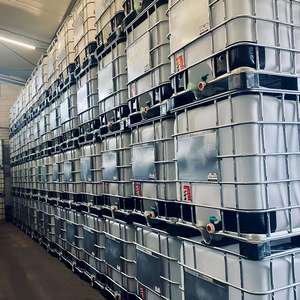
Reconditioned 1000L Steel Frame IBC Tank
- High-Density HDPE Inner Bottle
- Galvanized Steel Tubular Frame
- Fully Pressure-Tested & Cleaned
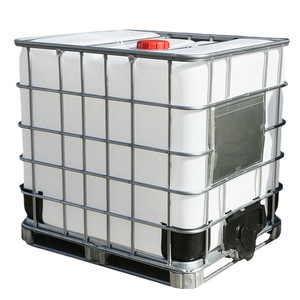
1000L Standard HDPE Chemical IBC Container
- UN 31HA1/Y Rating Compliant
- DN50/DN80 Integrated Valves
- UV-Stabilized Outer Casing
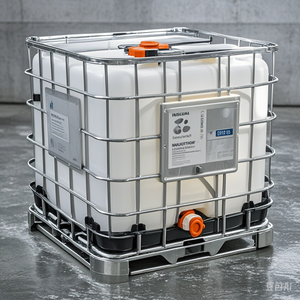
Thermal & Dustproof 1000L IBC Tank Cover
- Weatherproof Thermal Protection
- Heavy-Duty Waterproof Fabric
- Custom Top Inspection Cutouts
Heavy-Duty Refurbished 1000L IBC Tote
- Zero-Leakage Valve Certification
- Eco-Friendly Circular Lifecycle
- Cost-Optimized Industrial Grade
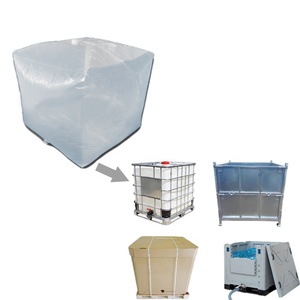
1000L Foldable Heavy-Duty Paper IBC Tote
- Food-Grade Sterility Liner Bags
- Space-Saving Collapsible Design
- 100% Recyclable Paperboard
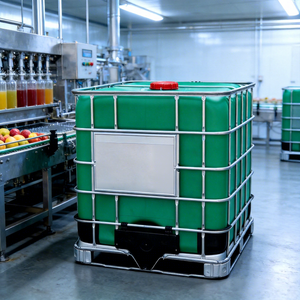
Anti-Spark EX-Proof 1000L Chemical IBC
- Conductive Anti-Static Layer
- Ex-Zone 1 & Zone 2 Certified
- Coating & Solvent Rated Valve
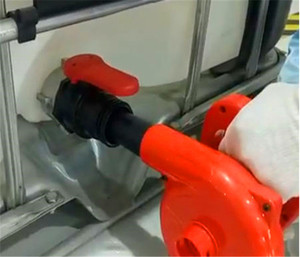
Upgraded Thickened 1000L Food-Grade IBC
- FDA & EU Food Contact Safe
- Enhanced Wall Thickness (HMW-HDPE)
- Heavy Load Stackable Base
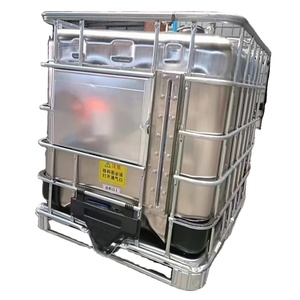
1000L SS304/SS316L Stainless Steel IBC Tank
- Sanitary Grade Surface Finish
- High-Pressure & Thermal Resistance
- 30+ Years Operational Life
Understanding CE Certification & UN Transport Standards for 1000L IBC Totes
Technical evaluation of compliance directives, structural integrity standards, and safety specifications governing liquid bulk container manufacturing.
Regulatory Distinction: CE Marking vs. UN Dangerous Goods Certification
In global industrial logistics, confusion often arises regarding CE certification versus UN packaging approvals. While CE certification confirms compliance with European Union health, safety, and environmental protection standards (specifically Pressure Equipment Directive 2014/68/EU when applicable), UN approval (such as 31HA1 or 31A) governs transport safety under ADR, RID, IMDG, and ICAO codes. Premium manufacturers engineering 1000L IBC totes supply dual-certified solutions to ensure seamless compliance from operational processing floors to international maritime routes.
Material Composition & Molecular Density
The inner container of a high-performance composite 1000L IBC is blow-molded using High-Molecular Weight, High-Density Polyethylene (HMW-HDPE). This material exhibits high environmental stress crack resistance (ESCR), resisting degradation caused by aggressive surfactants, aromatic hydrocarbons, and organic acids.
Structural Steel Cage Rigidity
The external framework consists of zinc-galvanized tubular steel gridwork welded at load points. This cage protects the inner HDPE liner against side impacts during forklift handling and dynamic pressure during sea transit. Top steel crossbars further prevent container swelling during stack loading.
Anti-Static & Ex-Zone Compliance
For chemical environments classified under ATEX / Ex-Zones 1 and 2, specialty anti-spark IBCs feature a multi-layer outer conductive polyethylene jacket linked to an integrated grounding mechanism. This safely dissipates static charges accumulated during high-speed fluid filling.
1000L IBC Tote Material & Application Comparison Matrix
Evaluate exact engineering specifications to match liquid viscosity, chemical compatibility, and thermal conditions with the appropriate container architecture.
| IBC Tote Variant | Inner Liner / Body Material | Frame / Outer Casing | UN Mark / Certification | Optimal Industry Application | Thermal Range |
|---|---|---|---|---|---|
| Standard Composite 1000L | HMW-HDPE Single Layer | Galvanized Steel Tubular Cage | UN 31HA1 / CE Approved | General Chemicals, Water, Agrochemicals | -20°C to +60°C |
| Food-Grade Pure IBC | 100% Virgin Food-Contact HDPE | Steel Frame / Plastic Pallet | FDA 21 CFR / EC 1935/2004 | Liquid Food, Syrups, Oils, Flavors | -20°C to +70°C |
| Anti-Static Ex-Proof IBC | 3-Layer Conductive Outer Shell | Grounding Steel Gridwork | ATEX / Ex-Zone 1 & 2 / UN 31HA1 | Paints, Solvents, Flammable Resins | -20°C to +50°C |
| SS304/SS316L Metallic IBC | Austenitic Stainless Steel | Heavy-Duty Integrated Frame | UN 31A / PED 2014/68/EU CE | Pharma Incredients, Corrosive Acids | -40°C to +150°C |
| Collapsible Paper/Flexi IBC | Aseptic Multi-Layer PE Liner Bag | Heavy-Duty Corrugated Outer Sleeve | ISO 9001 / ISTA 3E Tested | Non-Hazardous Bulk Export Liquids | +5°C to +50°C |
| Reconditioned / Refurbished | Washed & Pressure-Tested HDPE | Repaired Steel Skeleton | Re-certified UN / Non-UN Grades | Industrial Waste Water, Construction Liquids | -10°C to +50°C |
Future Procurement Trends in Industrial Liquid Packaging
How global ESG regulations, circular supply chains, and digital tracking technologies are reshaping B2B IBC tote sourcing strategy.
Mass-Balance PCR Integration
Global corporate sustainability targets drive demand for post-consumer recycled (PCR) resin integration in non-food IBC components. Leading manufacturers now offer outer layer PCR inner bottles that maintain UN structural integrity while slashing Scope 3 embodied carbon emissions by up to 28%.
IoT Digital Twin & Smart Telemetry
Modern 1000L IBC fleets are rapidly transitioning from static units to smart, connected assets. Integrated cellular/GPS sensors monitor fill level, real-time location, temperature spikes, and impact telemetry—giving logistics managers complete end-to-end supply chain visibility.
Closed-Loop Reconditioning Ecosystems
Forward-thinking buyers are shifting focus from purchasing single-use containers to long-term lifecycle management contracts. Industrial wash systems and standardized replacement parts allow cages to be reused across 5 to 10 bottle replacement cycles, dramatically lowering Total Cost of Ownership (TCO).
Advanced Manufacturing & Polymer Technologies
Next-generation polymer treatments and structural frame innovations elevating container performance under severe physical stress.
Fluorination & Multi-Layer EVOH Barriers
To prevent permeation of aggressive non-polar solvents and gases, inner bottles are subjected to Fluorination (Level 5 treatment) or co-extruded with an internal Ethylene Vinyl Alcohol (EVOH) barrier layer. This prevents wall softening, structural swelling, and volatile organic compound (VOC) emissions.
Optimized Valve & Gasket Systems
Discharge valves represent the most critical leak vector in fluid handling. Next-gen butterfly and ball valves incorporate Viton (FKM), EPDM, or PTFE encapsulations, engineered for zero-drip cutoffs and high mechanical cycle counts under continuous industrial operation.
Hybrid Ergonomic Pallet Bases
Modern bottom pallet structures have evolved from classic wood to composite steel-plastic hybrid designs. Four-way forklift entry pockets with rounded corner guides reduce puncture risks during high-density container maneuvering in automated warehousing systems.
Why Partner With Our Global Manufacturing Network
Combining world-class production infrastructure, decades of rigid packaging heritage, and strict quality control standards to safeguard your valuable chemical assets.
Global Manufacturing Infrastructure
Leveraging dozens of modern manufacturing plants and partner facilities across Europe, North America, and Asia-Pacific. Our local-for-local production footprint guarantees rapid order response times and mitigates international freight supply disruptions.
Full ISO 16106 QA Testing
Every batch undergoes rigorous quality assurance testing under ISO 16106 standards, including pneumatic leak detection (20 kPa pressure test), hydraulic internal pressure testing (100–200 kPa), 2.8-meter drop tests, and 28-day stacking load evaluations.
Custom OEM & Service Customization
We provide full customization including custom valve configurations, anti-glare color tinting, private label thermal branding, specialized drain spouts, and customized fleet management programs tailored to your precise operational workflow.
Frequently Asked Questions (FAQ) for 1000L IBC Sourcing
Expert engineering answers to common technical queries regarding certifications, compatibility, storage mechanics, and freight logistics.
What specific testing is required for a 1000L IBC to achieve CE & UN certification?
To qualify for UN 31HA1 certification for Packing Group II and III liquid transport, an IBC design prototype must pass four mandatory physical tests: a 2.8-meter drop test at -18°C, a 28-day hydraulic internal pressure test (minimum 100 kPa), a 28-day top stacking test under 4,000 kg load, and a 100% pneumatic leakproofness check at 20 kPa.
How do I determine if my chemical product requires a SS304/316L Metallic IBC or HDPE IBC?
HDPE composite IBCs are suitable for most inorganic acids, alkalis, water-based solutions, and non-aggressive organics up to 1.9 Specific Gravity. However, highly corrosive concentrated nitric acid, aggressive organic solvents (like methylene chloride), or high-temperature processes exceeding 70°C necessitate SS304 or SS316L stainless steel containers.
What is the dynamic stacking height capacity for full 1000L IBC Totes?
Our heavy-duty steel grid cage IBCs are engineered for 2-high stacking during dynamic transport (shipping containers or flatbed trucks) and 3-high to 4-high static stacking in warehouse environments, provided liquid specific gravity does not exceed 1.4 and ambient temperature stays within standard parameters.
What valve types are available, and how do I prevent leakage when handling volatile liquids?
We supply integrated DN50 (2-inch) and DN80 (3-inch) Butterfly and Ball discharge valves. For volatile solvents, we recommend a DN50 Ball Valve with PTFE (Teflon) seats and Viton stem O-rings, coupled with a pressure relief cap on the top filling lid to prevent vacuum pressure lock during rapid discharge.
Are reconditioned 1000L IBC totes safe for food-grade or pharmaceutical products?
No. Reconditioned IBCs should strictly never be used for food, beverage, or pharmaceutical applications. Food-grade applications require brand-new inner bottles molded from 100% virgin FDA-compliant resin within a cleanroom manufacturing environment.
How many 1000L IBC totes can fit into a standard 20ft and 40ft ocean shipping container?
A standard 20ft ISO ocean container accommodates 18 to 20 units of 1000L IBC totes (single layer). A 40ft High Cube (HC) container fits 42 to 44 units stacked two high, depending on pallet dimensions and total gross freight weight restrictions.