
Technical Whitepaper: Sourcing Collapsible & Stainless Steel IBCs from Leading Chinese Factories
In modern industrial logistics, the efficiency of liquid and bulk powder transportation directly dictates supply chain profit margins. As global regulatory bodies push for net-zero carbon footprints and stricter chemical packaging regulations, industrial enterprise buyers are aggressively transitioning away from single-use rigid plastic totes (bottled HDPE IBCs) and traditional 55-gallon drums toward high-integrity Collapsible Stainless Steel Intermediate Bulk Containers (IBCs).
As a premiere China-based manufacturer of specialized industrial packaging solutions, our engineering facilities integrate heavy-gauge cold-rolling, precision laser cutting, automated robotic welding, and automated pressure-leak detection. This technical guide outlines the critical engineering specifications, economic calculations, and sourcing parameters necessary when procuring high-performance IBC systems.
Key Sourcing Takeaway: Transitioning from rigid composite totes to collapsible metal IBCs yields an average 75% reduction in return freight volume, increases container payload efficiency by up to 28%, and eliminates single-use plastic liner waste when coupled with reusable food-grade or chemical-grade liquid bags.
1. Architectural Engineering & Structural Integrity of Collapsible IBCs
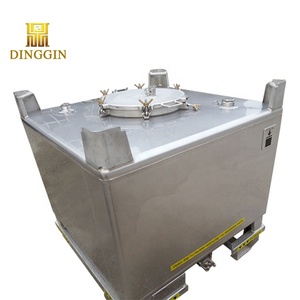
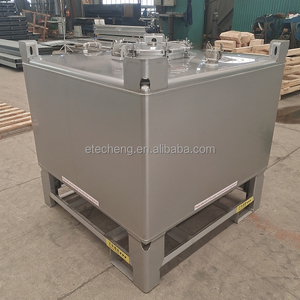
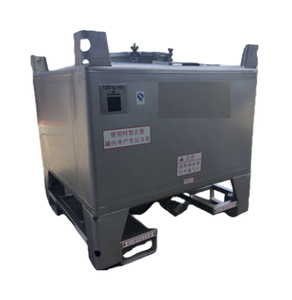
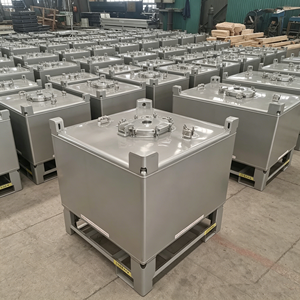
Unlike standard static tanks, a Collapsible IBC must withstand intense multi-directional dynamic loads during ocean, rail, and highway freight while maintaining easy foldability for factory operators. China's top tier manufacturers deploy structural steel frames combined with SUS304 or SUS316L stainless steel panel inserts engineered for maximum yield strength.
Structural Breakdown:
- Drop-Lock Hinge Framework: Precision-cast stainless steel hinges with heavy-duty safety locking pins prevent structural collapse under full load stacking (up to 4-high static stack weight).
- Conical & Sloped Discharge Bases: Bottom pans are stamped with a 5-degree to 15-degree deep dish slope leading directly to a 2-inch or 3-inch sanitary butterfly or ball valve, ensuring liquid residue remains below 50ml per discharge.
- Aseptic Liquid Liner Compatibility: Inner surfaces are deburred and electro-polished to prevent puncturing of multi-layer PE/EVOH pillow liners, barrier liners, or top-fill/bottom-discharge aseptic bags.
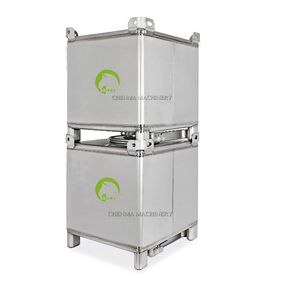
- Stacking Alignment Corners: Heavy-gauge corner posts featuring self-locating alignment shoes ensure rapid crane overhead lifting and forklift maneuverability without panel denting.
2. Material Selection: SUS304 vs. SUS316L vs. Carbon Steel Frames
Selecting the correct metallurgy is vital for avoiding premature stress corrosion cracking (SCC), localized pitting, or product contamination. Below is the material compatibility specification table utilized by our metallurgy team:
| Material Grade | Corrosion Resistance | Primary Industrial Applications | Passivation Standard |
|---|---|---|---|
| AISI 304 / SUS304 | Good resistance to atmospheric, organic acids, & food liquid items | Food & Beverage, Vegetable Oils, Lubricants, Personal Care, Non-corrosive Chemicals | ASTM A967 Citric / Nitric Passivation |
| AISI 316L / SUS316L | Superior resistance to chlorides, aggressive acids, & marine environments | Pharmaceutical Intermediates, Agricultural Pesticides, Hazardous Solvents, Petrochemicals | Electro-polishing Ra ≤ 0.4μm + Pickling |
| Hot-Dip Galvanized Frame | High mechanical impact & exterior weather durability | Outer structural frame of hybrid collapsible IBC containers with internal flexible liners | ISO 1461 Galvanizing Standard |
3. Total Cost of Ownership (TCO) & Sourcing ROI Analysis
Procurement directors often evaluate the upfront capital expenditure (CapEx) of stainless steel or collapsible IBC totes against traditional plastic rigid containers. However, an operational expenditure (OpEx) financial analysis demonstrates rapid payback (typically within 8 to 14 months of continuous loop operation).
Economic Benefits Matrix:
- Reverse Freight Optimization: A standard 40ft ISO high-cube shipping container holds approximately 40 to 44 rigid full IBC tanks. When returned empty in their collapsed state (4:1 or 5:1 folding ratio), a single 40ft container transports up to 180 to 220 collapsed units. This slashes cross-border empty return freight charges by over 70%.
- Elimination of Reconditioning Costs: Rigid HDPE bottles require expensive chemical washing, re-bottle insertion, or incineration after hazardous chemical usage. Collapsible IBCs utilize disposable inner liquid cassette bags, eliminating washing effluents and water treatment compliance fees.
- Elimination of Container Creep & Bulging: Under high ambient temperatures in tropical shipping routes, plastic IBC bottles bulge, compromising stack stability. Stainless steel and metal-frame collapsible IBCs maintain exact dimensions regardless of temperature or internal hydrostatic expansion pressure.
4. Procurement & Industry Growth Trends (2025–2030)
As corporate sustainability directives (ESG) accelerate globally, the industrial bulk packaging market is shifting rapidly towards closed-loop container sharing and high-durability steel assets: