
Featured Industrial Stainless Steel IBC Tanks & Storage Vessels
Precision-manufactured in China under ISO 9001 quality management systems. Tested to meet ASME, UN, and ISO international safety standards for dangerous and non-dangerous liquid payloads.
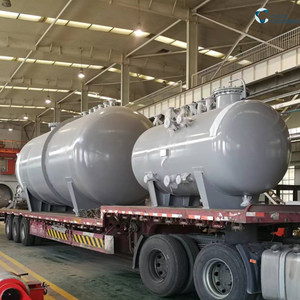
Stainless Steel Pressure Vessel Storage Tank Vertical/Horizontal Design for Fuel Diesel Chemical Water Custom Sizes ASME
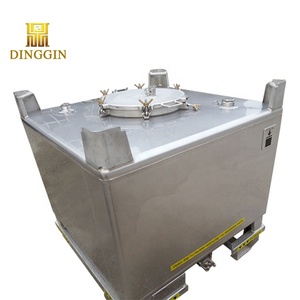
SS304/SS316L China UN Approved 1000l Stainless Steel Ibc Tote tank 1500l Manufacturer For Petrol/oil/chemical/Storage
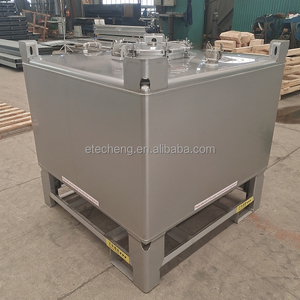
Customize 500L 1000L 1500L 2000L IBC Tank Stainless Steel Tote Tank Intermediate Bulk Containers for Chemical
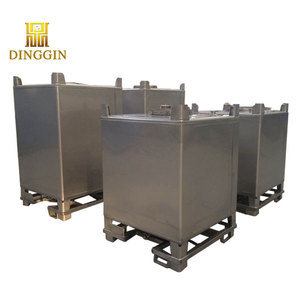
550 Gallon Stainless Steel Material Ibc Tote Cube Water Tank
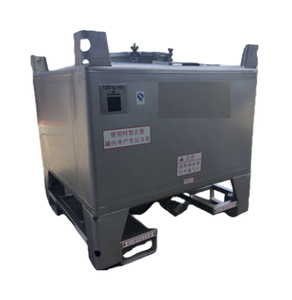
Factory Quality 304 Stainless Steel 1000L Storage IBC Tote Tank for Chemical Material Storage
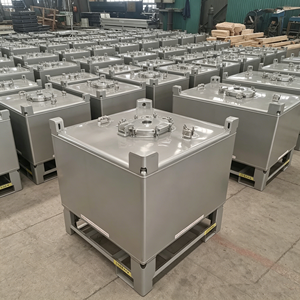
JST Brand 1000L Stainless Steel Stackable Storage IBC Tank Anti-Rust Coating 1 Year Warranty For Corrosion-Resistant Food Use
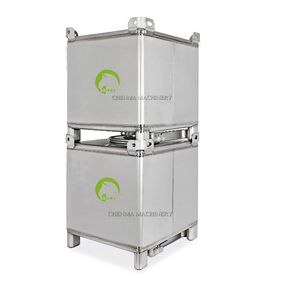
Stackable Stainless Steel IBC tank 500L 1000L 2000L Tote tank with Cooking Jacket for Sale
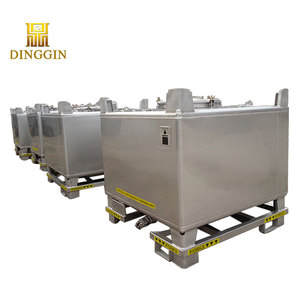
350GAL 550GAL 1500L 2000L STAINLESS STEEL IBC TOTE TANK CONTAINER INTERMEDIATE BULK CONTAINERS SUS304 SUS316L MATERIAL FACTORY
Engineering Principles of Heavy-Duty Stainless Steel IBC Totes
Why leading chemical standardizers and global logistics fleets are upgrading from rigid plastic totes to structural Grade 304 and 316L Stainless Steel Intermediate Bulk Containers.
Industrial Insight: Structural Reliability vs. Total Lifecycle Costs
Traditional composite bottle-in-cage IBC totes present a hidden liability for long-haul chemical logistics: polymer degradation, environmental stress cracking, and limited 2-to-5-year service horizons. China’s premier stainless steel IBC manufacturers have pioneered precision cold-rolled vessel geometries welded via automated Orbital TIG systems. By utilizing ASTM A240 grade SUS304 and SUS316L alloys, these metal tote containers resist high-temperature chemical reactions, extreme ambient weather conditions, and aggressive internal pressures during international maritime transport.
UN 31A/Y Certification Standard
Certified under Chapter 6.5 of the UN Recommendations on the Transport of Dangerous Goods. Tested for 2-bar hydrostatic pressure, drop impact, stacking integrity up to 3-high fully loaded, and vibration resistance under IMDG, ADR, and RID international freight codes.
Passivation & Surface Finish
Internal surfaces undergo full acid pickling and chemical passivation per ASTM A380 standards, eliminating free iron contaminants. Available in 2B industrial mill finish, sanitary Ra < 0.4 µm mechanical polish, or electro-polishing for sterile pharmaceutical and food ingredients.
Optimized Drainage & Zero Heel
Precision die-stamped deep bottom heads feature 1-piece seamless construction with a one-way slope toward the 2" or 3" bottom discharge ball or butterfly valve. Ensures 99.9% complete fluid evacuation, eliminating expensive chemical residues and reducing washdown volume.
Why Leading Global Brands Source IBCs from China’s Premier Tier-1 Factories
Leveraging advanced manufacturing clusters, robotics-driven fabrication lines, and direct maritime logistics to deliver unmatched value, customization, and certified safety compliance.
| Evaluation Parameter | China Tier-1 Stainless Steel IBC | Standard Rigid Plastic Bottle IBC | Reconditioned Composite Tote |
|---|---|---|---|
| Usable Service Life | 20 to 30+ Years (Heavy Repetitive Use) | 2 to 5 Years Maximum | 1 to 2 Cycles (High Risk) |
| Hazardous Goods Compliance | UN 31A/Y (Packing Groups II & III) | Limited UN Ratings (Degrades over time) | Conditional / Often Restricted |
| Fire Safety & Thermal Resistance | Non-combustible steel (NFPA 30 Compliant) | Highly Flammable Melt Risk | Melt & Contamination Risk |
| Stacking Payload Security | Up to 3-High Loaded (Static Stacking) | 2-High Maximum (Risk of bowing) | Single Tier / Strict Limits |
| Total Cost of Ownership (TCO) | Lowest TCO over 10-year operational lifecycle | High recurring replacement expense | Unpredictable maintenance overhead |
OEM & Custom Engineering Design Services
China's leading IBC suppliers do not merely produce standard cube tanks—they engineer custom liquid handling hardware. From integrated thermal dimple jackets for steam or hot-water heating of high-viscosity resins, lubricants, and syrups, to internal agitation baffles, level-gauge sight glasses, and top-mounted electric mixers, custom OEM specifications are fabricated with tight dimensional tolerances compatible with automated filling lines and standard ISO shipping containers.
Global Regulatory Approvals & Testing Facilities
Full traceability is guaranteed from steel mill test certificates (MTC per EN 10204 3.1) to end-of-line quality control. Factory testing rigs perform pneumatic leak detection, hydrostatic pressure holding tests, top/bottom lift lug load tests, and weld non-destructive testing (NDT / Radiography). Certified by international classification societies including China Classification Society (CCS), Bureau Veritas (BV), DNV GL, and Lloyd's Register.
Key Development Trends Reshaping the Global Industrial IBC Market
As environmental regulations tighten globally, industrial packaging is undergoing a profound paradigm shift driven by circular economy mandates, IoT fleet connectivity, and hazardous material safety standards.
1. Accelerated ESG & Circular Economy Transition
Single-use and short-lifespan plastic packaging face escalating carbon taxes and landfill bans across North America and the EU. Stainless steel IBC totes offer a 100% closed-loop recyclable solution. Their multi-decade durability enables fleet operators to achieve net-zero carbon packaging goals while reducing plastic waste emissions by up to 85% per ton of chemical transported.
2. Smart IoT Telematics Integration
Modern stainless steel tote tanks are increasingly outfitted with ATEX/IECEx certified smart tracking sensors. Integrated GPS, internal temperature probes, hydrostatic pressure sensors, and liquid level indicators transmit real-time telemetry via cellular or satellite networks, giving logistics managers total visibility over high-value chemical cargos in transit.
3. High-Viscosity Thermal Temperature Control
With the rise of specialized polymer resins, hot-melt adhesives, and food-grade concentrates, there is surging demand for heated IBC totes. Chinese manufacturers are leading innovations in low-profile dimple jackets, steam coils, and integrated electric heating blankets capable of maintaining fluid temperatures up to 150°C during cold-climate transit.
Future Procurement Trends & Sourcing Roadmap for B2B Purchasing Managers
How global procurement officers can mitigate supply chain risk, optimize freight density, and negotiate high-value contract terms with Chinese OEM IBC manufacturers.
1. Total Cost of Ownership (TCO) Procurement Shift
Leading procurement teams are shifting away from initial purchase price (CapEx) toward Total Cost of Ownership evaluation models. While a stainless steel IBC requires a higher initial outlay than a plastic tote, its 25-year service life amortizes the container cost down to pennies per trip. When factoring in zero container disposal fees, eliminated product loss from punctures, and high secondary market residual values, metallic IBC totes deliver superior return on investment (ROI).
2. Modular Standardization & Freight Density Optimization
Future packaging fleet strategies emphasize dimensional standardization tailored to ISO ocean containers and standard international flatbed trucks. Ordering standardized 350-gallon (1,325L) or 550-gallon (2,080L) square cube profiles allows buyers to maximize payload cubic space—fitting up to 18 units per 20ft ISO container—significantly lowering overseas freight costs per gallon of fluid.
3. Material Grade Matching to Chemical Compatibility
Avoid over-specifying or under-specifying raw materials. Grade 304 stainless steel is ideal for industrial solvents, motor oils, paints, and general food products. However, for aggressive acids, chlorinated compounds, saline solutions, and high-purity active pharmaceutical ingredients (APIs), specifying Grade 316L (with 2-3% Molybdenum content) is essential to prevent pitting and crevice corrosion.
4. Supplier Quality Audits & Factory Verification
When selecting a manufacturing partner in China, verify their in-house metallurgical testing equipment, automated seam-welding capabilities, and UN certification credentials. Request third-party inspection reports (such as SGS, TUV, or Intertek) verifying wall thickness tolerances, hydrostatic test pressures, and weld radiograph samples before commissioning volume production runs.
Frequently Asked Questions (FAQ) for IBC Tank Procurement
Answers to common engineering, regulatory, and logistics queries raised by industrial buyers, fleet operators, and chemical engineers.
Q What is the main difference between Grade 304 and Grade 316L Stainless Steel IBCs?
Grade 304 contains 18% chromium and 8% nickel, providing excellent corrosion resistance for general chemicals, lubricants, food products, and industrial oils. Grade 316L includes an additional 2-3% Molybdenum and lower carbon content, providing superior resistance to chlorides, acidic compounds, marine environments, and high-purity pharmaceutical ingredients.
Q What does UN 31A/Y approval mean for international transport?
UN 31A/Y is an international regulatory rating under the United Nations Dangerous Goods code. "31A" designates a rigid metallic intermediate bulk container for liquids, while "Y" certifies that the vessel is approved to transport Packing Group II (medium danger) and Packing Group III (low danger) liquid hazardous materials across ocean, rail, and highway routes worldwide.
Q How are stainless steel IBC tote tanks cleaned and sanitized between chemical batches?
Stainless steel totes feature smooth internal surfaces (passivated or polished) and sloping bottoms that accommodate automated Clean-In-Place (CIP) rotary spray balls. They withstand high-pressure hot water washes, caustic chemical detergents, steam sterilization (SIP), and solvent rinses without degrading the tank walls or gaskets.
Q Can stainless steel IBCs be safely stacked when fully loaded with liquid?
Yes. Heavy-duty stainless steel IBC totes are engineered with structural corner posts and top alignment stacking lugs. They are rated for static stacking up to 3-high fully loaded in warehouse environments, and dynamic stacking 2-high during freight transport, significantly optimizing storage footprint.
Q What custom capacities and dimensional profiles are available from Chinese manufacturers?
Standard capacities range from 500 Liters (130 Gallons) up to 2,000 Liters (550 Gallons). Custom manufacturers can fabricate specialized vertical or horizontal tanks up to 5,000 Liters, as well as low-profile cube designs tailored to fit specific transport vehicle dimensions or low-clearance plant filling rooms.
Q What valve and gasket options are recommended for aggressive chemical storage?
Standard configurations include 2-inch or 3-inch 316SS full-port ball valves or sanitary butterfly valves. Gaskets and seal materials are selected according to chemical compatibility, including PTFE (Teflon) for universal chemical resistance, Viton (FKM) for fuels and solvents, or EPDM for food and pharmaceutical applications.
Q How do heated dimple jackets work on stainless steel IBC tanks?
Dimple jackets are secondary outer steel skins spot-welded to the vessel wall, creating channels for steam, hot water, or thermal oil to circulate. Heat transfers through the stainless steel wall to maintain temperature or lower the viscosity of heavy fluids (such as wax, resin, or chocolate) without direct chemical contact.
Q What inspection and maintenance routines are required for reusable metal IBCs?
Under UN regulations, metal IBCs require periodic inspection every 2.5 years (leakproofness test and visual inspection of valves/gaskets) and full pressure testing every 5 years. Routine maintenance involves checking pressure relief vents, replacing worn valve seals, and inspecting stacking frames for mechanical damage.
Request a Custom Quotation for Stainless Steel IBC Tanks
Partner with China’s top-tier certified IBC manufacturers. Contact our technical sales engineering team today to receive CAD drawings, material spec sheets, UN test documentation, and competitive wholesale volume pricing.