
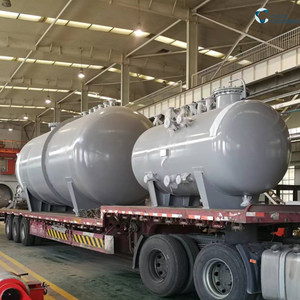
Stainless Steel Pressure Vessel Storage Tank Vertical/Horizontal Design for Fuel Diesel Chemical Water Custom Sizes ASME
- ASME Section VIII Div 1 Certified
- Vertical & Horizontal Configurations
- High-Pressure & Temperature Rated
Select from our premium lineup of heavy-duty stainless steel totes, composite reconditioned units, and custom pressure vessels designed for rigorous chemical, petroleum, and food-grade operations.
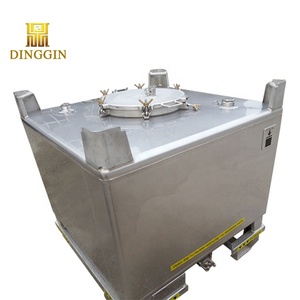
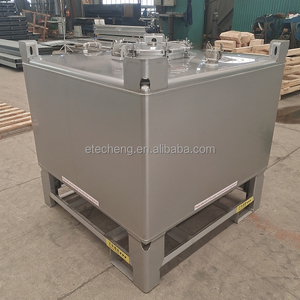
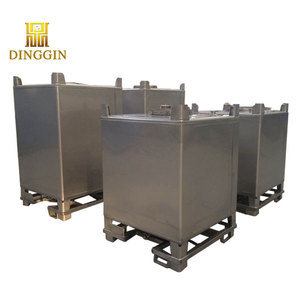
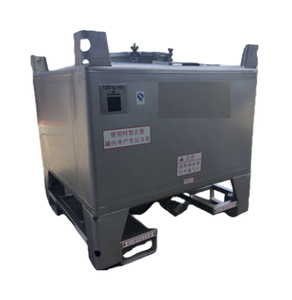
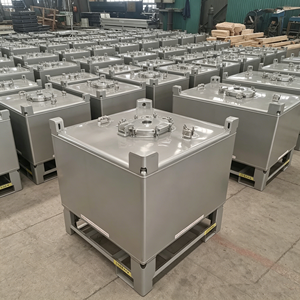
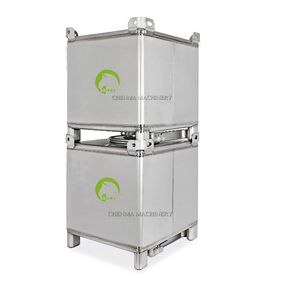
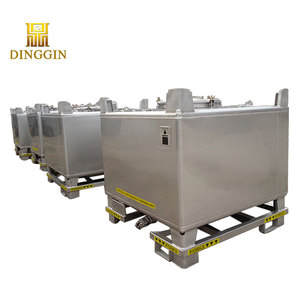
The global industrial liquid packaging landscape is undergoing a systemic transition toward structural sustainability, material longevity, and rigorous circular management. As multinational chemical giants, lubricant refiners, and food ingredient processors re-evaluate their supply chains under scope 3 emissions mandates, the demand for high-integrity Intermediate Bulk Containers (IBC Totes)—spanning both precision-reconditioned composite totes and heavy-duty stainless steel (SUS304/SUS316L) units—has reached unprecedented levels.
China has established itself as the global epicenter for industrial packaging manufacturing, leveraging advanced robotic TIG welding, automated multi-stage hot-water reconditioning lines, and comprehensive quality assurance frameworks. Partnering with top-tier Chinese manufacturers grants global procurement teams access to containers certified to international standards, including UN 31A/Y design approvals, ASME Section VIII compliance, and ISO 16106 packaging certification.
Every reconditioned and newly fabricated IBC container undergoes hydrostatic pressure tests, drop testing, and pneumatic leak testing under strict UN 31A/Y protocols for dangerous goods transport (Class 3, 6.1, 8, and 9 materials).
Leading Chinese reconditioning facilities utilize high-pressure automated washing, ultrasonic nozzle cleansing, and optical wall inspection to restore composite plastic inner bottles, diverting thousands of tons of high-density polyethylene (HDPE) from landfill streams annually.
For ultra-corrosive, high-temperature, or high-purity applications, custom stainless steel IBCs engineered from SUS304 or SUS316L provide 30+ year service lifecycles with fully integrated heating jackets, sanitary tri-clamp valves, and pressure-relief systems.
Integrating deep technical mastery, massive production scalability, and full-lifecycle fleet management into a single accountable manufacturing platform.
Featuring automated plasma welding seamers, laser-guided robotic frame bending, and cleanroom extrusion facilities for virgin and post-consumer recycled (PCR) HDPE inner bottles. Manufacturing precision ensures zero seam variance and structural stackability up to 4-high fully loaded containers.
Comprehensive batch testing includes spectrographic material alloy analysis, wall-thickness ultrasonic mapping, and 100% inline pressure testing at 20kPa to 200kPa based on design specifications. Quality controls match or exceed European (CEN) and American (DOT) standards.
Leading Chinese suppliers work in tandem with global collection and reconditioning networks spanning 170+ locations worldwide. This allows buyers to source locally in Asia and utilize global collection, wash, and rebottling facilities across Europe, North America, and LATAM.
Selecting the optimal Intermediate Bulk Container architecture requires evaluating chemical compatibility, pressure exposure, transport hazard classes, target operational lifecycle, and Total Cost of Ownership (TCO). Below is a comprehensive engineering comparison for B2B procurement officers.
| Performance Specification | Reconditioned Composite IBC (1000L HDPE) | Stainless Steel IBC (SUS304) | Heavy-Duty Stainless Steel (SUS316L) |
|---|---|---|---|
| Primary Target Media | General industrial chemicals, lubricants, non-flammable liquids, agricultural inputs | Flashing fuels, solvents, paints, food-grade oils, high-temp liquids | Aggressive acids, halogenated compounds, high-purity pharma active ingredients |
| Design Service Life | 2 - 5 Years (Multiple Re-bottle cycles) | 20 - 30+ Years | 25 - 35+ Years |
| UN Transport Approval | UN 31HA1/Y (Hazard Packing Groups II & III) | UN 31A/Y (Packing Groups I, II & III) | UN 31A/Y (Packing Groups I, II & III) |
| Pressure & Vacuum Rating | Relief settings typically 0.2 bar / standard gravity discharge | Design pressure up to 1.75 bar / ASME certified options | High pressure design > 2.0 bar / ASME pressure vessel compliant |
| Cleanability & Sterilization | High-pressure water washing / bottle replacement | CIP (Clean-in-Place) & Steam Sterilization (SIP) compatible | Electropolished internal finish (RA < 0.4µm) for sterile CIP/SIP |
| Carbon Reduction (ESG Impact) | Saves ~105 kg CO2e per cycle vs. virgin container production | Zero resin waste; 100% recyclable metallic value recovery | Maximum longevity; lowest lifecycle carbon footprint per ton moved |
As international environmental regulations tighten and operational margins demand greater supply chain transparency, B2B purchasing strategies for IBC totes are rapidly shifting. Strategic buyers must account for three major macro-trends:
Modern IBC totes are increasingly outfitted with ATEX/IECEx certified cellular and satellite IoT sensors. Real-time monitoring now tracks level measurement, internal temperature, hydrostatic pressure spikes, GPS location, and unauthorized opening detection during transit.
Regulatory frameworks such as the EU Packaging and Packaging Waste Regulation (PPWR) are setting minimum Post-Consumer Recycled (PCR) resin content requirements for industrial outer cages and components. Leading Chinese suppliers are producing composite totes with up to 30% PCR outer layers without sacrificing UN stacking strength.
With high-value chemical syntheses requiring strict thermal control during long ocean voyages, demand is surging for customized stainless steel totes equipped with dimple cooling/heating jackets, rock-wool insulation shells, and agitation ports.
Detailed answers addressing international compliance, cleaning protocols, material metallurgy, and import logistics from China.
A washed/washed-reconditioned IBC retains its original plastic inner bottle, which undergoes thorough automated high-pressure hot-water wash cycles, chemical neutralisation, leak testing, and valve replacement. A remanufactured (rebottled) IBC pairs a newly extruded virgin/PCR HDPE bottle with an inspected, repaired, and re-certified steel outer cage. Rebottled units carry full UN 31HA1 certification for hazardous chemical transport where cross-contamination risks must be zero.
SUS304 (18/8 Chrome-Nickel) is suitable for general solvents, fuels, lubricants, food-grade syrups, and mild acids. SUS316L (containing 2-3% Molybdenum and lower carbon content) is mandatory for aggressive chemicals, chlorides, phosphoric/acetic acid mixtures, high-salinity solutions, and ultra-pure pharmaceutical intermediates where pitting corrosion and metal leaching must be prevented.
Inspect the permanent embossed UN code plate on the container body. It must state the UN symbol, packaging code (e.g., 31A for steel liquids, 31HA1 for composite liquids), packing group designation (Y for Groups II & III, X for Group I), maximum gross mass, hydrostatic test pressure rating, month/year of manufacture, and approval country mark (e.g., "CN").
Yes. Unlike standard lightweight composite plastic IBCs, heavy-duty stainless steel totes can be engineered and stamped according to ASME Section VIII Division 1 or international pressure vessel codes, enabling safe pneumatic pressure discharge (typically rated between 1.5 to 3.0 bar working pressure) using dry nitrogen or compressed air.
Standard UN-approved composite plastic IBCs are typically rated for 2-high stacking during marine transport and up to 4-high static stacking in warehouse environments. Heavy-duty stainless steel IBCs feature reinforced corner posts and heavy-gage top framing that permit up to 3-high dynamic stacking in cargo ships and 6-high static warehouse stacking, dramatically optimizing floor space utilization.
Top manufacturers offer customizable gasket and valve seat materials. Standard options include EPDM (for general water-based media and mild acids), Viton/FKM (for aromatics, hydrocarbons, and strong fuels), PTFE/Teflon (for universal aggressive chemical resistance), and FDA-compliant silicone (for food and pharma hygiene standards).