
UN-Certified Intermediate Bulk Containers (8 Core Models)
Explore our rigorous compliance portfolio of UN-certified IBC tanks. Designed for chemical transport, pharmaceutical grade purity, UV-sensitive compounds, and heavy industrial fluids.
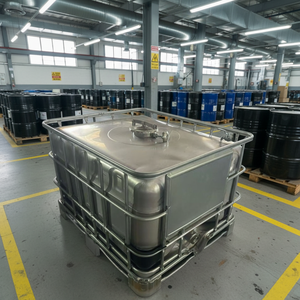
Durable 300L Compact IBC Tank with UV Protection
Engineered with high-density UV-stabilized polymer matrix for small-batch chemical distribution. Chemical resistant frame engineered for high-density liquids.
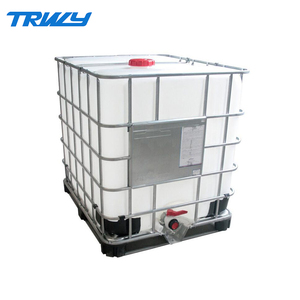
Standard 1000 Liters UN Approved Composite IBC
Industry-standard UN 31HA1 composite IBC featuring a tubular steel grid cage, integrated pallet, and multi-layer extruded HMW-HDPE bottle.
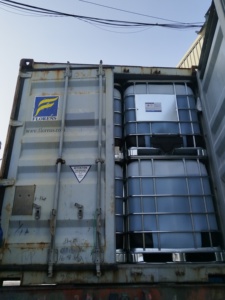
1000L Industrial Grade Ethylene Glycol Export IBC
Specialized leak-proof construction optimized for 99% purity Glycol and solvent shipments. Certified under international maritime DG standards.
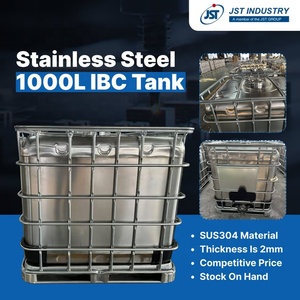
275 Gallon (1000L) Food Grade Stainless Steel IBC
Heavy-duty SUS304 steel IBC with 5+ year structural warranty, DN50 precision ball valve, ISO compliance, and complete CIP cleanability.
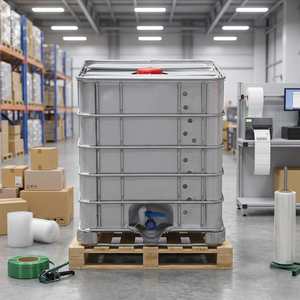
Opaque Leak-Proof 1200L IBC for Light-Sensitive Liquids
Total photo-blocking carbon/pigment layer designed for photosensitive active ingredients, agrochemicals, and specialized resins requiring zero UV penetration.
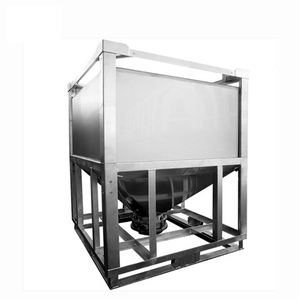
1000L Sanitary Taper-Bottom Stainless Steel IBC (SUS304)
Conical bottom design for 100% complete discharge of viscous liquids, food ingredients, and pharmaceuticals without residue buildup.
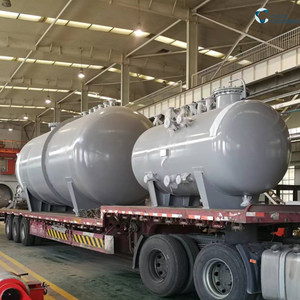
ASME-Certified Stainless Pressure Vessel Storage Tank
Available in vertical and horizontal configurations. Rated for pressurized fuel, solvent, and volatile chemical storage with custom nozzle orientation.
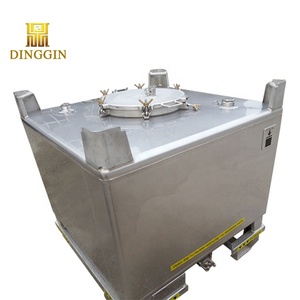
UN Approved 1000L / 1500L Stainless Steel Tote Tank (SS304/SS316L)
Heavy-duty transport container for flammable, aggressive oil and petrol chemicals. Full UN 31A/Y certification for international intermodal transport.
Executive Whitepaper: Strategic Sourcing of UN-Approved IBCs from China
In global liquid chemical and bulk liquid manufacturing, the Intermediate Bulk Container (IBC) serves as the backbone of intermodal logistics. As global environmental regulations (such as ADR, RID, IMDG Code, and US DOT Title 49 CFR) enforce increasingly rigid transport safety protocols, procurement directors and chemical supply chain managers must balance regulatory compliance, structural integrity, and cross-border transport economics.
China has evolved into the world's primary manufacturing hub for advanced UN-approved industrial packaging. Driven by massive domestic chemical infrastructure, investments in 6-layer co-extrusion blow molding machinery, and automated robotic welding for stainless steel pressure vessels (SUS304 & SUS316L), top-tier Chinese IBC suppliers deliver engineering precision that exceeds standard market expectations.
Future Sourcing & Procurement Trends in Industrial Packaging (2026–2035)
Key technical paradigm shifts transforming bulk liquid logistics, material science, and global compliance standards.
1. Multi-Layer PCR & Closed-Loop Circularity
Regulators worldwide are pushing for Post-Consumer Recycled (PCR) polymer integration. Next-generation composite IBCs utilize 6-layer co-extrusion technology where recycled resin is encapsulated strictly within inner structural layers, maintaining virgin High-Molecular Weight HDPE (HMW-HDPE) on contact surfaces to guarantee zero liquid contamination.
2. Smart IoT Fleet Tracking & Condition Monitoring
Enterprise supply chains are rapidly transitioning from passive storage totes to IoT-connected intelligent assets. Built-in cellular/LoRaWAN telemetry sensors monitor internal pressure, thermal spikes, tilt angles, liquid fill level, and GPS coordinates in real-time, preventing hazardous spills and streamlining fleet return logistics.
3. Transition to Heavy-Duty Stainless Steel (SUS316L)
With volatile solvent freight requiring EX-proof grounding and anti-static assurance, stainless steel IBCs (1000L–1500L) are replacing single-use poly totes in high-value chemical sectors. Stainless steel provides a 20+ year service life, 100% fire resistance, and complete chemical compatibility under ASME pressure vessel codes.
Technological Evolution: UN 31HA1 vs. Stainless Steel (SUS304/316L) IBCs
Technical comparison matrix detailing mechanical characteristics, regulatory classifications, and operational parameters.
| Engineering Spec | Composite IBC (UN 31HA1) | Stainless Steel IBC (UN 31A/Y) | ASME Pressure Vessel IBC |
|---|---|---|---|
| Inner Container Material | HMW-HDPE (High Molecular Weight) | Stainless Steel SUS304 / SUS316L | Austenitic Alloy SUS316L / Titanium option |
| Outer Frame Protection | Zinc-Coated Steel Grid Cage | Integrated Structural Steel Frame | Heavy Duty Channel Skid Frame |
| UN DG Classification | Packing Group II & III (Y/Z Mark) | Packing Group I, II & III (X/Y/Z Mark) | Hazardous Class 3 Flammables / High Pressure |
| Max Liquid Specific Gravity | 1.6 to 1.9 g/cm³ | Up to 2.5 g/cm³ | Up to 3.0 g/cm³ |
| Discharge Valve Specs | DN50 (2") / DN80 Butterfly/Ball Valve | DN50 Stainless Sanitary Ball/Flange Valve | DN50/DN80 Bottom Discharge with Safety Closure |
| Cleanability & Reuse | Multi-trip bottle replacement or reconditioning | 100% CIP (Clean-in-Place) Compatible | High-pressure steam & solvent washing |
| Thermal & Fire Rating | Standard ambient (-20°C to +40°C) | Fire resistant / Wide range (-40°C to +150°C) | Extreme temp & pressure certified |
Frequently Asked Questions (Procurement & Technical FAQ)
Expert technical responses to critical questions surrounding UN packaging codes, cross-border testing, and custom engineering.
Q What does the UN 31HA1 mark on an IBC tank specify?
The UN code 31HA1 is an international regulatory identifier established by the United Nations Recommendations on the Transport of Dangerous Goods. "31" denotes a rigid IBC for liquids; "H" specifies a plastic inner receptacle; "A" indicates a steel outer frame; and "1" indicates an inner container enclosed within the outer cage. This mark verifies the unit has passed drop, hydrostatic pressure, leakproofness, and stacking tests for Packing Groups II and III.
Q How do I determine whether my chemical requires SUS304 or SUS316L Stainless Steel?
While SUS304 is highly suitable for general solvents, food syrups, oils, and non-corrosive chemicals, SUS316L contains 2–3% Molybdenum, providing superior resistance to pitting and crevice corrosion caused by chlorides, acids, and harsh halides. For high-purity pharmaceutical compounds, aggressive agrochemical formulations, or marine logistics, SUS316L is strongly recommended.
Q What factory testing standards must Chinese UN IBC manufacturers supply?
Top-tier manufacturers must issue a factory test report and official UN certification from an accredited national inspection authority (such as China Inspection and Quarantine - CIQ, or CCS). Essential quality tests include: (1) Bottom lift test, (2) Top lift test, (3) Stacking test under 4600 kg load for 28 days, (4) Hydrostatic pressure test at 100-200 kPa, (5) Leakproofness air test at 20 kPa, and (6) Drop test from up to 1.9 meters at low temperature (-18°C).
Q Can composite plastic IBCs be safely reused for hazardous chemicals?
Yes, under UN regulations, composite IBCs can undergo certified reconditioning. This includes high-pressure washing, leak testing, valve replacement, or complete inner bottle replacement ("rebottling") while retaining the original steel frame. However, for highly toxic, volatile Class 3 or Class 8 chemicals, single-trip poly liners or dedicated stainless steel tote tanks are preferred to avoid cross-contamination.
Q What options are available for sun-sensitive or static-prone liquid compounds?
For sun-sensitive chemicals, opaque composite IBCs incorporate UV-stabilized carbon-black or titanium-dioxide layers to block 100% of visible light and ultraviolet spectrums. For volatile liquids in explosive (EX) environments, anti-static outer bottles or stainless steel tanks with dedicated grounding lugs must be used to eliminate electrostatic spark risks.
Q How does shipping capacity compare between 1000L IBC tanks and 200L drums?
A standard 40-foot sea container holds 20 units of 1000L IBCs (totaling 20,000 Liters) compared to 80 units of 200L steel drums (totaling 16,000 Liters). Sourcing 1000L IBCs increases freight volume efficiency by 25%, drastically reduces container handling labor, speeds up loading/unloading rates via forklift, and reduces residual liquid waste.
Why Partner with China’s Leading UN Approved IBC Manufacturer?
Combining over three decades of precision industrial molding, advanced metallurgical engineering, and rigorous international quality systems, we supply global enterprise buyers across 170+ countries.
Every production batch is certified under ISO 9001, ISO 14001, ISO 45001, and UN DG transport codes (IMDG, ADR, RID, DOT) with complete batch traceability.
State-of-the-art German blow molding lines execute real-time wall thickness control (parison control), ensuring zero weak spots and maximum stress-crack resistance.
Equipped to manage high-volume B2B contract orders, custom OEM valve/cap configurations, and streamlined sea freight packaging support worldwide.
Accelerate Your Bulk Liquid Sourcing Strategy
Request our full engineering specification catalog, UN compliance reports, chemical compatibility tables, and factory-direct pricing for composite and stainless steel IBCs.