
Featured Industrial Acid & Chemical IBC Solutions
UN-Approved & ASME Certified High-Safety Intermediate Bulk Containers from Direct China Manufacturers
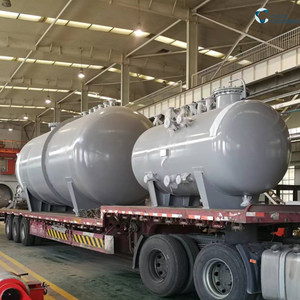
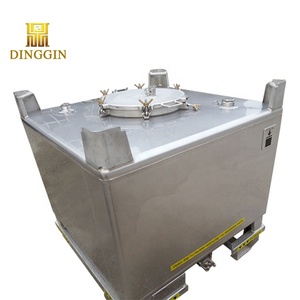
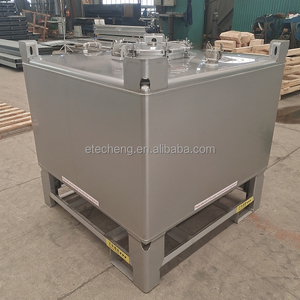
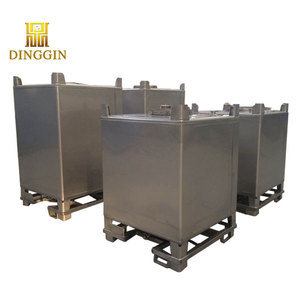
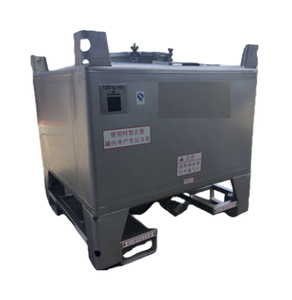
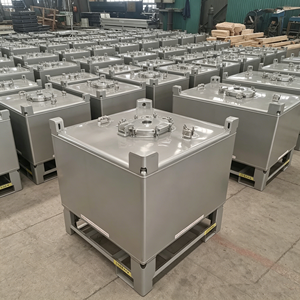
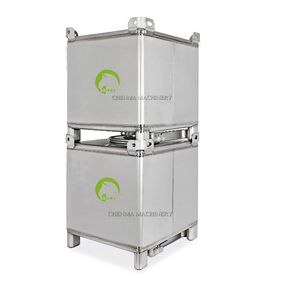
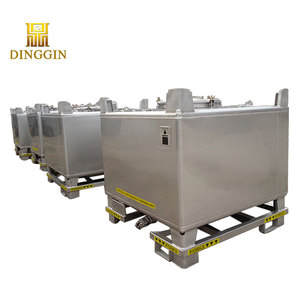
Whitepaper: Industrial Engineering of Acids Containment in Modern Chemical Supply Chains
Corrosive acid logistics demand an absolute zero-failure standard. Whether transporting concentrated Nitric Acid ($HNO_3$), Hydrochloric Acid ($HCl$), Sulfuric Acid ($H_2SO_4$), Hydrofluoric Acid ($HF$), or high-purity organic acids, industrial procurement teams must navigate complex metallurgical, chemical, and structural variables. As global regulatory oversight under the UN Recommendations on the Transport of Dangerous Goods (TDG) tightens, relying on substandard containment vessel infrastructure introduces existential operational risk, product contamination, and regulatory exposure.
This technical guide evaluates the engineering parameters, manufacturing methodologies, and metallurgical selections essential for specifying heavy-duty chemical Intermediate Bulk Containers (IBCs). Sourcing directly from certified China wholesale acid storage IBC factories provides global chemical enterprises with cost-effective, custom-engineered containers that satisfy stringent UN 31A, UN 31HA1, and ASME Section VIII standards.
Advanced Metallurgical Processing & Quality Compliance
Our OEM manufacturing network incorporates state-of-the-art cold-rolling, automatic TIG longitudinal seam welding, and computerized orbital orbital welding technologies. Every acid-grade stainless steel IBC undergoes continuous automated non-destructive testing (NDT), including dye penetrant inspection and radiographic weld checks.
- Full ASTM A967 Chemical Passivation: Removes free iron contamination from weld seams, forming a dense chromium oxide passive film necessary to withstand aggressive oxidizing environments.
- ASME Boiler & Pressure Vessel Code (BPVC) Alignment: Rated for operating pressures exceeding 2.0 to 4.0 bar, ensuring full structural stability during pneumatic pressure discharge.
- Material Traceability: Complete EN 10204 3.1 material test certificates (MTC) supplied with every batch, validating chemical composition and mechanical stress limits.
Global Supply Chain & Lifecycle Reconditioning Support
Backed by decades of operational heritage and an international footprint spanning over 170 support and service centers worldwide, our industrial packaging platform bridges high-volume manufacturing capabilities in China with localized technical service globally.
- Closed-Loop Reconditioning: Modular component design enables rapid swap-out of inner liners, heating jackets, and discharge valves to support zero-landfill corporate objectives.
- Custom Geometry Configurations: Standard capacities from 500L, 1000L, to 2000L, plus specialized imperial sizes (350 Gal, 550 Gal) optimized for international intermodal ocean freight.
- Vibration & Drop Test Certification: Fully certified for UN Packing Group I, II, and III hazardous liquid transport under stringent international maritime (IMDG) standards.
Acid Compatibility & Container Engineering Selection Matrix
Selecting the incorrect alloy or lining mechanism leads to catastrophic pitting, stress corrosion cracking (SCC), or rapid fluoropolymer degradation. The matrix below outlines standardized material recommendations for common industrial acids:
| Chemical / Acid Type | Concentration | Optimal IBC Material | Lining / Coating Option | UN Certification Code |
|---|---|---|---|---|
| Sulfuric Acid ($H_2SO_4$) | 93% - 98% | AISI 316L / 316Ti Stainless Steel | Passivated Bare Metal / PTFE Liner | UN 31A / UN 31HA1 |
| Hydrochloric Acid ($HCl$) | 30% - 37% | Fluoropolymer-Lined / HDPE Rigid Inner | PTFE / PFA / ETFE Rotomolding | UN 31HA1 |
| Nitric Acid ($HNO_3$) | < 65% | AISI 304L / 316L Stainless Steel | Electro-polished Pickled Surface | UN 31A |
| Hydrofluoric Acid ($HF$) | All Concentrations | High-Density Polyethylene / PFA | Heavy Wall Virgin Fluoropolymer | UN 31HA1 |
| Phosphoric Acid ($H_3PO_4$) | Industrial Grade (85%) | AISI 316L Stainless Steel | Pickled & Passivated (ASTM A967) | UN 31A |
| Glacial Acetic Acid | > 99% | AISI 316L / SUS304 Stackable Tote | Bare Stainless Steel (Passivated) | UN 31A |
Future Procurement Trends in Global Chemical Containment
The global chemical sourcing landscape is undergoing a structural transition driven by digital tracking, stringent carbon-accounting directives, and supply chain resiliency. B2B chemical buyers purchasing from China wholesale factories are rapidly shifting their procurement specs to integrate three core forward-looking parameters:
1. IoT-Enabled Smart Telemetry Integration
Procurement contracts increasingly require IBCs equipped with ATEX-certified ultrasonic level sensors, real-time pH monitoring probes, internal headspace pressure indicators, and GPS/LoRaWAN tracking devices. This provides chemical manufacturers with complete end-to-end visibility of acid volume, temperature spikes, and leak indicators during long-haul intermodal transit.
2. Transition to Reusable Metallic Totes over Single-Use Plastic
ESG regulations and Extended Producer Responsibility (EPR) legislation are rendering single-use composite IBCs less cost-effective over long-term operations. High-grade SUS304/316L stainless steel totes—capable of 30+ year service lives with minimal maintenance—are experiencing exponential growth in procurement volume due to lower total cost of ownership (TCO) and superior recyclability.
3. Modular Thermally-Jacketed Containment
Modern chemical processing demands precise temperature control for temperature-sensitive acids and high-viscosity liquids. Procurement trends show a 40% surge in demand for double-walled stackable IBCs outfitted with integrated steam/cooling jackets (dimple jackets), allowing direct fluid heating or cooling on factory floors without transferring media.
Engineering Innovations: Next-Generation Manufacturing Solutions
Chinese IBC manufacturing facilities are investing heavily in advanced metallurgical processes and automated fabrication technologies to ensure zero-defect production for aggressive liquid containment. Key engineering innovations shaping the market include:
- Robotic Laser Cold-Metal Transfer (CMT) Welding: Minimizes heat-affected zones (HAZ) during sheet jointing, virtually eliminating the risk of intergranular corrosion along weld lines.
- Advanced Fluoropolymer Co-Rotomolding (ETFE/PFA): Enables seamless bonding of thick fluoropolymer linings directly onto the internal stainless steel shell. This eliminates micro-vacuum collapse risks during high-temperature acid transfer.
- Nanotechnology Electropolishing Surface Refinement: Achieves internal surface roughness ratings as low as $Ra < 0.2 \mu m$, drastically reducing chemical residue adhesion, facilitating fast CIP (Clean-in-Place) sterilization, and inhibiting chemical pitting.
- Lightweight Cube-Geometry Structural Optimization: Advanced finite element analysis (FEA) modeling optimizes corner radius geometry and bottom discharge slopes, yielding complete drainability (>99.98%) while supporting up to 4-high stacking under full payload weight.
Procurement FAQ: Sourcing Acid Storage IBC Totes from China
SUS304 contains 18% Chromium and 8% Nickel, offering excellent resistance to organic acids and oxidizing solutions like low-concentration Nitric Acid. However, SUS316L contains 16-18% Chromium, 10-14% Nickel, and 2-3% Molybdenum, with a maximum carbon content of 0.03%. The addition of Molybdenum and low carbon significantly increases resistance to pitting corrosion, chloride environments, and reducing organic/inorganic acids like concentrated Sulfuric Acid.
No. Unlined stainless steel (including SUS304, 316L, and 316Ti) will experience rapid chloride pitting corrosion and severe stress corrosion cracking when exposed to Hydrochloric Acid. For Hydrochloric Acid or Hydrofluoric Acid, buyers must specify either a Fluoropolymer-Lined Stainless Steel IBC (lined with PTFE, PFA, or ETFE) or a specialized Composite Rigid Plastic IBC (UN 31HA1 standard).
Dangerous goods transport under UN regulations requires containers to undergo rigorous drop tests, leak-proofness tests, hydraulic internal pressure tests, and stacking tests. Metallic IBCs for liquids carry the designation UN 31A (e.g., 31A/Y/1023/CHN/...) for Packing Groups II and III, while Composite IBCs carry the designation UN 31HA1. Ensure your Chinese supplier provides valid UN Certificate documentation issued by an accredited national inspection authority.
During thermal welding, stainless steel loses chromium from its surface layer, creating a "heat tint" region vulnerable to rust and chemical attack. Full chemical pickling dissolves the free iron and oxide scale left by welding, while acid passivation restores a continuous, corrosion-resistant Chromium Oxide ($Cr_2O_3$) barrier across 100% of the internal metal surface.
Factories can equip IBC totes with dimpled heating jackets (steam or hot water thermal circulation), electric heating blankets, top-mounted pneumatic agitators/mixers, 45-degree sloping bottoms for complete discharge, and specialized PTFE-encapsulated Viton or Kalrez gasket seals for zero-emission containment.
Standard 1000L SUS304/316L IBC totes generally have a Minimum Order Quantity (MOQ) of 1 to 5 units, with production lead times of 15-25 days. Highly customized ASME U-stamped pressure vessels or fluoropolymer-lined tanks may require 30-40 days depending on raw material sourcing and NDT testing schedules.
Request Complete Engineering Specifications & Wholesale Catalog
Speak directly with our senior industrial packaging technical team to request CAD drawings, chemical compatibility verification, UN certification compliance documents, and bulk factory pricing.