
Engineering Showcase: Industrial Liquid Storage Portfolio
Heavy-duty SUS304 & SUS316L stainless steel storage containers custom-manufactured for aggressive chemicals, flammable petroleum, high-purity food, and pharmaceutical applications.
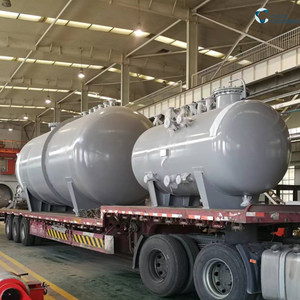
Stainless Steel Pressure Vessel Storage Tank Vertical/Horizontal Design for Fuel Diesel Chemical Water Custom Sizes ASME
Send an Inquiry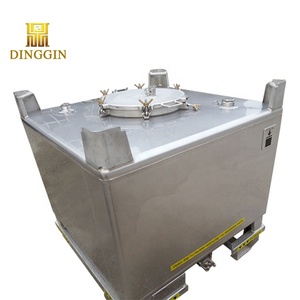
SS304/SS3016L China UN Approved 1000l Stainless Steel Ibc Tote tank 1500l Manufacturer For Petrol/oil/chemical/Storage
Send an Inquiry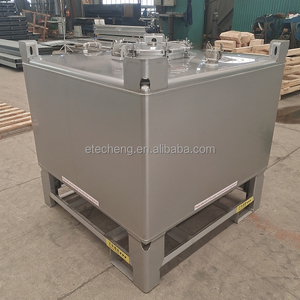
Customize 500L 1000L 1500L 2000L IBC Tank Stainless Steel Tote Tank Intermediate Bulk Containers for Chemical
Send an Inquiry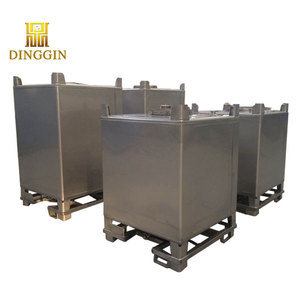
550 Gallon Stainless Steel Material Ibc Tote Cube Water Tank
Send an Inquiry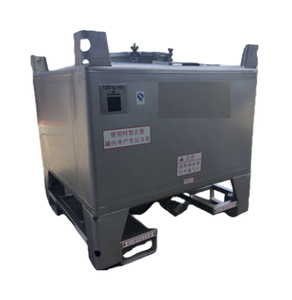
Factory Quality 304 Stainless Steel 1000L Storage IBC Tote Tank for Chemical Material Storage
Send an Inquiry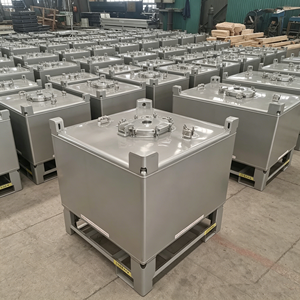
JST Brand 1000L Stainless Steel Stackable Storage IBC Tank Anti-Rust Coating 1 Year Warranty For Corrosion-Resistant Food Use
Send an Inquiry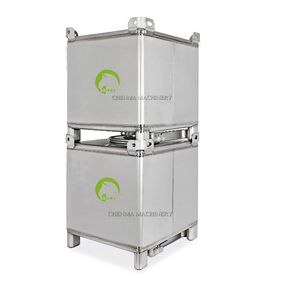
Stackable Stainless Steel IBC tank 500L 1000L 2000L Tote tank with Cooking Jacket for Sale
Send an Inquiry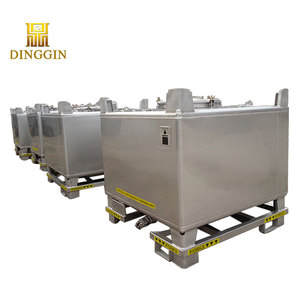
350GAL 550GAL 1500L 2000L STAINLESS STEEL IBC TOTE TANK CONTAINER INTERMEDIATE BULK CONTAINERS SUS304 SUS316L MATERIAL FACTORY
Send an InquiryTechnical Whitepaper: Engineering Next-Generation Custom OEM Bulk Liquid Storage Tanks
In modern industrial process engineering, bulk liquid storage and transport containers form the foundation of global supply chains. As regulatory frameworks such as UN31A/Y, ASME Boiler and Pressure Vessel Code (BPVC) Section VIII Division 1, and European PED 2014/68/EU become increasingly stringent, procurement directors cannot rely on off-the-shelf liquid containment. Selecting custom OEM bulk liquid storage tanks requires a deep understanding of metallurgy, mechanical load distribution, surface roughness tolerances, thermal transfer jacket efficiency, and international dangerous goods compliance.
This technical guide evaluates the engineering parameters, metallurgical selection models, process integration mechanics, and global market trends governing custom stainless steel Intermediate Bulk Containers (IBCs) and stationary pressure vessels. As an established OEM manufacturer and exporter with a global footprint spanning more than 170 facilities worldwide, our manufacturing methodologies integrate state-of-the-art robotic TIG welding, automatic orbital pipe fusion, pickling/passivation chemistry, and non-destructive testing (NDT) to deliver industrial containment systems engineered for 30+ year service lives.
Engineering Core Principle: "True structural reliability in hazardous bulk liquid containment requires zero compromise on grain boundary integrity. Pickling and passivation processes must achieve internal surface finishes below Ra 0.4 µm to eliminate micro-pitting corrosion in chloride and acid processing environments."
1. Metallurgical Engineering & Material Selection Frameworks
Selecting the optimal stainless steel alloy for custom bulk liquid storage tanks depends directly on fluid reactivity, temperature range, ambient operating stress, and washdown chemistry. OEM buyers must balance initial capital expenditure with long-term total cost of ownership (TCO).
1.1 Austenitic Stainless Steels: SUS304 vs. SUS316L vs. SUS316Ti
For non-corrosive hydrocarbons, water, and standard lubricants, Austenitic Stainless Steel 304 (UNS S30400) remains the industry baseline. However, for active chemical synthesis, petrochemical storage, and food processing involving organic acids, SUS316L (UNS S31603) is mandatory. The low-carbon variant ("L") restricts chromium carbide precipitation during welding, maintaining intergranular corrosion resistance in heat-affected zones (HAZ).
In extreme thermal environments (exceeding 450°C to 850°C process cycles), SUS316Ti (Titanium-stabilized stainless steel) is employed to prevent sensitization. The added titanium binds carbon, keeping chromium evenly distributed throughout the iron lattice matrix.
1.2 Duplex Stainless Steels for Aggressive Chlorides
Where high-pressure storage tanks face aggressive halide stress-corrosion cracking (SCC), our OEM custom lines integrate Duplex 2205 (UNS S31803). Offering double the yield strength of conventional austenitic steels, Duplex alloys allow for reduced wall thickness without compromising structural pressure limits, reducing overall container tare weight by up to 25% for cross-border freight efficiency.
| Material Grade | Tensile Strength (MPa) | Yield Strength 0.2% (MPa) | Corrosion Resistance | Primary Industrial Application |
|---|---|---|---|---|
| SUS304 / 304L | 515 - 620 | 205 - 240 | Moderate (Standard Organic) | Edible Oils, Diesel, Water, Non-Corrosive Solvents |
| SUS316L | 485 - 580 | 170 - 220 | High (Pitting & Acid Resistant) | Petroleum, Sulfuric Acid Traces, Pharma Ingradients |
| Duplex 2205 | 655 - 880 | 450 - 550 | Extreme (Chloride SCC Immune) | Offshore Marine Fuels, Concentrated Halides |
| SUS316Ti | 520 - 680 | 215 - 260 | High (High-Temp Intergranular) | Heated Bitumen, Thermally Cycled Resin Tanks |
2. Structural Design Mechanics & OEM Customization Capabilities
Bulk liquid storage containers must endure static hydrostatic pressure, dynamic sloshing loads during transport, and internal pneumatic surges caused by thermal expansion. Our custom engineering team employs Finite Element Analysis (FEA) to optimize vessel geometry for maximum volumetric efficiency and structural fatigue life.
2.1 Vertical vs. Horizontal Storage Geometries
Vertical tank designs offer superior natural bottom drainage, minimizing residual heel volume. Equipped with 60° conical or ASME dished heads (torispherical), vertical tanks maximize gravity flow for high-viscosity resins and food syrups. Horizontal pressure vessels are specified when ceiling height restrictions exist or when mobile transport skid frames require a low center of gravity to prevent vehicle rollover.
2.2 Thermal Management: Dimple Heating/Cooling Jackets
For temperatures-sensitive media—such as chocolate, paraffin wax, polymers, and active pharmaceutical ingredients (APIs)—tanks are equipped with custom dimple jacket (pillow plate) heat exchangers. Welded using automated CNC laser welding machines, these jackets allow steam or glycol coolant circulation at working pressures up to 10 bar. Combined with 50mm to 100mm high-density mineral wool or polyurethane foam insulation encased in an outer stainless skin, thermal decay rates are maintained below 0.5°C per hour.
2.3 Mechanical Agitation & Mixing Integration
OEM customization extends to internal top-entry, bottom-entry, or magnetic-drive agitators. Pitch-blade turbines, anchor sweep impellers, and high-shear emulsifiers can be scaled according to Fluid Dynamics (CFD) modeling to prevent settling in slurries or liquid-solid suspensions.
3. Global Sourcing Trends & Future Market Dynamics
The industrial packaging and bulk liquid containment market is undergoing a structural transition toward long-term sustainability, digital asset tracking, and strict total cost optimization. Industrial procurement leads are moving away from single-use HDPE plastic totes toward fully recyclable, reconditioned, and stackable stainless steel IBCs.
1. Circular Economy & ESG
Stainless steel IBC totes feature a 30+ year lifespan. Unlike plastic drums that end up in landfills after 2-3 years, metal tanks are 100% recyclable, drastically reducing Scope 3 carbon emissions for global enterprise buyers.
2. IoT Telemetry Integration
Modern bulk storage tanks incorporate smart level sensors, GPS location tracking, internal temperature logging, and automated pressure relief alerts transmitted over ATEX/IECEx certified cellular networks.
3. Automated CIP/SIP Systems
Future-proof containment requires self-cleaning capabilities. Integrated Clean-In-Place (CIP) 360° rotary spray balls ensure rapid batch turnover with zero cross-contamination risk in multi-product facilities.
4. Strategic Corporate Advantages of Partnering with Our Manufacturing Facilities
Leveraging over 330 combined years of industrial container development and operating 170+ locations worldwide, our organization provides global exporters and local plants with unmatched manufacturing depth:
- Certified Quality Management: Our plants operate under certified ISO 9001:2015, ISO 14001, and ISO 45001 management systems, guaranteeing consistent weld metallurgy and dimensional tolerances across all production lots.
- UN & ASME Stamp Approvals: Containers engineered for hazardous goods carry official UN31A/Y stamps for dangerous cargo handling under IMDG, ADR, and RID codes. Pressure vessels are built to ASME VIII Div 1 rules (U-Stamp optional).
- Advanced NDT & Quality Control: Every custom tank undergoes 100% hydrostatic testing (up to 6 bar), pneumatic leak decay testing, liquid penetrant testing (PT) on weld seams, and optional X-ray radiography or Helium Mass Spectrometer testing.
- Global Fleet & Reconditioning Network: Beyond initial OEM equipment fabrication, our worldwide network provides reverse logistics, tank washing, structural inspection, and certified reconditioning services to close the loop on your liquid supply chain.
5. Frequently Asked Questions (FAQ) for Industrial B2B Procurement
What is the difference between SUS304 and SUS316L stainless steel for bulk storage tanks?
SUS304 contains 18% chromium and 8% nickel, making it ideal for food-grade liquids, diesel fuel, water, and general solvents. SUS316L contains 16% chromium, 10% nickel, and 2-3% molybdenum, providing superior resistance to pitting and corrosion caused by chlorides, marine environments, harsh acids, and aggressive chemical compounds.
What certifications are required for transporting flammable or hazardous liquids in bulk IBC totes?
For transporting dangerous liquids (Packing Groups II and III) on public roads, rail, or ocean vessels, containers must carry UN 31A/Y approval under international regulations (IMDG, DOT 57, ADR). This certifies that the tank has passed drop tests, stacking tests, vibration tests, and hydrostatic pressure testing.
Can OEM storage tanks be customized with heating jackets and internal agitators?
Yes. We custom engineer dimple heating/cooling jackets (steam/glycol), electrical heat tracing jackets, insulation layers, and mechanical mixers. Agitators can be top-mounted or bottom-magnetic, fitted with variable speed drives (VFD) and explosion-proof (ATEX-certified) motors.
How many stackable stainless steel IBC totes can be safely stored vertically?
Our heavy-duty steel frame IBC totes are designed with heavy-gauge corner posts and positioning lugs. When fully loaded with liquid (up to 1.9 specific gravity), they can be stacked 3-high. When empty, they can be stacked up to 4-high, maximizing vertical warehouse footprint.
What surface finishing options are available for pharmaceutical and hygienic sanitary tanks?
We offer mechanical polishing down to Ra 0.2 µm (180 to 320 grit) followed by electropolishing and chemical passivation. This smooth micro-finish prevents bacterial adhesion and simplifies cleaning validation protocols in sanitary processing.
What is the standard lead time for custom OEM volume bulk tank orders?
Standard IBC tote models (500L, 1000L, 1500L, 550 gallon) are typically produced within 2 to 3 weeks. Custom-engineered ASME pressure vessels with heating jackets, internal baffles, and special port configurations take approximately 4 to 6 weeks, including NDT inspection and documentation delivery.
Request a Custom Engineering Quote Today
Whether you require UN-approved stackable IBC totes for international shipping or complex ASME pressure vessels with heating jackets, our global engineering team is ready to consult on your exact material specifications, dimensional constraints, and budget targets.