
Precision-Engineered Hazardous Packaging Solutions
Explore our export-ready, heavy-duty industrial IBC containers, anti-static bulk totes, and hazardous chemical spill containment systems tailored for global supply chains.
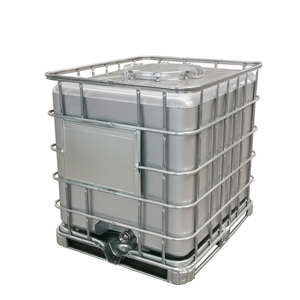 UN Group I & II
304 Stainless Steel 500L–3000L Chemical IBC Container
- Heavy-gauge AISI 304 / 316L construction
- UN 31A/Y certified for hazardous liquids
- Sloped bottom for 99.9% complete drainage
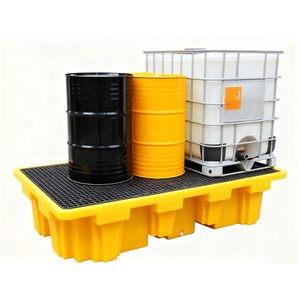 EPA & OSHA Compliant
Hazardous Leakproof Poly IBC Spill Containment Pallet
- 100% Virgin high-density polyethylene (HDPE)
- Sump capacity exceeds EPA 40 CFR 264.175
- Heavy-load removable anti-skid floor grates
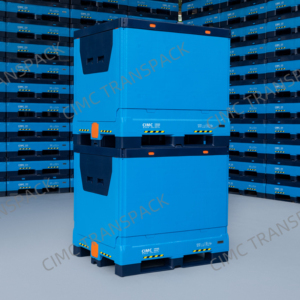 Collapsible Design
1000L Durable Foldable Plastic Composite IBC Container
- Reduces return freight footprint by up to 75%
- Reinforced outer structural steel cage
- Food-grade & chemical-resistant polymer inner
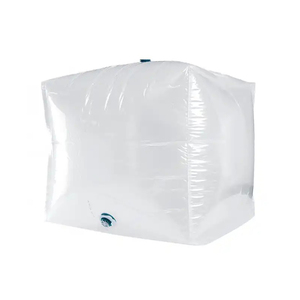 Sterile & Disposable
Food-Grade 1000L PE Liquid Liner Bag for Oil & Chemical IBCs
- Multilayer co-extruded aseptic barrier film
- Eliminates container cleaning cross-contamination
- High mechanical puncture & flex-crack resistance
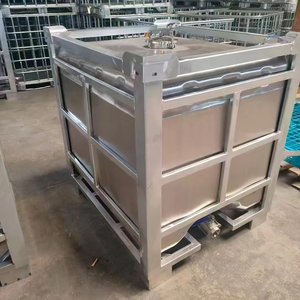 Flammable Fuel Grade
Thickened Stackable Stainless Steel IBC Tank for Gasoline/Diesel
- Explosion-proof grounding lug & pressure relief valve
- 3-high full load stackable structural frame
- Viton / PTFE chemical gasket sealing matrix
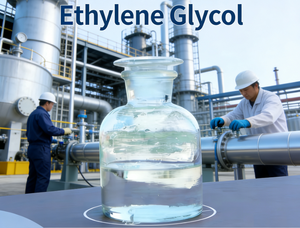 Industrial Grade
Industrial Grade Ethylene Glycol Packaging 1000L IBC Tank
- High-density UV-stabilized polymer liner
- Integrated DN50/DN80 precision discharge valve
- Optimized for diesel vehicle antifreeze shipping
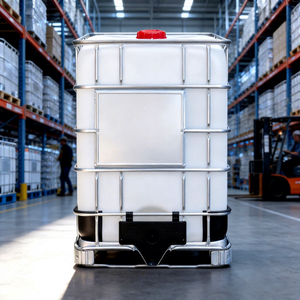 ATEX Zone 1/21 Safe
500L Conductive Anti-Static Recyclable IBC Bulk Storage Tank
- Electrostatic dissipative surface layer (<10^6 ohms)
- Prevents spark discharge in explosive atmospheres
- Fully recyclable high-molecular HDPE polymer
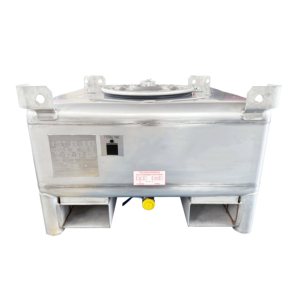 Dual Food & HazMat
1000L Food Grade Stainless Steel Stackable Hazardous IBC
- Electropolished Ra < 0.4 µm internal finish
- Steam sterilizable & CIP (Clean-In-Place) ready
- Certified for hazardous pharmaceuticals & flammables
Engineering Compliance & Structural Architecture of OEM Hazardous Material IBCs
In the global transport of Class 3 (Flammable Liquids), Class 6.1 (Toxic Substances), and Class 8 (Corrosive Materials), selecting an appropriately engineered Intermediate Bulk Container (IBC) is not merely a logistics decision—it is a critical environmental and operational risk management imperative. As leading custom OEM Hazardous Material IBC factories and exporters, our manufacturing architecture integrates advanced polymer chemistry, metallurgy, and severe-duty mechanical testing to satisfy UN, ADR, RID, IMDG, and US DOT Title 49 CFR standards.
Key Insight: Information Gain in Hazardous Packaging Selection
Traditional IBC evaluation focuses solely on volumetric cost per liter. However, modern chemical supply chains require calculating Total Cost of Ownership (TCO) incorporating permeation rates, static dissipation resistance, thermal expansion tolerance, and long-term cleanability (CIP compatibility).
1. Metallurgy vs. Advanced Polymer Science: Selecting the Optimal Core Shell
Hazardous liquids demand strict material compatibility matrices to prevent chemical degradation, stress cracking, or catastrophic vapor release during long-haul intermodal transit. Our OEM factory lines manufacture two distinct primary container categories:
- Stainless Steel IBCs (AISI 304 / 316L): Specially engineered for aggressive solvents, flammable fuels, and high-purity pharmaceutical intermediates. Incorporating cold-rolled stainless steel sheets welded via fully automated TIG/Plasma orbital systems, these tanks withstand extreme thermal fluctuations (-40°C to +120°C) and mechanical hydraulic shocks during ocean transit.
- Fluorinated & Anti-Static HDPE Composite IBCs: Designed for heavy acids, alkalis, and volatile organics. Utilizing High-Molecular-Weight High-Density Polyethylene (HMW-HDPE), our extrusion lines incorporate optional multi-layer co-extrusion with inline fluorination (Level 5 barrier) to eliminate hydrocarbon permeation and container wall softening.
Material Selection Matrix for Dangerous Goods (UN Packaging Groups I, II, III)
| IBC Category | Primary Shell Material | UN Marking Code | Compatible Hazardous Classes | Max Specific Gravity | Static Dissipation |
|---|---|---|---|---|---|
| Heavy-Duty Stainless Steel | AISI 316L / Passivated 304 | UN 31A/Y | Class 3 (Flammables), Class 8 (Corrosives) | Up to 2.1 g/cm³ | Integrated Grounding Lug (< 10 Ω) |
| Conductive Anti-Static Poly | Carbon-infused HMW-HDPE | UN 31HA1/Z | Class 3 (ATEX Zone 1/21), Class 6.1 (Toxics) | Up to 1.9 g/cm³ | Conductive Outer Layer (< 10^6 Ω) |
| Standard Composite IBC | UV-Stabilized HMW-HDPE | UN 31HA1/Y | Class 8 (Acids/Alkalis), Non-Hazardous Food | Up to 1.9 g/cm³ | Insulated Poly (Grounding Wire Required) |
| Collapsible Steel Grid IBC | Galvanized Steel Frame + PE Liner | UN 11HA1/Y | Industrial Chemicals, Resins, Glycol | Up to 1.6 g/cm³ | Frame Grounded / Disposable Liner |
2. Fire Safety & Static Discharge Mitigation in Ex-Zones
Electrostatic discharge (ESD) remains one of the primary ignition triggers in chemical transfer stations. When low-conductivity liquids (such as toluene, xylene, or diesel) are discharged at high velocities, static charges accumulate rapidly on non-conductive container surfaces. Our specialized conductive 500L and 1000L OEM IBC totes feature a carbon-black co-extruded outer layer. This continuous conductive path safely dissipates static charges to the earth ground when connected via integrated grounding clamps, fulfilling European CENELEC CLC/TR 50404 guidelines for explosive atmospheres (ATEX Zone 1 and 21).
Why Enterprise Buyers Partner with Our OEM Export Infrastructure
Combining over three centuries of corporate packaging legacy with state-of-the-art automation across 170+ global distribution and service nodes.
Stringent Quality Assurance & Testing
Every OEM unit undergoes 100% pneumatic leak testing (up to 100 kPa pressure drop method), hydrostatic drop testing from 1.9 meters at -18°C, and hydraulic stacking pressure tests simulating up to 4-high full-load warehousing.
Custom OEM Tailoring
We engineer customized dimensions, specialized Viton/PTFE chemical gaskets, integrated electric heat-tracing jackets, quick-connect Camlock/Tri-Clamp valves, and customer-branded serial embossing for fleet tracking.
Global Network & Reconditioning
Backed by over 170 worldwide operational sites, our closed-loop collection and washing network allows global chemical exporters to execute sustainable packaging reuse and certified IBC reconditioning programs.
Future Procurement Trends & Technology Shifts in Hazardous IBC Manufacturing
The industrial hazardous liquid packaging sector is undergoing a profound transformation driven by three core catalysts: strict ESG carbon disclosure regulations, aggressive adoption of industrial IoT telemetry, and the worldwide scale-up of Post-Consumer Recycled (PCR) resin integration in multi-layer blow molding.
Trend 1: IoT Telemetry & Real-Time Hazardous Cargo Monitoring
Global logistics managers are transitioning from static bulk totes to Smart Connected IBCs. Factory-installed low-power satellite and cellular sensors (ATEX Zone 0 certified) now deliver continuous real-time data streaming regarding container location, internal pressure spikes, liquid temperature fluctuations, and shock/tilt incidents during ocean transit. This proactive telemetry mitigates hazardous chemical off-gassing risks and guarantees chain-of-custody compliance for sensitive pharmaceutical and lithium battery electrolyte shipments.
Trend 2: Closed-Loop Circularity & PCR Polyethylene Integration
Driven by the EU Packaging and Packaging Waste Regulation (PPWR) and global corporate Scope 3 decarbonization goals, future OEM IBC manufacturing relies heavily on multi-layer inner bottle co-extrusion technology. By sandwiching 30% to 50% high-quality Post-Consumer Recycled (PCR) HDPE between pristine virgin inner skin layers (which contact the chemical) and protective outer layers, chemical manufacturers achieve identical UN drop and stacking performance while slashing embedded carbon emissions by up to 35% per container cycle.
Trend 3: Standardization of High-Flow Ergonomic Safety Valves
Traditional butterfly discharge valves are rapidly giving way to integrated double-seal ball valves and dry-disconnect coupling systems. In hazardous chemical transfer operations, operator safety is paramount. Modern OEM IBC valves incorporate secondary safety locks, anti-drip caps, and chemical-resistant fluoropolymer seats that prevent accidental valve opening during severe transport vibration, virtually eliminating exposure hazards for plant personnel.
Frequently Asked Questions for Hazardous Material IBC Sourcing
Clear, technical answers to assist procurement directors, EHS engineers, and logistics specialists in evaluating custom OEM IBC containers.
What does the UN 31A/Y marking signify on Stainless Steel IBC containers?
The UN code 31A indicates a rigid metallic intermediate bulk container designed for liquid transport. The "Y" designation certifies that the IBC is rigorously tested and legally approved for Packaging Group II (Medium Danger) and Group III (Low Danger) liquids with a maximum relative density specified in the certificate.
How do anti-static conductive IBCs prevent explosions in flammable chemical plants?
Conductive IBCs feature an outer polymer layer blended with conductive carbon black compounds (<10^6 ohms resistivity) or a complete grounded metal cage. When connected to a grounding wire during chemical filling or discharge, electrical charges flow safely to the ground rather than building up and creating a static spark that could ignite surrounding explosive gases or vapors.
What customization options are available for specialized chemical OEM orders?
We provide full custom engineering including wall thickness optimization (up to 3.0mm for steel or 6.0mm for plastic liners), custom valve configurations (Camlock, Tri-Clamp, Threaded), Viton/PTFE/EPDM gasket selection, heating jackets, top-discharge siphon tubes, and custom frame colors or hot-stamped corporate logos.
Why is spill containment pallet capacity crucial for hazardous liquid storage?
Regulatory authorities such as the US EPA (40 CFR 264.175) and international EHS regulations mandate that secondary spill containment pallets must hold at least 110% of the single largest container stored on it, or 25% of the total volume of all containers combined, ensuring any catastrophic rupture is fully trapped before contaminating soil or waterways.
What is the typical lifespan and reconditioning cycle of a heavy-duty Stainless Steel IBC?
Heavy-duty AISI 304/316L stainless steel IBCs have a service life exceeding 15 to 20 years with periodic 2.5-year pressure testing and 5-year UN recertification. Between chemical rotations, automated high-pressure CIP cleaning and passivating treatments allow the tank to safely transition between different chemical products.
How do collapsible IBC containers optimize return freight logistics cost?
Collapsible composite IBCs feature heavy-duty folding exterior walls. Once the inner single-use disposable liner is emptied, the structural frame folds flat, allowing up to 4 times more empty containers to fit into a single return sea container or flatbed truck, dramatically slashing return logistics TCO and carbon footprint.
Ready to Optimize Your Hazardous Packaging Supply Chain?
Consult with our senior OEM engineering specialists today to receive custom dimensional drawings, chemical compatibility verification, UN certification dossiers, and competitive factory-direct export pricing.