
Custom OEM Industrial Liquid Containers Manufacturer & Factories

ASME & UN Certified Stainless Steel IBC Totes, Bulk Storage Pressure Vessels & High-Purity Fluid Handling Systems

OEM Catalog

Featured Industrial Liquid Containers & IBC Totes

Engineered for volatile chemicals, petroleum, food-grade liquid transport, and high-pressure industrial storage. Fully compliant with UN, ASME, DOT, and ISO international safety regulations.

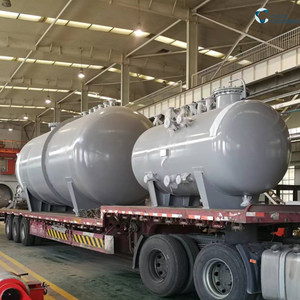
Stainless Steel Pressure Vessel Storage Tank

ASME Vertical & Horizontal Pressure Storage Tanks

Heavy-duty ASME certified pressure vessels designed for fuel, diesel, water, and volatile chemical storage with custom wall thickness.

Inquire Now
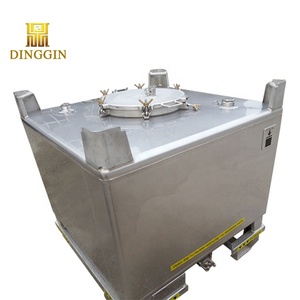
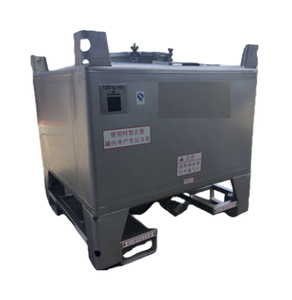
UN Approved 1000L Stainless Steel IBC Tote Tank

UN Approved 1000L/1500L SS304/SS316L IBC Tote Tanks

China UN certified metal intermediate bulk container for safe hazardous petrol, oil, and corrosive liquid chemical transport.

Inquire Now
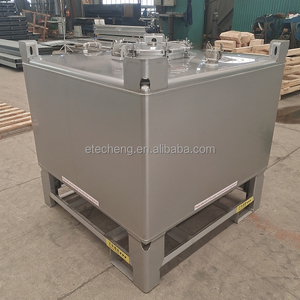
Customize 500L to 2000L IBC Tank

Custom 500L - 2000L Stainless Steel Chemical IBC Tanks

Tailor-made stainless steel tote containers for chemical blending, storage, and overseas maritime shipping.

Inquire Now
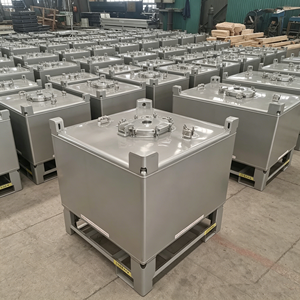
550 Gallon Stainless Steel IBC Tote Cube Tank

550 Gallon Stainless Steel Cube Liquid Tote Tanks

Space-saving heavy-gauge cube profile tote container built for maximizing truck bed space and high-volume fluid logistics.

Inquire Now
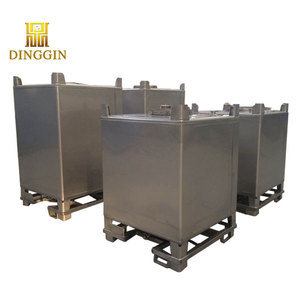
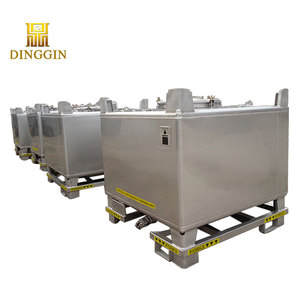
304 Stainless Steel 1000L Storage IBC Tank

Factory OEM 304 Stainless Steel 1000L Storage IBC Totes

Precision-manufactured storage tote tank equipped with sloped bottom discharge valves for zero residual chemical retention.

Inquire Now
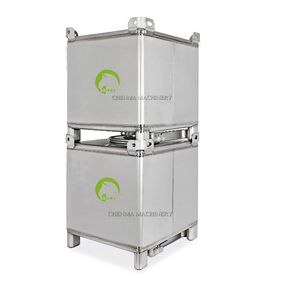
Stackable Storage IBC Tank Anti-Rust Coating

Stackable Food-Grade Corrosion-Resistant IBC Containers

Sanitary polished interior with anti-rust frame coating. Certified for high-purity food, flavorings, and beverage additives.

Inquire Now
Stackable Stainless Steel IBC Tank with Cooking Jacket

Heating & Dimple Jacket Stainless Steel IBC Tote Tanks

Equipped with steam/cooling jackets for temperature-sensitive fluids, viscous oils, syrups, and chemical polymers.

Inquire Now
350GAL 550GAL SUS304 SUS316L IBC Containers

SUS304 / SUS316L Heavy-Duty Industrial Bulk Containers

Direct factory supply of 350gal to 2000L high-volume stainless metal totes designed for extreme industrial operational life.

Inquire Now
Manufacturing Excellence

World-Class Industrial Container Manufacturing Capacity

Combining over 330 combined years of industrial packaging expertise with advanced robotic welding and strict non-destructive quality assurance.

170+
Global Logistics Facilities
100%
UN & ASME Certification Compliance
304/316L
Premium Stainless Steel Alloys
10k+
Industrial Clients Served Globally

Custom OEM Industrial Liquid Container Manufacturing: Engineering, Metallurgy & Compliance

In modern industrial process engineering, fluid logistics, and hazardous material transportation, selecting the appropriate bulk container architecture is a mission-critical operational choice. Industrial liquid containers—ranging from 500-liter stackable Intermediate Bulk Containers (IBCs) to 2,000-liter ASME pressure storage tanks—serve as the foundation for global chemical, pharmaceutical, food processing, and energy supply chains. As an authoritative OEM/ODM manufacturer specializing in custom liquid containment solutions, our engineering practices synthesize advanced physical metallurgy, automated robotic welding, rigorous surface chemistry passivation, and strict adherence to international shipping regulations (UN, DOT, IMDG, ASME Section VIII).

Technical Value Insight: Stainless steel IBC totes and pressure vessels eliminate the risk of environmental stress cracking, product contamination, and costly container degradation associated with single-use plastics or standard poly-totes. Over a 20-year operational lifecycle, reusable metal containers deliver up to 65% total cost of ownership (TCO) savings while fulfilling corporate carbon neutrality mandates.

1. Metallurgy & Material Selection: SUS304 vs. SUS316L vs. Specialized Alloys

The structural integrity and chemical compatibility of an industrial liquid vessel depend fundamentally on raw material selection. Custom OEM container manufacturing relies primarily on austenitic stainless steel alloys due to their high ductility, impact resistance at cryogenic temperatures, and exceptional anti-corrosive performance under aggressive fluid exposure.

AISI 304 / SUS304 Stainless Steel

Composed of 18% Chromium and 8% Nickel, SUS304 offers excellent resistance to atmospheric oxidation, organic acids, petroleum products, and neutral aqueous solutions. It represents the industry benchmark for food-grade liquid ingredients, vegetable oils, lubricants, and mild industrial reagents.

AISI 316L / SUS316L Stainless Steel

Formulated with 16-18% Chromium, 10-14% Nickel, and 2-3% Molybdenum, SUS316L provides superior resistance to pitting and crevice corrosion in chloride-rich environments. The low-carbon designation ("L") prevents intergranular carbide precipitation during welding, making it vital for active pharmaceutical ingredients (APIs), strong inorganic acids, and marine offshore fluid handling.

Fluoropolymer Linings & Hastelloy

For ultra-pure semiconductor wet chemicals, concentrated hydrofluoric acid, or hot caustic alkalis, containers can be retrofitted with interior fluoropolymer linings (PTFE, ETFE, PFA) or fabricated from Hastelloy C-276 nickel superalloys to achieve zero chemical dissolution.

2. Precision OEM Fabrication Standards & Quality Control

The manufacturing execution process at our certified production facilities utilizes state-of-the-art cold-forming, automated longitudinal and circumferential TIG/MIG welding systems, and optical laser tracking. Eliminating weld defects is critical to avoiding localized stress corrosion cracking (SCC) and maintaining micro-smooth sanitary surfaces.

  • Automated Orbital Welding: Ensures consistent weld bead geometry, complete joint penetration, and uniform grain boundaries across all tank seams.
  • Surface Treatment & Electropolishing: Tanks undergo mechanical grinding followed by chemical pickling and electropolishing, achieving internal surface roughness down to Ra < 0.4 µm (16 micro-inches). This smooth mirror finish prevents biofilm adhesion and simplifies Clean-In-Place (CIP) operations.
  • Non-Destructive Testing (NDT): 100% of pressure vessels undergo radiographic (X-ray) weld inspection, liquid dye penetrant testing, hydro-static pressure testing up to 1.5x design pressure, and pneumatic leak testing.

Strategic Industry Application Matrix

Custom industrial liquid containers are designed to adapt to specific chemical dynamics, viscosity profiles, and operational workflows. Below is a overview of key industry deployment parameters:

  • Petrochemicals & Lubricants: Requiring heavy-gauge 350-gallon to 550-gallon cube IBC tote tanks with high-discharge ball valves, fire-safe pressure relief vents, and heavy stacking frames capable of 3-high dynamic stacking during transport.
  • Specialty & Fine Chemicals: Utilizing SUS316L UN 31A/Y approved containers designed for dangerous goods under Packing Groups II and III. Optional inert gas blanketing valves preserve purity.
  • Food, Beverage & Dairy Processing: Employing sanitary stainless steel totes equipped with dimple heating jackets for chocolate, honey, and viscous syrups, complete with FDA-compliant EPDM or Viton seals and tri-clamp sanitary connections.
  • Agrochemical & Fertilizer Distribution: Utilizing UV-resistant, corrosion-proof storage vessels engineered to withstand seasonal temperature extremes and aggressive agricultural formulations.

Future Procurement Trends in Industrial Liquid Container Technology (2025–2035)

The global industrial liquid container market is undergoing a structural transition driven by digital connectivity, strict ESG (Environmental, Social, and Governance) targets, and automated supply chain tracking. Forward-looking procurement directors must align purchasing strategies with these emerging technological vectors:

IoT-Integrated "Smart" Containers

Modern stainless IBCs are increasingly deployed with ATEX-certified IoT telemetry sensors. These smart units communicate real-time liquid level, internal temperature, pressure buildup, tilt, and GPS location via cellular or satellite networks directly to ERP systems.

Circular Economy & Asset Tracking

Procurement models are shifting from single-use packaging to closed-loop fleet management. Stainless steel containers can be reconditioned, washed, and recalibrated indefinitely, drastically reducing Scope 3 carbon emissions across international freight operations.

Advanced Thermal Regulation

To reduce energy consumption at processing plants, modern totes incorporate high-density polyurethane insulation shells around dimple jackets, ensuring rapid heating or cooling cycles with minimal thermal dissipation.

Knowledge Base

Frequently Asked Procurement & Technical Questions

Expert guidance for engineering teams, quality managers, and global supply chain buyers.

Q1: How do UN Markings on Stainless Steel IBCs guarantee compliance for hazardous liquid transport?

UN Approval (such as UN 31A/Y) indicates that a metal intermediate bulk container has successfully passed rigorous international performance tests dictated by the UN Recommendations on the Transport of Dangerous Goods. Tests include 12-meter drop testing, hydrostatic pressure testing (up to 200 kPa), dynamic vibration testing, and 3-high stacking capacity verification. Containers bearing a stamped UN plate are legally authorized for international sea (IMDG), rail (RID), and highway (DOT/ADR) transit of hazardous liquid chemicals.

Q2: What is the main difference between SUS304 and SUS316L for liquid container construction?

SUS304 contains 18% Chromium and 8% Nickel, offering robust corrosion protection for food products, vegetable oils, and mild industrial reagents. SUS316L includes an addition of 2-3% Molybdenum and reduced carbon content, providing superior resistance to chloride pitting, strong acids, organic solvents, and high-salinity solutions. SUS316L is strongly recommended for pharmaceutical APIs, marine transport, and aggressive chemical processing.

Q3: Can custom dimensions and discharge valve configurations be engineered for existing factory lines?

Yes. As a custom OEM/ODM manufacturer, we tailor tank footprints, overall heights, leg clearances, and discharge valve types (e.g., sanitary butterfly valves, 316SS ball valves, quick-connect camlocks) to match your automated filling lines, rack systems, or specific transport vehicle constraints.

Q4: How do dimple jackets work on heated stainless steel tote tanks?

A dimple jacket (or heat-transfer jacket) is welded to the exterior wall of the inner container shell. Hot water, steam, or thermal oil circulates through the flow channels, transferring heat uniformly across the tank wall to maintain viscous fluids (such as wax, resin, honey, or heavy crude) at optimal flow temperatures during mixing or discharge.

Q5: What surface finishes are available for sanitary or high-purity fluid applications?

Standard industrial containers feature a 2B finish or acid-pickled welds. For sanitary food and pharmaceutical applications, we offer internal mechanical polishing up to 400 grit (Ra < 0.4 µm) combined with full chemical electropolishing to create a passive, non-porous micro-surface that prevents product entrapment and simplifies CIP validation.

Q6: What is the expected operational lifespan of a stainless steel IBC compared to plastic totes?

While plastic poly-totes have a recommended operational life of 2 to 5 years (due to UV degradation, chemical embrittlement, and structural weakening), a heavy-gauge stainless steel IBC tote has an operational lifespan exceeding 20 to 25 years with routine inspection and seal replacement, delivering superior long-term ROI and lower environmental impact.

Q7: How do stackable IBC designs maximize warehouse efficiency?

Our heavy-duty stainless steel totes feature reinforced corner posts and alignment stacking feet. This enables safe multi-tier stacking (up to 3-high fully loaded, or 4-high empty), optimizing vertical warehouse space and maximizing payload density inside standard 20ft and 40ft ISO shipping containers.

Q8: What quality testing documentation is provided with OEM liquid containers?

Every shipment is accompanied by a comprehensive Quality Assurance Dossier, including Mill Test Certificates (MTC EN 10204 3.1) for raw steel, Radiographic NDT Inspection Reports, Hydrostatic & Pneumatic Pressure Test Records, Passivation Test Certificates, and official UN/ASME Compliance Certificates.

Q9: What are the standard lead times for custom OEM orders?

Standard prototype or small-batch custom container engineering typically takes 2 to 3 weeks for technical drawing sign-off and material preparation. Full-scale production lead times range from 3 to 5 weeks depending on order volume, specialized valve configurations, and required surface treatments.

Q10: How can I request a customized technical quotation or engineering drawing consultation?

You can directly contact our engineering sales office by clicking the live inquiry button below. Our engineering team provides detailed 3D CAD models, structural calculations, and competitive factory-direct pricing tailored to your fluid containment requirements.

Request a Custom Engineering Quote & CAD Design

Partner with a global leader in custom OEM industrial liquid containers. Talk directly to our technical specialists for factory-direct pricing, ASME/UN certification support, and custom container designs.

Inquire Now