
Factory-Direct Custom OEM IBC Totes & Storage Tanks
Explore our engineering portfolio of heavy-gauge stainless steel tote tanks, UN-approved hazardous liquid containers, pressure vessels, and thermal-jacketed process tanks designed for demanding B2B supply chains.
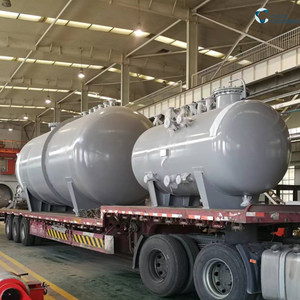
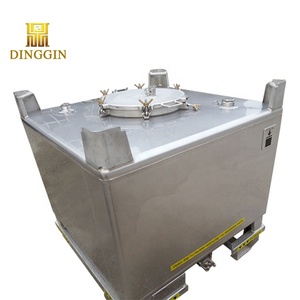
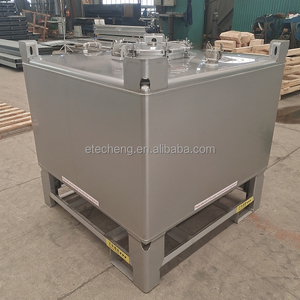
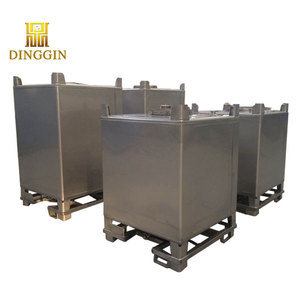
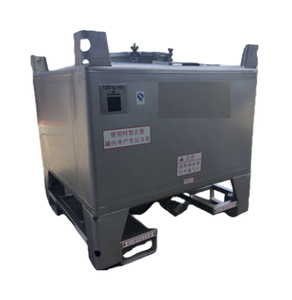
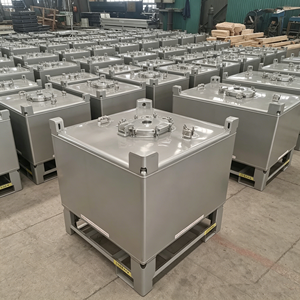
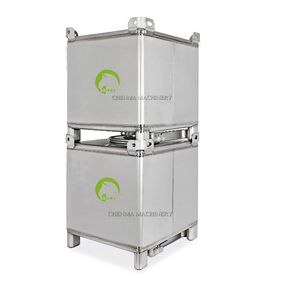
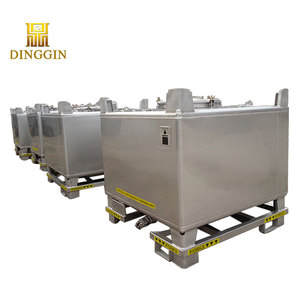
Technical Whitepaper: Engineering Next-Gen OEM Shipping IBC Totes
In modern industrial chemical manufacturing, energy extraction, and sanitary pharmaceutical production, selecting the optimal container system directly impacts operational safety, regulatory compliance, and total cost of ownership (TCO). Standard plastic composite totes (HDPE bottled inside galvanized steel cages) are subject to chemical permeation, UV degradation, mechanical fatigue, and strict 2 to 5-year replacement mandates under international hazardous goods codes.
As a premier Custom OEM Shipping IBC Totes Factory & Supplier, our engineering philosophy focuses on fabricating heavy-gauge metallic Intermediate Bulk Containers (IBCs) crafted from high-grade austenitic stainless steel alloys (AISI 304, 304L, 316, and 316L). Metallic totes eliminate permeation risk, offer fire resistance exceeding NFPA 30 code standards, and deliver an extended service life often exceeding 30 years under continuous industrial deployment.
Metallurgical Selection: SUS304 vs SUS316L
We utilize prime cold-rolled steel sheet stock with fully traceable mill test reports (MTRs compliant with EN 10204 3.1). SUS304 provides exceptional structural strength and oxidation resistance for food products, paints, general solvents, and non-corrosive industrial lubricants. For highly volatile, aggressive media—such as halogenated organic compounds, strong organic acids, agricultural chemicals, and active pharmaceutical ingredients (APIs)—we spec SUS316L containing 2.0–3.0% Molybdenum, providing superior resistance to pitting and crevice corrosion under chloride-rich environments.
Structural Geometry & Stacking Safety
Our OEM shipping totes feature a sloped bottom shell geometry with a deep-drawn sump, enabling 99.95% complete drainage and reducing costly product residue. Heavy-duty stacking corner posts and continuous robotic TIG-welded structural cages protect the internal vessel during multi-modal ocean, rail, and highway transport. Formed heavy-gauge stacking feet allow safe 3-high dynamic stacking when fully loaded (up to 2.0 Specific Gravity rating) and 5-high static warehouse stacking.
Engineering Comparison: Stainless Steel Totes vs. Composite IBCs
Evaluate the technical metrics, life expectancy, and regulatory safety margins when procuring custom OEM metallic totes versus commodity plastic packaging solutions.
| Performance Parameter | OEM Stainless Steel IBC (SUS304/316L) | ASME Pressure Vessel IBC Tank | Standard Poly Composite IBC |
|---|---|---|---|
| Target Service Life | 25 to 35+ Years (Reusable) | 30+ Years (Heavy Duty) | 2 to 5 Years Max (Single/Limited Use) |
| UN Dangerous Goods Approval | UN 31A/Y (Packing Groups II & III) | UN 31A/Y + ASME Sec VIII Div 1 | UN 31HA1 (Packing Groups II & III) |
| Design Operating Pressure | 0.2 to 0.5 bar (Standard Venting) | 1.0 to 10.0+ MPa (High Pressure) | Atmospheric / Non-pressurized |
| Thermal Resistance Range | -40°C to +260°C (-40°F to 500°F) | -196°C to +350°C (Cryogenic/High Temp) | -10°C to +60°C (Max limit) |
| Fire Safety Compliance | NFPA 30 Class I, II, III Flammable Liquids | Full Explosion/Pressure Rated Containment | Combustible (Melts under flame contact) |
| Cleaning & Passivation | CIP/SIP Hydro-jet compatible, ASTM A967 | Sanitary Polish (Ra < 0.4 µm available) | Difficult; prone to flavor/chemical absorption |
| Residue Retention Rating | < 0.05% (Bottom Sump Drain Design) | Zero-Residue Conical / Spherical Bottom | 0.5% to 1.5% Left in Molded Sump |
OEM Customization Spectrum: Tailored Tank Engineering
As a specialized OEM container manufacturer, we provide end-to-end custom engineering to match your plant automation, filling line hookups, and specific fluid rheology.
Thermal Jacket Integration
For viscous liquids, food syrups, resins, and temperature-sensitive chemicals, we custom-engineer Dimple Steam Heating Jackets, Limpet Coils, or electric tracing circuits onto the tank shell. Steam or thermal oil heat exchanger channels permit rapid viscosity reduction for high-speed discharge.
Agitation & Mixing Systems
Equip your totes with custom top-entry flange mounts for electric or pneumatic agitators. We offer direct-drive, turbine, or folding-blade impellers designed to maintain liquid suspensions, prevent solid settling, and homogenize chemical mixtures directly inside the shipping container.
Custom Valve & Fitting Configurations
Specify exact top-manway sizes (16", 18", 22" quick-opening or bolted), pressure relief valves (PRVs), vacuum breakers, and sanitary Tri-Clamp, dry-disconnect (Camlock/Kamlok), or 2" to 3" heavy-duty 316SS ball valves equipped with secondary security lock-outs.
Future Procurement Trends in Industrial Packaging (2026–2030)
As global environmental regulations tighten and corporate ESG mandates accelerate, the bulk packaging sector is undergoing a structural transition from single-use plastics to closed-loop metal packaging ecosystems. Procurement executives must align their supply chain investments with several key technology trends:
Strategic Buying Insight: Total Cost of Ownership (TCO) vs Capital Expenditure
While an industrial stainless steel IBC requires a higher initial capital outlay compared to a plastic bottle cage tote, the break-even point is typically reached within 14 to 18 shipment cycles. Accounting for plastic tote disposal fees, zero-reusability penalties under European Carbon Border Adjustment Mechanism (CBAM) frameworks, and product loss from container puncture, stainless steel totes yield a 65% lower net logistics cost over a 10-year horizon.
1. Smart Telematics & IoT Tracking Integration
Modern OEM IBCs are now pre-engineered with recessed mounting brackets for ATEX/IECEx certified smart IoT sensors. Real-time monitoring of real-time GPS location, internal fluid pressure, ambient temperature, shock/vibration events, and fluid level telemetry is becoming standard for high-value chemical and pharmaceutical shipments.
2. Zero-Carbon Closed-Loop Fleets
Global multi-nationals are replacing one-way intermediate bulk packaging with circular fleet management models. Reusable 304/316L stainless totes undergo decades of turn-key collection, automated caustic washing, steam sterilization, and re-certification—eliminating thousands of metric tons of plastic waste annually.
3. Automated Passivation & Surface Finishing
Advanced robotic polishing delivers surface roughness ratings under Ra 0.4 µm (15 µ-in) followed by citric or nitric acid chemical passivation compliant with ASTM A967 standards. This prevents microbiological contamination and chemical adhesion, reducing water usage during CIP (Clean-In-Place) wash cycles by up to 40%.
Why Partner With Our Factory: Manufacturing Strengths
Our state-of-the-art fabrication facility combines heavy industrial machinery with rigorous quality control systems to produce world-class stainless steel tote tanks and custom ASME pressure vessels.
Quality Assurance & NDT Testing
Every single OEM shipping tote manufactured in our plant undergoes 100% hydrostatic pressure testing, pneumatic leak detection, and dye-penetrant weld inspections. For ASME-stamped pressure tanks, X-ray radiographic inspection (RT) is performed on primary circumferential and longitudinal seam welds to guarantee total weld integrity under extreme dynamic loads.
Global Logistics & Regulatory Certifications
Our packaging products hold global regulatory type-approvals, including UN 31A/Y certified by international test labs (CCS, BV, ABS), U.S. DOT Title 49 CFR compliance, ASME Section VIII Division 1 U-Stamp accreditation, and FDA/USDA sanitary food contact clearance. With an integrated network spanning 170+ shipping points, we support localized inventory buffer stocks for large enterprise buyers.
Frequently Asked Questions (Procurement & Technical FAQ)
Get clear, expert engineering answers to common procurement questions regarding custom OEM shipping IBC totes and industrial pressure tanks.
A UN 31A/Y IBC tote is tested and certified specifically for the transport of liquid dangerous goods (Hazard Classes 3, 6.1, 8, 9) by road, rail, and sea under IMDG and DOT rules, typically rated for test pressures around 1.5 to 2.0 bar. An ASME Pressure Vessel IBC carries a formal "U" or "UM" stamp under ASME Code Section VIII Div 1, engineered for higher internal operating pressures (often 3.5 bar to over 10 bar), high-temperature reaction processes, or gaseous blanketing requirements during transport.
Grade 304 stainless steel is the standard economical choice for non-corrosive chemicals, food ingredients, vegetable oils, and motor oils. Grade 316L contains added Molybdenum (2–3%) and lower carbon content, making it mandatory for aggressive chemicals, chlorides, strong acids, organic solvents, and high-purity pharmaceutical compounds where pitting corrosion or metallic leaching must be prevented.
We provide full OEM engineering for top filling manways (16", 18", or 22" diameters with fusible caps or quick-clamp lids), bottom discharge valves (2" or 3" 316SS ball valves, butterfly valves, or sanitary diaphragm valves), internal heating coils, dimple steam jackets, level sight glasses, automatic pressure/vacuum relief vents, and heavy-duty forklift channels or top crane lifting lugs.
Standard model sizes (500L, 1000L, 1500L, 550 Gallon) are maintained in base inventory with rapid dispatch. Custom OEM designs featuring specific dimensions, jacket configurations, or valve setups typically require a lead time of 3 to 5 weeks from technical drawing sign-off. We accommodate flexible B2B order sizes from single sample units for factory trials up to full container load (FCL) volume contracts.
Under international UN 31A regulations, metallic shipping IBCs must undergo a periodic visual inspection and leak-proofness test every 2.5 years, and a full structural inspection every 5 years. Because our tanks feature heavy-duty welded frames and solid alloy bodies, routine re-certification requires simple gasket replacements, valve seat inspections, and standard pressure testing—enabling seamless decades-long deployment.
Request a Custom OEM IBC Engineering Quotation
Connect directly with our engineering and procurement team to request custom CAD drawings, material mill certificates, volume price breakdowns, or UN test documentation for your specific chemical or sanitary application.