
OEM/ODM Standard & Custom Bulk Intermediate Containers
Explore our UN-certified, ISO-compliant industrial storage and transport systems engineered for high-density liquids, hazardous chemicals, sensitive food ingredients, and bulk solids.
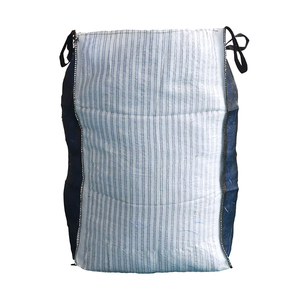 Bulk Solid OEM
Convenient Dimensions 1 to 2 Ton Jumbo FIBC PP Container Bag (500kg - 2000kg)
- Payload: 500kg to 2000kg Capacity
- Material: High-Tenacity Polypropylene
- Design: Cross-Corner Loops & Bottom Discharge
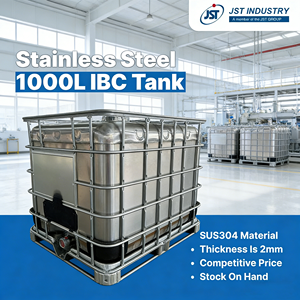 Sanitary Grade
SS316L Stainless Steel EU Compliant 1000L Food-Grade Storage Barrel With Valve
- Metallurgy: SS316L Premium Stainless
- Certifications: EU Food-Grade & UN Rated
- Discharge: Integrated Precision Ball Valve
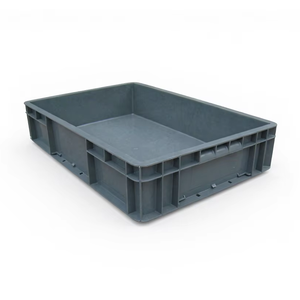 Logistics Systems
Heavy Duty Solid Storage Stackable Plastic Turnover Industrial Tote EU Logistics Box
- Structure: High-Impact Polyethylene
- Standard: EU Modular Dimensions
- Feature: Multi-Tier High Stacking Rating
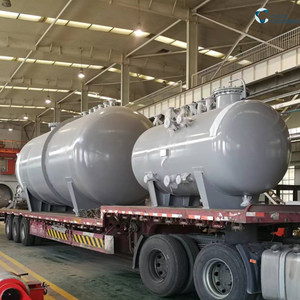 ASME Pressure Rated
Stainless Steel Pressure Vessel Storage Tank Vertical/Horizontal Design ASME
- Engineering: ASME Section VIII Code
- Media: Fuel, Diesel, Corrosive Chemicals
- Orientation: Custom Vertical / Horizontal
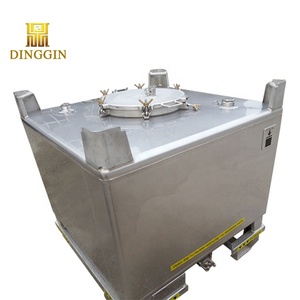 UN 31A/Y Certified
SS304/SS316L UN Approved 1000L & 1500L Stainless Steel IBC Tote Tank for Petrol & Oil
- Capacity: 1000L / 1500L Options
- Hazmat Rating: UN 31A/Y Hazardous Transport
- Frame: Heavy-Duty Galvanized Outer Cage
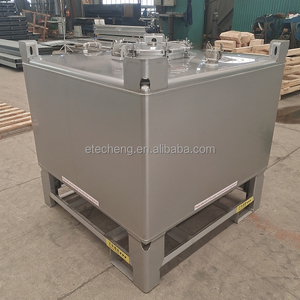 Custom OEM Engineering
Customized 500L to 2000L Stainless Steel IBC Tote Intermediate Bulk Containers
- Custom Volumes: 500L, 1000L, 1500L, 2000L
- Options: Heating Jackets & Agitators
- Application: High Purity Chemical Processing
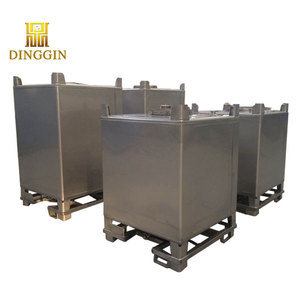 High Volume Cube
550 Gallon Heavy-Duty Stainless Steel Cube IBC Tote Bulk Water & Fluid Tank
- Volume: 550 Gallon (2080L) Capacity
- Handling: 4-Way Forklift Entry & Top Lift
- Drainage: Sloped Bottom 100% Discharge
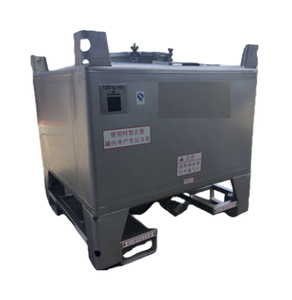 Factory Direct Standard
Factory Certified 304 Stainless Steel 1000L Storage IBC Tote Tank for Raw Materials
- Quality: 100% Pressure & Leak Tested
- Finish: Interior Pickled & Passivated
- Stackability: 3-High Stack Loaded
Executive Sourcing Overview: Navigating OEM/ODM Industrial IBC Sourcing
In modern industrial logistics, the procurement of Intermediate Bulk Containers (IBC Totes) has evolved far beyond transactional container buying. For global supply chain directors, chemical procurement managers, and plant operations executives, selecting the right OEM/ODM Industrial IBC Totes Manufacturer represents a critical strategic decision that directly influences enterprise risk management, product purity compliance, operational total cost of ownership (TCO), and ESG corporate performance goals.
Intermediate Bulk Containers serve as the workhorse of intermodal chemical transport, holding liquid volumes ranging from 500 liters (132 gallons) to 2,000 liters (528 gallons). When handling high-purity food ingredients, aggressive fluorinated acids, volatile petrochemical liquids, or reactive pharmaceutical intermediates, container integrity is paramount. Off-the-shelf catalog containers often fail to address specific operating parameters such as thermal jacket transfer rates, automated CIP (Clean-In-Place) spray-ball sanitization, viscous fluid complete drainage geometries, and extreme hydrostatic pressure fluctuations during maritime transport.
Strategic Information Gain Insight: According to global chemical logistics audit data, customized OEM/ODM stainless steel IBC designs reduce product residual heel waste by up to 98.4% compared to flat-bottom standard vessels. Furthermore, precision-engineered SS316L containers deliver a operational service life exceeding 30 years with proper passivation, resulting in a 65% reduction in lifetime packaging capital expenditure compared to single-use reconditioned HDPE composite alternatives.
Why OEM/ODM Engineering Customization is Essential for Complex Applications
Original Equipment Manufacturing (OEM) and Original Design Manufacturing (ODM) partnerships allow industrial buyers to tailor vessel metallurgy, structural geometries, valve configurations, and thermal regulation systems to their exact process chemistry. Standard generic totes frequently lead to operational bottlenecks, including:
Corrosion & Pitting Failures
Standard austenitic steels fail when exposed to halogenated compounds or organic acids. Custom ODM metallurgical selection (e.g., SS316L, Duplex 2205) mitigates localized pitting corrosion.
Thermal & Viscosity Stagnation
High-viscosity media (heavy resins, syrups, waxes) require specialized dimple-jacketed electric or steam heating systems to maintain pumping fluidity during offloading.
Regulatory Non-Compliance
Transporting Class 3 Flammable Liquids or Class 8 Corrosives without proper UN 31A/Y certification creates severe cross-border regulatory exposure and supply chain delays.
Engineering Material Matrix: SS304 vs SS316L vs Composite HDPE vs FIBC PP
Selecting the optimal container material requires a precise technical evaluation of chemical compatibility, mechanical stress limits, thermal stability, and intermodal transport dynamics. Below is an engineering comparison matrix designed by packaging specialists to streamline material specification during OEM scope definition.
| Material Specification | Stainless Steel 304 (SS304) | Stainless Steel 316L (SS316L) | Rigid HDPE Composite IBC | Heavy-Duty FIBC PP Bag |
|---|---|---|---|---|
| Primary Ideal Applications | Industrial Solvents, Lubricants, Non-Corrosive Chemicals | Pharmaceuticals, High-Acid Foods, Halogenated Acids, Actives | General Industrial Acids, Water Treatment Chemicals | Dry Powders, Granules, Pellets, Bulk Solids (500kg-2000kg) |
| Pitting Resistance Index (PREN) | 19.0 – 20.0 | 23.0 – 25.0 (Superior Chloride Resistance) | N/A (Polymer Permeation Risk) | N/A (Woven Polypropylene Structure) |
| Max Thermal Limits | -196°C to +400°C | -196°C to +450°C | -20°C to +60°C | -10°C to +80°C |
| Hydrostatic Pressure Rating | Up to 2.0 Bar (200 kPa) | Up to 4.0 Bar (ASME Pressure Vessel Code) | Max 100 kPa Test Rating | Atmospheric Pressure Only |
| Expected Service Lifespan | 25+ Years (Reusable) | 30+ Years (Reusable & Recyclable) | 2 – 5 Years (Reconditioned Cycles) | Single-Trip to Multi-Trip (FIBC) |
| UN Hazmat Compliance | UN 31A/Y Approved | UN 31A/Y Approved | UN 31HA1 Approved | UN 13H3 / 13H4 Flexible Rated |
Understanding Pitting Corrosion & Passivation Protocols
For chemical and food processing buyers, the longevity of a stainless steel IBC tote is governed by the passive chromium oxide ($Cr_2O_3$) surface layer. During OEM manufacturing, high-precision automated TIG (Tungsten Inert Gas) welding alters the localized grain structure, depleting chromium in the heat-affected zone (HAZ). Leading OEM manufacturers enforce stringent post-weld chemical pickling and nitric/citric passivation in accordance with ASTM A967 standards. This process restores the passive layer, guaranteeing zero iron contamination in sensitive product batches.
Custom OEM/ODM Modular Engineering Architecture
Our global manufacturing infrastructure allows B2B buyers to customize every structural element of their intermediate bulk containers to integrate seamlessly with automated filling lines, robotic palletizers, and tank farm discharge manifolds.
Valves & Discharge Manifolds
Choice of 2-inch and 3-inch 316L stainless steel ball valves, sanitary butterfly valves, dry-disconnect couplings, or bottom-flange quick-connect systems with anti-drip lock mechanisms.
Agitation & Homogenization
Integrated top-entry gear-driven agitator bridges, magnetic drive mixers, or pneumatic impeller systems designed for high-viscosity suspension, paints, and active liquid slurries.
Thermal Control Systems
Dimple jacketed heat exchangers engineered for steam or hot water heating, cooling fluid coils, and high-density polyurethane insulation shells wrapped in 304 stainless outer cladding.
Precision Drainage Geometries
1-piece deep-drawn one-piece bottom heads featuring 1/2-inch to 2-inch one-piece sloped channels ensuring 99.9% complete drainage, eliminating expensive product heels and simplifying CIP washouts.
Stacking & Structural Frames
Heavy-gauge tubular steel outer protection cages designed for high-density 3-high loaded stacking in standard ISO dry van containers and marine cargo vessel holds.
Smart IoT Telemetry Integration
Factory-installed ATEX/IECEx certified wireless telemetry sensors for real-time monitoring of fill level, pressure, internal temperature, tilt, and GPS location track-and-trace.
Enterprise Manufacturing Infrastructure & Quality Control
Building high-integrity bulk liquid containers demands state-of-the-art metalworking technology, standardized process controls, and rigorous non-destructive testing (NDT). Drawing upon over 330 years of combined historical packaging expertise across 170+ global facilities, our OEM manufacturing units operate under unified ISO 9001:2015, ISO 14001:2015, and ISO 45001 safety frameworks.
Robotic Welding & Quality Assurance Pipeline
Every customized stainless steel container undergoes an uncompromised multi-stage validation sequence prior to factory gate release:
- Spectrometric Alloy Verification: Incoming coil stock and plates undergo X-ray Fluorescence (XRF) testing to verify metallurgical chemical composition (nickel, molybdenum, chromium percentages).
- Automated Longitudinal & Circumferential Welding: Robotic plasma and TIG welding heads deliver continuous, full-penetration welds without porosity or slag inclusions.
- Hydrostatic & Pneumatic Pressure Testing: 100% of manufactured pressure vessels are subjected to 1.5x working pressure liquid static tests and air-under-water bubble leak detection.
- UN Hazmat Drop & Stacking Drop Tests: Prototype units are subjected to 1.9-meter drop tests filled to capacity at freezing temperatures, dynamic vibration testing, and 28-day hydraulic stack loading.
- Roughness (Ra) Surface Inspection: Food and pharma-grade vessels are polished down to Ra < 0.4 µm (16 micro-inch) and verified with calibrated profilometers.
Future Industry Trends: The Next Decade of Industrial Sourcing (2025–2035)
The global industrial container landscape is undergoing a paradigm shift driven by stringent carbon accounting mandates, extended producer responsibility (EPR) laws, and digital supply chain integration. Procurement executives must align their capital expenditure strategies with the following emerging macro trends:
1. Shift from Disposable Composite Totes to Closed-Loop Stainless Steel Fleet Management
While single-use plastic composite IBCs feature lower initial procurement costs, European Union packaging waste directives and US EPA regulations are penalizing non-recyclable plastic waste. Multi-trip stainless steel IBC totes, which can be reused for over 30 years and are 100% recyclable at end-of-life, deliver a net-zero packaging pathway that dramatically lowers enterprise Scope 3 carbon emissions.
2. Mandatory Integration of High-Ratio Post-Consumer Recycled (PCR) Polymers
For rigid plastic containers and logistics crates, regulations now require the inclusion of 30% to 50% Post-Consumer Recycled resin (PCR). OEM manufacturers are deploying multi-layer co-extrusion technology—housing PCR material in the inner structural layer while maintaining a virgin HDPE lining on the product contact surface to preserve chemical safety compliance.
3. Autonomous Fleet Telemetry & Smart Chemical Logistics
Modern enterprise logistics requires real-time visibility into active chemical inventories. Next-generation OEM IBC totes are engineered with recessed top-head pockets designed to accept low-power cellular and satellite IoT transponders. These devices transmit instant alerts regarding pressure spikes, temperature excursions, unauthorized valve opening events, and geofence departures directly to ERP systems SAP and Oracle.
Strategic Procurement & Technical FAQ
Below are authoritative responses to the most critical technical and commercial questions raised by corporate buyers during OEM/ODM contract negotiations.