
Featured Industrial Storage & Transport IBC Solutions
Engineered for extreme structural durability, compliance with UN 31A/Y regulations, and optimized payload capacity for petroleum and chemical supply chains.
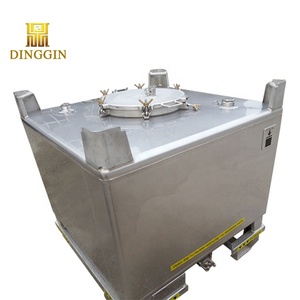 Heavy-Duty Heavy Oil
SS304/SS316L UN Approved 1000L/1500L Stainless Steel IBC Tote Tank
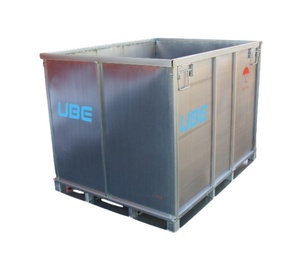 Multipurpose Metal
CIMC Metal IBC Tank UN Certified Liquid & Solid Storage IBC Container
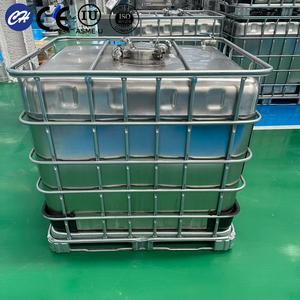 Acid & Alkali Resistant
Heavy Duty Corrosion Resistant 1000L Stainless Steel & HDPE Composite IBC
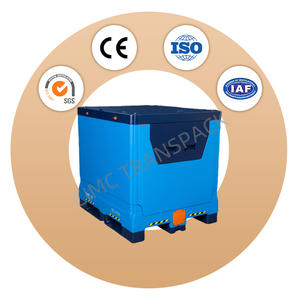 Collapsible & Anti-Static
Anti-Static Large IBC Liquid Container Plastic Folding IBC (EU Standard)
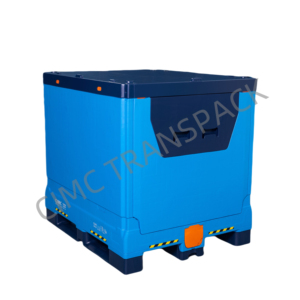 Custom Dimensions
Industrial Chemical & Oil Storage Equipment 1000L / 1250L / 1500L IBC Tanks
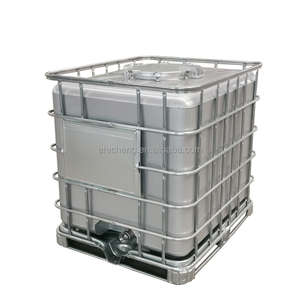 UN 31A/Y Certified
UN 31A/Y High-Spec Stainless Steel IBC Liquid Storage & Transport Tote
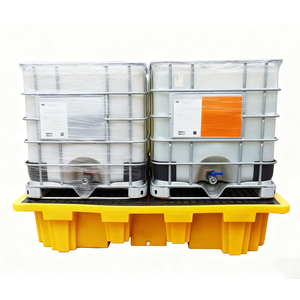 Spill Containment
Heavy Duty Low Profile Spill Containment Pallet for IBC Tanks & Drums
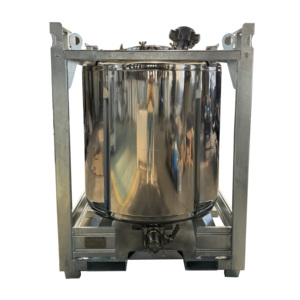 Food & Sanitary Grade
Wanlong Food Grade & Chemical Stainless Steel IBC Tanks (500L-3000L)
Whitepaper: Engineering Standardizations for Industrial Bulk Oil Containment
A technical guide on metallurgical selection, structural stress analysis, and international compliance protocols for B2B procurement managers.
Metallurgical Integrity: SS304 vs SS316L Alloys
In high-stress petrochemical storage, liquid transport tote failure is unacceptable. Our OEM manufacturing process utilizes cold-rolled AISI 304 and 316L austenitic stainless steel, treated with automatic TIG/plasma welding. SS316L, enriched with 2-3% Molybdenum, provides superior resistance against chloride pitting and acidic oil additives. All internal welds undergo pickling passivation (2B finish, Ra < 0.4µm) to eliminate micro-cavities where microbial growth or sulfur oxidation occurs.
UN 31A/Y Certification & Dynamic Hydrostatic Testing
Compliance with Dangerous Goods Regulations (ADR, RID, IMDG Code) requires stringent mechanical verification. Our custom-manufactured metal IBCs are fully UN 31A/Y approved for hazardous fluids with specific gravities up to 1.9. Each production batch undergoes a 100 kPa pneumatic leakproof test, a 200 kPa hydraulic pressure proof test, and a 28-day dynamic vibration simulation, ensuring absolute structural safety during intermodal transport.
Selecting the optimal Intermediate Bulk Container (IBC) for industrial oil storage involves balancing structural payload optimization, chemical permeability prevention, and total cost of ownership (TCO). As a specialized OEM/ODM manufacturer and exporter, our engineering frameworks prioritize high-viscosity discharge efficiency, thermal dissipation management, and anti-static safety protocols for explosive hazardous environments (ATEX Zone 1 & 2).
Structural Geometry & Volumetric Optimization
Standardized 1000L, 1250L, and 1500L cubic profiles maximize ISO sea-container loading densities. Compared to traditional 200L/55-gallon drums, a single 1000L Stainless Steel IBC tote replaces five drums while eliminating 80% of handling touchpoints, drastically lowering operational risk and labor overhead during bulk filling and discharge.
| Performance Parameter | SS304/316L Metallic IBC | Rigid HDPE Composite IBC | Collapsible Anti-Static IBC |
|---|---|---|---|
| Operational Lifespan | 20+ Years (Indefinitely Reconditionable) | 3 - 5 Years (Liner/Bottle Replacement) | 5 - 8 Years (Replaceable Inner Bags) |
| UN Hazardous Rating | UN 31A/Y (Packing Groups II & III) | UN 31HA1 (Packing Groups II & III) | Non-UN / Specific Liquid Approvals |
| Temperature Range | -40°C to +180°C (Steam Sterilizable) | -20°C to +60°C | -10°C to +50°C |
| Permeation Resistance | Absolute Zero (0.00 g/m²/day) | Low (Subject to volatile hydrocarbons) | Medium (Varies by multi-layer barrier film) |
| Return Logistics Efficiency | Fixed Stack Structure (1:1 Ratio) | Fixed Stack Structure (1:1 Ratio) | Collapsible 4:1 Nested Return Ratio |
ODM Customization: Tailored Valves, Heating Jackets, and Agitators
For synthetic lubricants, crude oil derivatives, transformer oils, and heavy paraffin blends, off-the-shelf packaging often fails to meet viscosity-control requirements. Our ODM engineering department works directly with global procurement partners to implement integrated solutions:
- Thermal Management Jackets: Integrated dimple steam jackets or electrical heating blankets capable of raising fluid temperature safely from ambient to +80°C prior to gravity discharge.
- Sanitary Bottom Valves: 2-inch and 3-inch 316L stainless steel ball, butterfly, or diaphragm valves featuring self-cleaning PTFE seats that prevent fluid trap zones and product degradation.
- Agitator Flanges: Top-mounted heavy-duty manhole covers with quick-connect mixer ports for continuous homogenization of oil additives prior to end-user dispensing.
- Custom Nitrogen Blanketing Ports: Quick-disconnect fittings for inert gas purge to protect moisture-sensitive or easily oxidized synthetic lube base stocks.
Future Sourcing & Global Industry Trends (2026-2035)
Key technological, regulatory, and sustainability shifts transforming the industrial oil packaging market.
1. Closed-Loop Circular Packaging & ESG Directives
Global oil and chemical majors are rapidly pivoting from single-trip rigid composite containers to long-lifecycle, 100% recyclable stainless steel IBC assets. Strict ESG mandates, Extended Producer Responsibility (EPR) regulations, and carbon footprint accounting favor heavy-duty metal IBCs that can undergo professional washing and reconditioning over 50 times, cutting lifecycle emissions by up to 70% compared to single-use alternatives.
2. Smart IoT Asset Tracking & Telemetry Integration
The integration of ATEX-certified GPS, fill-level sensors, and temperature telemetry directly into OEM IBC frames is becoming standard practice for high-value oil export lines. Real-time visibility allows global supply chain managers to track fluid location, monitor ullage pressure changes during ocean transit, and receive automated alerts for thermal anomalies or unauthorized valve access.
3. Rise of PCR Resins & Lightweighted Composites
For secondary and non-hazardous lubricant containment, standard composite IBC lines are adopting up to 30%-50% Post-Consumer Recycled (PCR) HDPE resin in their outer bottle layers. Micro-layer co-extrusion technology ensures the inner contact layer remains 100% virgin resin, preserving fluid purity while fulfilling corporate sustainability mandates.
Why Global Oil & Chemical Enterprises Partner With Us
Deep expertise, worldwide infrastructure, and uncompromised compliance assurance.
Rigorous Hydrostatic & Pneumatic Testing
100% of our manufactured metal IBC tanks undergo rigorous pressurized leak testing before leaving our factory floor. Our quality assurance protocol exceeds ISO 9001:2015 standards, ensuring zero field failures.
Global Network Across 170+ Service Locations
Leveraging a multinational infrastructure with over 170 locations worldwide, we provide rapid local asset delivery, emergency maintenance, and closed-loop IBC reconditioning services near your key port facilities.
Full OEM/ODM Mechanical Customization
From custom volumetric dimensions and specialized valve metallurgy (Viton, PTFE, Hastelloy) to company-branded steel frame powder coating, our engineering team tailors every detail to your spec sheet.
Seamless International Export Logistics
Full export documentation support including Certificate of Origin, UN Compliance Certificates, Mill Test Reports (MTRs to EN 10204 3.1), and customs clearance coordination for FOB, CIF, or DDP shipments.
Frequently Asked Questions (FAQ) for Industrial Bulk Buyers
Essential guidance covering regulatory compliance, fluid compatibility, handling safety, and custom manufacturing lead times.
What is the difference between UN 31A/Y and UN 31HA1 certification for oil packaging?
UN 31A/Y designates metallic intermediate bulk containers suitable for carrying dangerous liquid chemicals and oils falling under Packing Groups II and III with a maximum vapor pressure rating. UN 31HA1 refers to composite IBCs featuring a rigid plastic inner container surrounded by a steel outer framework. Metallic SS316L/SS304 IBCs (UN 31A/Y) provide complete fire resistance, zero permeation, and an operational lifespan exceeding 20 years, whereas composite IBCs (UN 31HA1) are lighter and lower cost for shorter life cycles.
How do stainless steel IBCs handle high-viscosity lube oils and crude additives?
High-viscosity oils (e.g., ISO VG 320 to 680 lube oils, gear oils, heavy fuel additives) require specialized discharge geometry. Our OEM stainless steel IBC tanks feature a 15-degree to 45-degree sloped bottom section that directs fluid towards a full-port 2-inch or 3-inch bottom discharge valve. Furthermore, optional steam-heating or electric-heat dimple jackets can be integrated to safely decrease fluid viscosity prior to pumping, achieving a >99.9% clean discharge rate.
Are your oil storage IBCs anti-static rated for ATEX explosive environments?
Yes. Stainless steel IBCs inherently possess electrical conductivity. When equipped with dedicated grounding lugs and anti-static discharge valves, they completely eliminate the risk of electrostatic spark accumulation during high-speed filling or discharge of low-flashpoint petroleum products (Class I, Division 1/ATEX Zone 0/1). For composite or folding plastic IBCs, specialized conductive carbon-infused resin blends are utilized to meet strict anti-static standards.
What are the minimum order quantities (MOQ) and production lead times for OEM/ODM orders?
For standard SS304/SS316L 1000L UN-approved tanks, our standard production lead time is 15 to 25 business days depending on volume, with MOQs starting as low as 1 to 5 units for trial evaluation. Custom ODM designs (including custom dimensions, heating jackets, or non-standard valve ports) typically require 3 to 4 weeks for initial mechanical drawing approval, prototyping, and pressure testing approval.
How many units can be loaded into standard 20ft and 40ft High Cube sea shipping containers?
Our 1000L stainless steel IBCs are dimensionally optimized around ISO freight container footprints (typically 1150mm x 1150mm or 1200mm x 1000mm base dimensions). A standard 20ft ocean container fits 10 to 12 stacked units (single level or double stacked depending on tare weight restrictions), while a 40ft High Cube container accommodates up to 20 to 24 units, maximizing export freight payload efficiency.
What reconditioning and cleaning procedures are required between oil batches?
Because stainless steel possesses a non-porous, smooth surface finish (2B or mirror polished), cleaning between batches is fast and effective. Recommended protocols involve automated high-pressure rotary hot water jets (>85°C) combined with alkaline degreasing agents, followed by a clean water rinse and warm air drying. Unlike HDPE containers, stainless steel does not absorb aromatic hydrocarbons or color pigments, ensuring zero batch-to-batch cross-contamination.
Can I request mill test certificates (MTRs) and third-party inspection for export shipments?
Absolutely. Every exported IBC shipment is delivered with comprehensive quality documentation including Mill Test Reports to EN 10204 3.1 verifying alloy chemical composition and mechanical tensile strength. We also routinely coordinate third-party factory acceptance inspections with independent agencies such as SGS, Bureau Veritas (BV), or TÜV prior to port departure.
Ready to Upgrade Your Global Oil Storage & Transport Infrastructure?
Connect directly with our engineering sales specialists to request a custom OEM quote, request mechanical CAD drawings, or evaluate volume export discounts.
Contact Us