
1. Executive Summary & Global Rigid IBC Market Dynamics
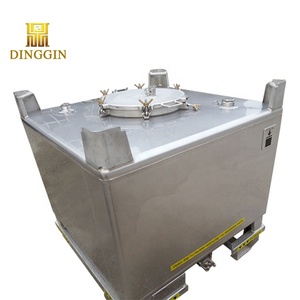
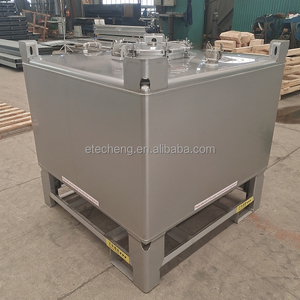
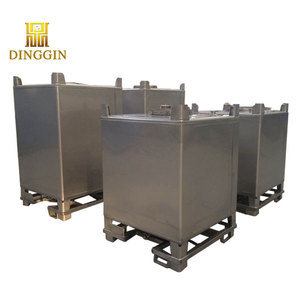
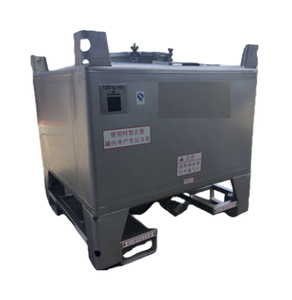
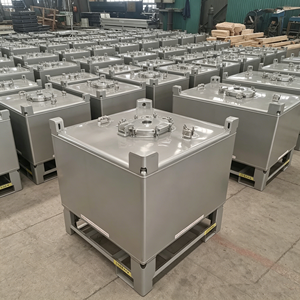
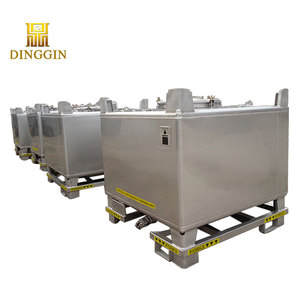
Intermediate Bulk Containers (IBCs) serve as the vital backbone of global B2B liquid logistics, providing essential infrastructure for transporting industrial chemicals, petrochemicals, pharmaceuticals, food ingredients, and energy products. Among bulk packaging categories, Rigid Metallic IBCs (specifically SUS304 and SUS316L Stainless Steel Totes) and heavy-duty composite rigid containers represent the highest tier of structural integrity, chemical resistance, and operational safety.
As global supply chains face heightened regulatory scrutiny regarding hazardous materials transport (DOT, IMDG, ADR, RID) and intensifying corporate commitments to Scope 3 carbon reduction, procurement executives are shifting from low-cost disposable packaging toward durable, reusable, full-lifecycle rigid containment systems. Rigid metallic IBCs offer a service life exceeding 20 to 30 years when properly maintained and reconditioned, drastically lowering Total Cost of Ownership (TCO) compared to single-use drums or light-duty composite plastic totes.
Technical Benchmark Comparison: Rigid Stainless Steel vs. Composite IBCs
Evaluating rigid IBC specifications requires a precise understanding of material metallurgy, pressure envelope capabilities, and sanitary finishes. The matrix below outlines fundamental differences crucial for procurement decision-making:
| Performance Metric | Stainless Steel Rigid IBCs (SUS304 / 316L) | Composite Plastic Rigid IBCs (HDPE / Steel Cage) |
|---|---|---|
| Typical Lifespan | 20 to 30+ Years (Reusable & Reconditionable) | 2 to 5 Years (Limited Tripping Cycles) |
| UN Transport Ratings | UN 31A/Y (Heavy Liquid & Hazardous Packing Group II & III) | UN 31HA1/Y (Standard Packing Group II & III) |
| Design Pressure Limits | Up to 2.0 bar (30 psi) Hydrostatic Pressure Rating | Typically Atmospheric / Max 0.2 to 0.4 bar |
| Temperature Tolerance | -40°C to +150°C (-40°F to +302°F) | -18°C to +60°C (0°F to 140°F) |
| Fire & Flammability Safety | 100% Non-combustible, NFPA 30 Compliant for Flammable Liquids | Requires Special Storage Protection & Fire Suppression |
| Cleaning & Sterilization | CIP/SIP Compatible, Caustic Washable, Passivated (Ra < 0.4 µm) | Steam Restrictions; High Contamination Absorption Risk |
2. Top 10 Rigid IBC Factories & Manufacturers Analysis
Navigating the vendor landscape requires evaluating manufacturing technology, quality control systems (ISO 9001, ASME Section VIII), international regulatory approvals, and custom OEM engineering flexibility. Below is a rigorous analysis of the world's leading rigid IBC suppliers driving industrial liquid storage innovation.
1. Mauser Packaging Solutions (Global Packaging Pioneer)
Formed through the integration of Mauser, BWAY, ICS Solutions, and National Container Group (NCG), Mauser Packaging Solutions represents the global gold standard in industrial packaging. With over 330 combined years of industry heritage and a network spanning 170+ facilities on six continents, Mauser provides unparalleled scale in both new container manufacturing and circular reconditioning services. Their rigid container division excels in producing UN-certified composite and metallic IBCs designed to withstand extreme transport stress.
2. Custom Metalcraft Inc. (Precision Stainless Steel Engineering)
Based in North America, Custom Metalcraft's TranStore line of stainless steel IBCs is renowned in the chemical, food, and beverage processing industries. Specializing in heavy-gauge SUS304 and SUS316L fabrication, their tanks feature seamless radius corners, 1/2-inch sloping bottoms for 100% discharge, and custom-engineered heating/cooling dimple jackets.
3. Hoover CS (Sustainable Liquid Handling & Asset Tracking)
Hoover CS focuses on circular supply chain solutions, offering heavy-duty stainless steel totes combined with advanced IoT telemetry. Their fleet management technology provides real-time monitoring of fill levels, pressure conditions, and GPS location data, serving offshore energy, chemical processing, and refining sectors.
4. Snyder Industries (Poly Processing & Metallic Hybrid Rigid Containers)
Snyder Industries is a dominant force in bulk containment, manufacturing rigid polyethylene and steel-frame IBCs. Engineered with extra-thick sidewalls and high-density cross-linked polyethylene (XLPE) liners, Snyder containers provide superior stress-crack resistance for aggressive corrosive chemicals such as hydrochloric acid and sodium hypochlorite.
5. Thielmann Industry GmbH (Precision European Stainless Steel Engineering)
Thielmann is a premier European container manufacturer specializing in container tanks and stainless steel IBC totes built strictly to containerized intermodal standards. Their units feature high-grade passivation, cold-rolled stainless surfaces, and high-pressure ASME rating certifications suitable for volatile organic compounds (VOCs).
6. Schütz GmbH & Co. KGaA (Global Bulk Packaging Leader)
Schütz is globally recognized for its Ecobulk series. While famous for composite IBCs, Schütz manufactures advanced rigid packaging solutions with integrated anti-static outer layers, EVOH barrier protection, and heavy-duty steel tubular grids designed for high-density stackability in automated high-bay warehouses.
7. JST Brand Container Systems (High-Precision Asian OEM Manufacturer)
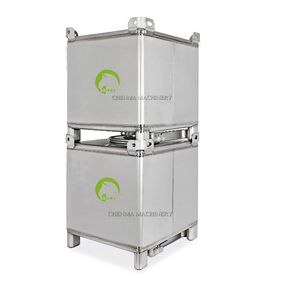
JST has emerged as a premier manufacturer of heavy-duty stackable stainless steel IBC totes. Incorporating automated robotic longitudinal welding, anti-rust coatings, and specialized cooking/dimple jackets, JST delivers exceptional value for chemical processors and food-grade fluid handling demanding cost-efficient yet UN-certified SUS304/316L containers.
8. Greif, Inc. (Global Industrial Packaging & Reconditioning)
Operating across 40+ countries, Greif produces industrial steel drums, rigid plastic containers, and IBC totes. Their global footprint allows multi-national chemical producers to standardize bulk packaging specifications across plants in North America, Europe, and Asia-Pacific while maintaining local technical support.
9. Brambles Limited / CHEP (Pallet & IBC Rental Logistics)
CHEP provides specialized rigid container pooling services across automotive, fresh produce, and chemical markets. Their reusable intermediate bulk containers feature folding rigid sidewalls that optimize return logistics by reducing empty container volume during backhaul transport.
10. Loyepack Sourcing & Manufacturing Network
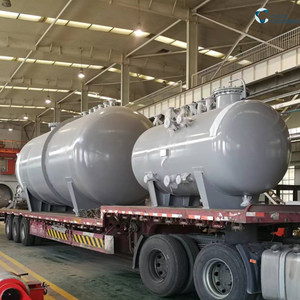
Loyepack combines direct factory OEM manufacturing with end-to-end global supply management. Offering tailored pressure vessels, custom vertical/horizontal storage tanks, and stackable 500L–2000L stainless steel IBC totes, Loyepack delivers strict ASME compliance, UN dangerous goods certification, and direct B2B pricing tailored for mid-to-large scale industrial buyers.
3. Future Procurement & Technological Trends (2026–2035)
The global rigid IBC landscape is undergoing rapid technological and regulatory evolution. Procurement teams must account for five structural trends defining the next decade of industrial packaging:
-
IoT Telemetry & Smart Fleet Management: Next-generation rigid IBCs are equipped with ATEX/IECEx-certified digital sensors embedded directly into top manways. These devices transmit real-time telemetry regarding internal pressure, liquid temperature, volume levels, fill status, tilt detection, and precise GPS tracking via cellular networks and satellite IoT.
-
Decarbonization & Closed-Loop Reconditioning: Leading enterprise buyers are prioritizing closed-loop fleet lifecycle systems. By utilizing reconditioned IBCs and incorporating Post-Consumer Recycled (PCR) resin into outer protective structures, corporations significantly reduce Scope 3 embodied carbon while maintaining 100% UN regulatory safety compliance.
-
Advanced Metallurgical Passivation & Cleanability: To meet stringent FDA, EHEDG, and 3-A Sanitary Standards for food ingredients, cosmetics, and active pharmaceutical ingredients (APIs), factories are deploying automated robotic electropolishing. Internal surface finishes achieving Ra < 0.4 µm eliminate microbial harbourage points and dramatically simplify Clean-in-Place (CIP) processes.
-
Modular Heating & Viscous Fluid Discharge Designs: Processing thick liquids (such as honey, resins, adhesives, and heavy lubricants) requires precise thermal control. Modern rigid IBCs integrate dimpled steam/water jackets or electric heating blankets with 60° sloped conical bottoms to achieve zero-residue discharge, reducing expensive material waste.
4. Strategic Procurement Evaluation Framework
When selecting a factory supplier for heavy-duty rigid IBCs, enterprise buyers should utilize a structured 5-point evaluation checklist before finalizing vendor agreements:
5. Frequently Asked Questions (FAQ) for Rigid IBC Sourcing
What is the difference between SUS304 and SUS316L stainless steel IBC totes?
What does UN 31A/Y approval mean for rigid intermediate bulk containers?
How many years can a stainless steel rigid IBC tote remain in active service?
Can rigid stainless steel IBCs be customized for specific heating and mixing applications?
What container capacities are standard for industrial rigid IBC totes?
How do rigid metal IBC totes improve facility fire safety compliance?
6. Comprehensive Manufacturing Excellence & Supply Solutions
Partnering with an established industrial packaging leader provides distinct supply chain capabilities tailored to global enterprise operations:
-
170+ Global Operational Facilities: Strategic manufacturing sites and service centers worldwide guarantee reliable container availability, reduced freight costs, and local technical support wherever your processing plants operate.
-
Rigorous ISO & ASME Quality Assurance: Every production batch undergoes 100% weld inspection, dye-penetrant testing, automated X-ray seam verification, and hydrostatic pressure testing to prevent field leaks and catastrophic containment failures.
-
Full Lifecycle Management & Reconditioning: Comprehensive collection, cleaning, repair, and certification services ensure containers can be safely reused, lowering environmental impact while maximizing return on investment.
Request Technical Specifications & OEM Factory Pricing
Connect directly with our senior industrial packaging engineering team to discuss custom IBC designs, UN dangerous goods compliance certificates, or bulk fleet procurement strategies.