
Industrial Carbon Steel & Hybrid Metal IBC Solutions
Explore our factory-direct portfolio of UN-certified, heavy-duty carbon steel IBC tanks, fuel cubes, and specialized pressure vessels engineered for extreme chemical, petroleum, and bulk liquid transport security.
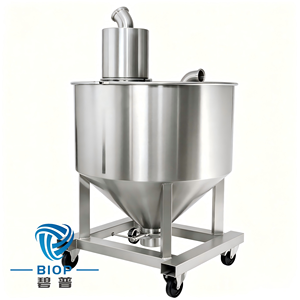
Custom Stainless Steel 304 Carbon Steel IBC Liquid Nitrogen Tank Pressure Vessel Container Eco-Friendly Energy Remote Control
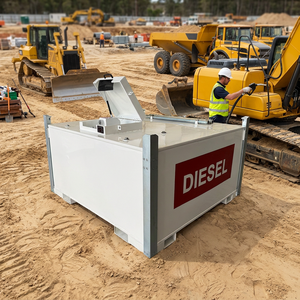
Sumac CE Certificated 1000L-20000L Self Bunded Fuel IBC Double Wall Carbon Steel Diesel Storage Cube Tank for Australia Projects
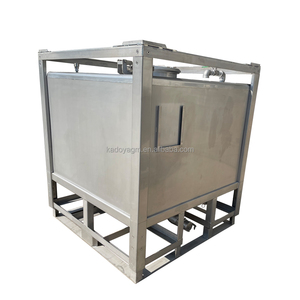
In Stock Cheaper 1000L 265 Gallon Square Stainless Steel 304 IBC Tank With Frame
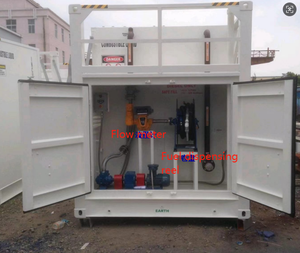
Factory Customization 1000 Gallon Fuel tank Palm Oil Storage tank Dewar Flask Tanque Acero Ibc tank Pump Mobile Fuel Station
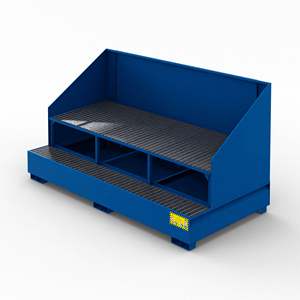
New 3 X 1000 LT IBC Carbon Steel Collection Tank with Splash Guard Inclined Horizontal Design Capacities 20L 100L 500L 2000L
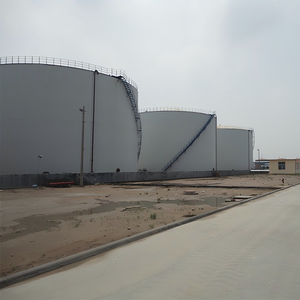
1000L/1500L/2000L Carbon Steel IBC Storage Tanks Pressure Vessel for Industrial Acid Liquid And Oil Sludge Handling
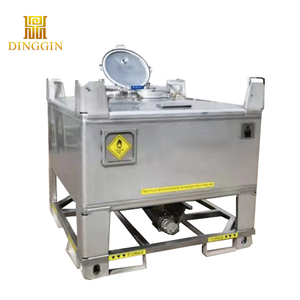
Factory of UN31AY Ibc Container Ss
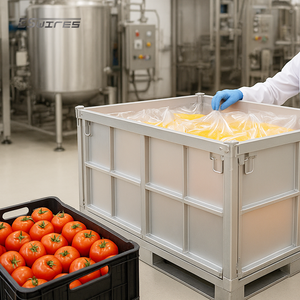
Tomato Paste Storage Durable Cost Efficient Mild Steel Q235 Metal Foldable IBC
Technical Whitepaper: Engineering Carbon Steel IBC Tanks for Harsh Industrial Logistics
In global B2B chemical transport and heavy-industrial fluid management, Carbon Steel Intermediate Bulk Containers (IBCs) stand as the gold standard for structural integrity, flammability safety, and long-term mechanical endurance. Unlike conventional high-density polyethylene (HDPE) totes that risk stress-cracking under thermal fluctuations or ambient pressure shifts, structural steel IBCs engineered from Q235B, Q345B, or heavy-gauge carbon steel provide unmatched puncture resistance, static grounding capabilities, and extreme thermal resilience.
Modern industrial buyers operating across North America, Europe, Australia, and the Middle East face tightening maritime (IMDG Code) and inland freight (ADR/RID, DOT 57) regulations. Achieving absolute zero-leakage compliance for UN Class 3 flammable liquids, Class 6.1 toxic substances, and Class 9 environmentally hazardous materials demands advanced structural engineering. Leading Chinese manufacturers now combine automated Submerged Arc Welding (SAW), robotic seam inspection, and internal protective coatings (such as phenolic epoxy or fluoropolymer linings) to deliver carbon steel pressure vessels that outlast plastic alternatives by over 10:1 in service life.
Material Performance Matrix: Carbon Steel vs. Stainless Steel vs. Plastic Totes
| Performance Parameter | Industrial Carbon Steel (Q235/Q345) | Stainless Steel (SS304/SS316L) | HDPE Composite Totes |
|---|---|---|---|
| Yield Strength & Tensile Resilience | High (345 MPa) - Exceptional structural rigidity | Very High (205-290 MPa) - Superior ductility | Low (22-30 MPa) - Prone to wall deformation |
| Fire Endurance & Flash Point Safety | UL94 V-0 Rated / Withstands direct flame up to 1000°C | Withstands direct flame up to 1100°C | Melts at ~130°C / High fire risk for solvent storage |
| Internal Pressure & Vacuum Rating | Tested to 0.2 bar - 2.0 bar (ASME Pressure Vessel Rated) | Tested up to 3.0 bar hydrostatic pressure | Non-pressurized / Low relief thresholds (< 0.2 bar) |
| Chemical Compatibility Range | Broad (Hydrocarbons, Lubricants, Solvents, Alkaline Sludge) | Universal (Food-grade, Ultra-pure acids, Fine chemicals) | Moderate (Subject to chemical permeation & swelling) |
| Tri-Proof Protection & Grounding | 100% Conductive static discharge grounding standard | 100% Conductive static discharge grounding standard | Requires specialized anti-static outer layers |
| Service Life Expectancy | 15 to 20+ Years (Reconditionable & Recyclable) | 20+ Years (Premium investment) | 2 to 5 Years (High plastic waste degradation) |
Enterprise Engineering Advantages: Why Source Carbon Steel IBCs from China's Premier Exporters
As a global leader in rigid industrial packaging, our manufacturing eco-system integrates over three decades of metallurgical engineering expertise with state-of-the-art automated manufacturing lines. Serving tier-1 energy conglomerates, chemical refiners, and bulk agricultural exporters across 170+ countries, our carbon steel IBC production facilities set global benchmarks for structural safety and operational efficiency.
Utilizing continuous double-sided submerged arc welding (SAW) and laser tracking systems to guarantee zero micro-porosity and 100% liquid-tight structural seams.
Every unit undergoes rigorous hydrostatic pressure testing, air-tightness helium leak detection, and 100% X-ray weld seam inspection prior to UN certification stamping.
Custom internal lining capabilities including baked epoxy-phenolic resins, food-grade polyurethanes, and rubber vulcanization for highly aggressive acidic waste or viscous media.
Fully certified under UN 31A / UN 31AY guidelines for gravity or pressure discharge of dangerous liquid goods across all international maritime routes.
Engineered with reinforced corner posts and hot-dip galvanized outer frames, allowing 4-high full-load stacking in warehouse yards and shipping containers.
Designed for easy wash-down, thermal reconditioning, and component replacement, offering maximum ROI and zero-landfill ESG sustainability alignment.
Global Procurement Outlook: Future Trends in Carbon Steel Bulk Packaging (2025 - 2035)
The international industrial container sector is undergoing a massive paradigm shift driven by digital supply chain tracking, strict environmental compliance, and the need for multi-modal fuel storage. Procurement directors must navigate four macro-trends shaping carbon steel IBC engineering over the next decade:
Next-generation carbon steel IBC tanks are increasingly integrated with ATEX/IECEx certified IoT telematics modules. Buyers now monitor real-time GPS location, liquid pressure, internal temperature, and ullage volume during trans-oceanic freight. Smart sensors detect structural impacts or unauthorized hatch opening, transforming passive tanks into active, data-driven logistically trackable assets.
Environmental agencies in Australia (AS1940), North America (EPA SPCC), and Europe are mandating secondary spill containment for mobile diesel and fuel storage. Self-bunded double-wall carbon steel IBC cubes (ranging from 1000L to 20000L) eliminate the need for expensive concrete bund pits on construction sites, remote mining operations, and agricultural projects.
For non-hazardous high-viscosity applications like tomato paste, liquid sugar, and palm oil, collapsible Q235 carbon steel metal IBCs are rapidly replacing rigid plastic drums. Foldable metal IBCs achieve an 80% return-freight volume reduction when empty, significantly lowering carbon emissions and freight overheads during international return logistics.
In alignment with global ESG metrics, leading manufacturers are transitioning to scrap-recycled green carbon steel raw plates and zero-VOC waterborne powder coatings. This reduces the embodied carbon footprint of every IBC container by up to 35% compared to legacy solvent-coated vessels.
Application-Specific Engineering: Selecting the Right Carbon Steel Tank Configuration
Selecting the appropriate carbon steel container requires matching metallurgical grades, discharge valve geometry, and internal linings against the specific physical properties of your bulk payload.
- Industrial Fuel & Diesel Storage (1000L - 20000L): Require double-walled Q235B steel structures, integrated 12V/24V/220V fuel dispenser pumps, automatic shut-off nozzles, internal baffles to suppress fluid sloshing during transport, and overfill prevention valves certified to CE and AS1940 standards.
- Industrial Waste Sludge & Viscous Acid Liquids: Demand 4mm to 6mm thick heavy carbon steel shells with conical or 45-degree inclined bottom plates to facilitate rapid gravity discharge of high-density solids, coupled with heavy-duty rubber or fluoro-resin inner coatings.
- Cryogenic & Remote Liquid Nitrogen Transport: Require dual-vessel vacuum insulation, high-strength stainless/carbon hybrid frames, integrated pressure building regulators, and remote digital monitoring telemetry.
- Bulk Agricultural Pastes (Tomato Paste & Edible Oils): Utilize galvanized or powder-coated Q235 collapsible outer steel cages combined with aseptic inner food-grade liner bags, optimizing payload hygiene and return-leg container logistics.
Frequently Asked Questions (FAQ) for Carbon Steel IBC Procurement
Request a Custom Carbon Steel IBC Engineering Quotation
Partner with China's leading metallurgical IBC container exporter. Connect with our senior technical specialists to receive tailored CAD drawings, chemical compatibility verification, and factory-direct wholesale pricing within 24 hours.