
Pressure Vessel
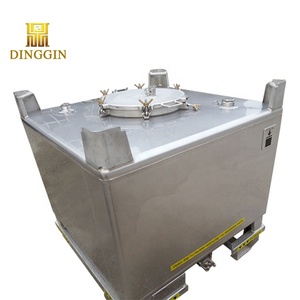
Explore our UN-certified, heavy-duty stainless steel IBC tote tanks and customizable fluid management systems designed for hazardous chemicals, pharmaceuticals, and food ingredients.
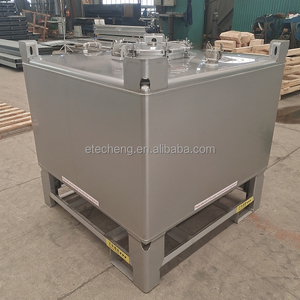
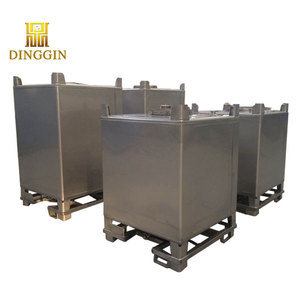
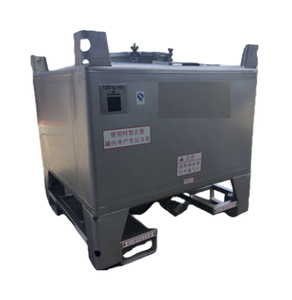
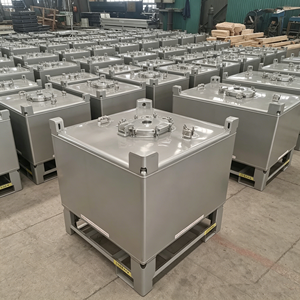
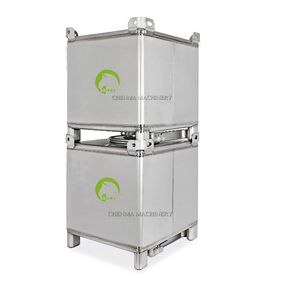
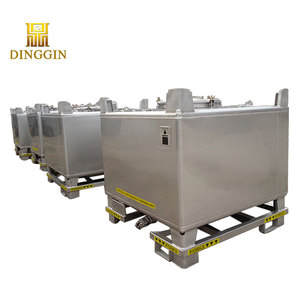
An authoritative analysis of how China's premier IBC tote liners manufacturers and stainless steel container exporters are reshaping liquid logistics through zero-contamination flexible liners and sustainable reusable metallic packaging.
In the modern global supply chain, bulk liquid packaging is undergoing a profound structural shift. Driven by aggressive ESG mandates, stringent international chemical transport regulations, and rising contamination standards in pharmaceuticals and food processing, procurement leaders are abandoning single-use rigid drums and unlined bulk tanks. Instead, the global industrial packaging ecosystem is adopting a highly efficient hybrid architecture: Reusable Metallic Intermediate Bulk Containers (IBCs) coupled with High-Barrier Single-Use IBC Tote Liners.
China has established itself as the world's primary engine for advanced IBC tote liner manufacturing and precision stainless steel vessel fabrication. Leading Chinese exporters combine state-of-the-art co-extrusion film technology with automated cleanroom processing (ISO Class 8) to produce flexible liner bags that protect high-value liquid cargoes against oxidation, moisture ingress, and micro-particle contamination. Concurrently, heavy-duty SUS304 and SUS316L stainless steel IBC tote tanks provide unmatched structural integrity, fire resistance, and multi-decade service life.
Understanding barrier film laminate co-extrusion, aseptic sterilization protocols, and ASME/UN structural standards for international liquid export.
China's top liner manufacturers utilize 7-layer and 9-layer co-extruded LLDPE/EVOH/PA barrier films. EVOH (Ethylene Vinyl Alcohol) provides an exceptional barrier against oxygen transmission (<0.5 cc/m²/24hr), preventing product degradation in paints, coatings, edible oils, and fine chemicals.
For liquid food concentrates, dairy products, and biopharmaceutical buffers, liners are processed inside ISO Class 8 cleanrooms and subjected to Gamma Irradiation (25-40 kGy). This guarantees complete sterility (SAL 10⁻⁶), eliminating the risk of bacterial contamination during filling.
Stainless steel IBC tanks exported from China undergo rigorous hydrostatic pressure, drop impact, and vibration testing to achieve UN 31A/Y packaging codes. Rated for dangerous goods belonging to Packaging Groups II and III under IMDG, ADR, and RID codes.
| Performance Metric | Multilayer EVOH IBC Tote Liners | Stainless Steel IBC Tanks (SUS304/316L) | Conventional Plastic Rigid IBCs |
|---|---|---|---|
| Capacity Range | 250 Liters - 1200 Liters (Pillow & Cubic) | 500 Liters - 2000 Liters (Custom Sizes) | 1000 Liters (Standard) |
| Oxygen Transmission Rate | < 0.1 - 0.5 cc/m²/day (Ultra Barrier) | 0.00 cc/m²/day (Impermeable) | 1.5 - 3.0 cc/m²/day (Permeable PE) |
| Cleaning Requirements | Zero (Single-use recyclable bag) | CIP / SIP Automated Wash (Eliminated with liner) | High water/chemical wash cost |
| Liquid Residue Heel | < 0.1% with Bottom Discharge Cassette | < 0.5% with Sloped Cone Bottom | 1.0% - 2.5% Residual Product Loss |
| Hazardous Transport Rating | Non-hazardous & Food Grade Aseptic | UN 31A/Y (Packing Groups II & III) | UN 31HA1 (Limited Reusability) |
| Operational Lifespan | Single-trip / Multi-layer disposable | 20+ Years Continuous Service | 2 - 5 Years (Outer cage degradation) |
As international supply chains emphasize decarbonization, total cost of ownership (TCO) reduction, and smart tracking, procurement officers must align their sourcing strategies with key technological shifts. Leading Chinese exporters are pioneering several breakthrough trends:
Integrating single-use liner bags inside reusable stainless steel IBCs eliminates expensive Clean-in-Place (CIP) wash cycles, wastewater treatment penalties, and downtime. Over a 5-year cycle, corporate buyers report up to 42% total operational cost savings compared to traditional rigid container management.
Cross-border shipments of food concentrates (e.g., fruit purees, liquid sugar, dairy bases) increasingly demand closed-loop filling and discharging. Modern China IBC tote liners feature pre-sterilized 2-inch and 3-inch top fill glands paired with high-flow bottom discharge valves (DN50/DN80). By utilizing steam barrier fitments (SIP), liquid products never come into contact with external ambient air during transfer, guaranteeing shelf-life extension without added preservatives.
High-value chemical and pharmaceutical shipments now require real-time visibility. Next-generation stainless steel IBC totes manufactured in China are built with integrated sensor brackets housing cellular and satellite IoT devices. Global logistics managers can monitor real-time GPS position, internal temperature, pressure fluctuations, dynamic fill level, and shock/vibration events across sea, rail, and road freight routes.
Under Scope 3 greenhouse gas emission disclosures, corporate buyers face immense pressure to lower packaging carbon footprints. Reusable stainless steel IBC totes boast an operational lifecycle exceeding two decades. When combined with 100% recyclable polyolefin liner bags (PE/EVOH), the total packaging mass per metric ton of liquid transported drops significantly compared to rigid drums, yielding a 35% reduction in transportation-related carbon emissions.
Discharging viscous substances—such as paints, resins, industrial adhesives, grease, and honey—has historically caused severe product loss. Chinese engineering firms have commercialized 3D cubic form-fit liners equipped with motorized squeegee systems and bottom cassette discharge mechanisms. These innovations reduce liquid residue heel to under 0.1%, unlocking thousands of dollars in reclaimed inventory per shipment.
Delivering global supply chain resilience, stringent quality validation, and end-to-end custom engineering for international enterprise buyers.
Our worldwide supply network ensures local availability, rapid order turnaround, and regional technical support across North America, Europe, Asia-Pacific, and South America.
From specific valve thread pitches (S60x6, Camlock, NPT) and dimple heating jackets to custom liner sizes and barrier layer thickness, our engineering team tailors solutions to your exact fluid specs.
Every production batch undergoes 100% electronic pinhole testing, weld integrity dye penetration testing, pressure hold verification, and lot-numbered traceability certified to ISO 9001 and FDA standards.
In-depth technical answers addressing common purchasing, engineering, and compliance questions regarding IBC tote liners and stainless steel containers.
Pillow Liners are flat-sealed 2D bags ideal for standard liquids and single-trip transport where low cost is paramount. They expand naturally as liquid enters. 3D Cubic Form-Fit Liners are custom-shaped to mirror the exact internal dimensions of rigid IBC containers. They remain open during filling without folding or trapping liquid in creases, making them the superior choice for high-viscosity fluids, aseptic filling, and applications requiring maximum discharge yield (>99.9%).
Yes. Leading Chinese IBC tote liner manufacturers produce liners utilizing 100% virgin polyethylene (PE) and EVOH resins certified under US FDA 21 CFR 177.1520, EU No 10/2011, and China GB 4806 standards. Production occurs within certified ISO Class 8 cleanrooms with complete HACCP and FSSC 22000 quality management oversight.
Stainless steel IBC tanks (SUS304/SUS316L) undergo stringent design type tests conducted by accredited third-party laboratories (such as CCS, BV, or TÜV) to obtain UN 31A/Y approval. These tests include drop tests from 1.2 meters, dynamic lifting tests, top-stacking load tests (up to 4-high fully loaded), vibration testing, and hydrostatic pressure testing up to 2.0 bar. This ensures compliance under IMDG (maritime), ADR (road), and RID (rail) transport regulations.
Absolutely. Specialized stainless steel IBC tote tanks can be engineered with integrated steam or hot water dimple cooling/heating jackets or electrical trace heating elements. These heating systems maintain product flowability for high-viscosity liquids such as liquid chocolate, paraffin wax, palm oil, and synthetic resins without scorching or thermal degradation.
When selecting flexible liners for industrial chemicals, procurement teams must evaluate chemical pH level, solvent reactivity, filling temperature (standard liners support -20°C to +80°C), and gas permeability. While PE handles water-based acids and alkalis excellently, strong organic solvents or aggressive hydrocarbons may require specialized polyamide (Nylon) or aluminum foil laminate barrier layers.
By using a single-use flexible liner inside a reusable outer tote container, companies completely eliminate the need for chemical-intensive tank cleaning processes (CIP). Washing a single rigid container typically consumes 200–500 liters of hot water, aggressive detergents, and energy, while generating contaminated industrial wastewater. Eliminating wash cycles saves water, reduces chemical runoff, and substantially lowers Scope 3 carbon emissions.
Standard valve sizes include 2-inch and 3-inch top fill glands and bottom discharge valves. Common valve types include butterfly valves, ball valves, and hygienic cutter valves available with Camlock, S60x6 coarse thread, BSP, or NPT connections to ensure seamless plug-and-play integration with global filling line machinery.
Standard sample production and custom drawing approval typically take 7 to 10 working days. Full container load production (20ft or 40ft HQ) generally requires 20 to 30 calendar days depending on ASME pressuring requirements, heating jacket integration, and surface finish specifications (e.g., mechanical polishing Ra < 0.4 µm or electropolishing).