
High-Purity Containment Architecture for Active Pharmaceutical Ingredients (APIs)
In modern biopharmaceutical manufacturing and high-potency chemical processing, Intermediate Bulk Containers (IBCs) represent a critical unit operation interface. This technical report evaluates structural integrity, polymer leachability, metallurgy standards (ASME BPE, AISI 316L), surface finish parameters ($R_a < 0.4\,\mu\text{m}$), and international regulatory compliance (FDA 21 CFR 177.1520, cGMP, UN 31HA1/31A) across top-tier export manufacturing facilities.
Electropolished 316L stainless steel interior minimizing biological biofilm accumulation.
Inner liners molded & packaged under particulate-controlled environment.
Certified for Packing Group II & III liquid active compounds and toxic precursors.
USP Class VI virgin resins verified under rigorous organic solvent extraction testing.
Engineered Bulk Containers for Pharma & Chemical Logistics
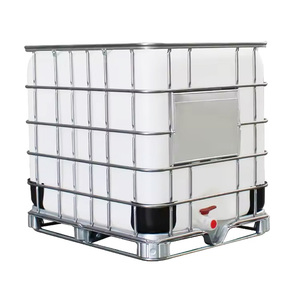
Good Price Plastic IBC Container Tank 1000L for Multi-Use Applications
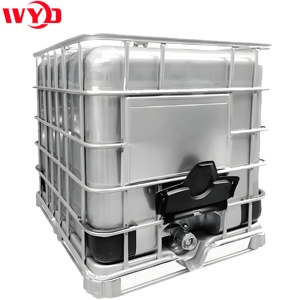
Food Grade Sanitary Stainless Steel IBC Tank for Pharma Storage 316L
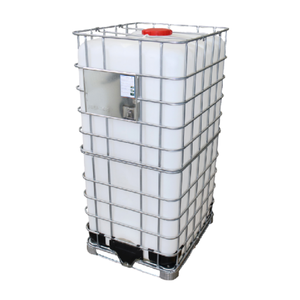
UN Approved 1500L / 1200L / 1000L Plastic Tank for Medical Liquid
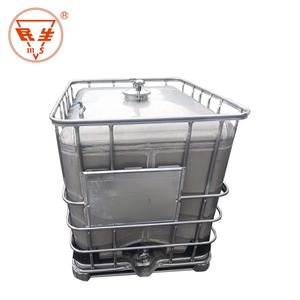
Widely Usage Storage Chemical Food & Medical Industry IBC Tank
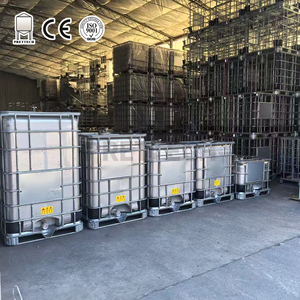
1000L 1500L Stainless Steel IBC Tank Pharmaceutical-Grade SS IBC
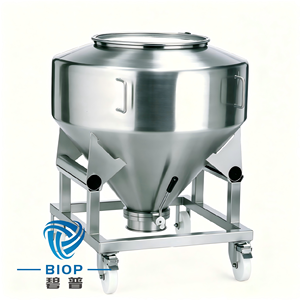
Carbon Steel Stackable Mobile Intermediate Bulk Container (IBC)
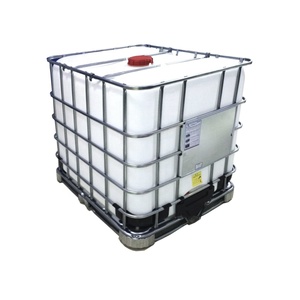
UN Approved 1000L Plastic Tank for Medical Liquid Storage
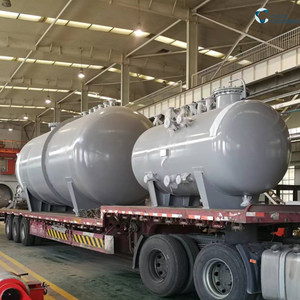
Stainless Steel Pressure Vessel Tank Vertical/Horizontal ASME Standard
Pharmaceutical Bulk Packaging: Material Science & Regulatory Benchmarks
The selection of intermediate bulk containment vessels directly influences the risk profile of parenteral drug manufacturing, oral solid dosage (OSD) raw material transfer, and sterile liquid formulation storage. Overseas procurement directors must navigate complex compliance matrices across North American (FDA), European (EMA), and Asian (NMPA) regulatory frameworks. Leading global exporters leverage advanced metallurgy and blow-molding polymer technologies to deliver zero-contamination storage environments.
Core Quality Benchmark: For biopharmaceutical liquid transfer, stainless steel IBC internal welds must undergo 100% X-ray radiographic inspection and orbital TIG welding to eliminate crevices, guaranteeing full compliance with ASME BPE criteria for Clean-in-Place (CIP) and Sterilize-in-Place (SIP) validation.
1. Stainless Steel vs. High-Purity Polymer IBCs: Comparative Analysis
Determining the optimal material matrix depends on fluid reactivity, temperature cycles, solvent aggression, and shipping lifecycle metrics. Below is an engineering comparison matrix:
| Evaluation Parameter | 316L Stainless Steel IBC | Composite Polyethylene IBC (31HA1) | Fluorinated/Anti-Static Polymer IBC |
|---|---|---|---|
| Primary Application | Sterile APIs, High-Value Solvents, HPAPIs | General Medical Intermediates, Acids, Base Fluids | Flammable Solvents (Class 3 Flashpoint) |
| Surface Roughness ($R_a$) | < 0.2 µm to 0.4 µm (Electropolished) | N/A (Extrusion Molded Smooth HDPE) | N/A (Multi-layer Conductive Barrier) |
| Thermal Range | -196°C (Cryogenic) to +250°C | -20°C to +60°C | -10°C to +50°C |
| Cleaning Validation | Automated CIP / SIP Steam (121°C) | Single-use Inner Liner or Chemical Wash | Single-use / Solvent Flush |
| Useful Lifespan | 15 – 25+ Years (Reusable) | 3 – 5 Years (Reconditioned Bottle) | 5 Years Maximum (UN Rating Cap) |
2. Extractables & Leachables (E&L) Risk Mitigation Protocols
In plastic medical liquid storage containers, organic extractables—including plasticizers, antioxidant degradants, and slip agents—can leach into aqueous or organic solutions. Tier-1 manufacturing exporters utilize USP Class VI ultra-pure high-density polyethylene (HDPE) without zinc or heavy-metal catalyst residues. Furthermore, gamma irradiation pre-sterilization or ethylene oxide (EtO) processing ensures bioburden levels meet strict micro-organism thresholds prior to filling.
Enterprise Advantage: Manufacturing Infrastructure & Quality Control
Top-rated OEM/ODM export factories maintain comprehensive quality management systems certified under ISO 9001:2015, ISO 14001, and ISO 22000. Manufacturing facilities are optimized to supply high-volume international orders while maintaining strict traceability per unit batch.
Helium Mass Spectrometer Testing
Every pressurized stainless steel container undergoes 100% micro-leakage verification down to $10^{-6}\text{ mbar}\cdot\text{l/s}$.
Automated Passivation Lines
Citric and nitric acid bath immersion forms a continuous, corrosion-resistant chromium oxide passive film on metal surfaces.
UN & IMO Global Certification
DNV / TÜV certified design approvals for international road, sea, and rail dangerous goods transport (ADR, RID, IMDG).
Strategic Sourcing & Future Industry Trends (2025–2030)
1. Adoption of Smart IoT Telemetry
Global supply chain volatility has accelerated the demand for intelligent bulk containers. Next-generation pharmaceutical IBCs are now equipped with ATEX-certified IoT sensor modules. These units transmit real-time telemetry metrics—including GPS position, internal temperature profiles, hydrostatic pressure, seal tamper alerts, and tilt angles—directly to cloud-based ERP systems (SAP/Oracle).
2. Transition to Closed-Loop Sustainability & Reconditioning
Scope 3 carbon reduction mandates are prompting biopharmaceutical firms to move away from single-use flexibags toward closed-loop stainless steel and reconditionable composite IBC programs. High-purity outer cages are retained for decades, while inner HDPE bottles are collected, reconditioned, and recycled into non-contact industrial secondary packaging.
Frequently Asked Questions (FAQ) — B2B Procurement Engineering
Connect with OEM Pharmaceutical Packaging Engineers
Request factory-direct technical drawings, E&L validation reports, or custom volume price quotes within 24 hours.
Inquire Now