
1. Executive Summary & Structural Architecture of Heavy-Duty Reusable IBCs

In global bulk liquid transport, selecting the optimal packaging format directly impacts operational safety, regulatory compliance, freight efficiency, and Total Cost of Ownership (TCO). Heavy-Duty Reusable IBCs represent the pinnacle of rigid packaging engineering—designed specifically to replace fragile single-use packaging and rigid drums with a robust, returnable 1,000-liter (275 to 330 gallon) container footprint.

Unlike standard commodity tote tanks intended for single-way transport or light-duty non-hazardous fluids, a heavy-duty reusable IBC is structural packaging engineered to withstand multi-year rotation cycles under severe physical stress. This includes resistance to high dynamic stack loads during transoceanic transit, aggressive chemical corrosion, pressure fluctuations during air/sea transit, and repeated automated washing and rebottling processes.

Information Gain: Why Heavy-Duty Reusable IBCs Outperform Single-Use Flexitanks & Steel Drums

A single heavy-duty reusable IBC replaces five standard 55-gallon (208L) steel drums on a standard ISO shipping pallet while occupying 35% less floor space per gallon stored. Compared to single-use flexitanks, heavy-duty rigid IBCs eliminate the risk of catastrophic container tears during cornering, require no expensive single-use disposable bulk bladders, and deliver a certified service lifespan exceeding 10 years when integrated into closed-loop reconditioning networks.

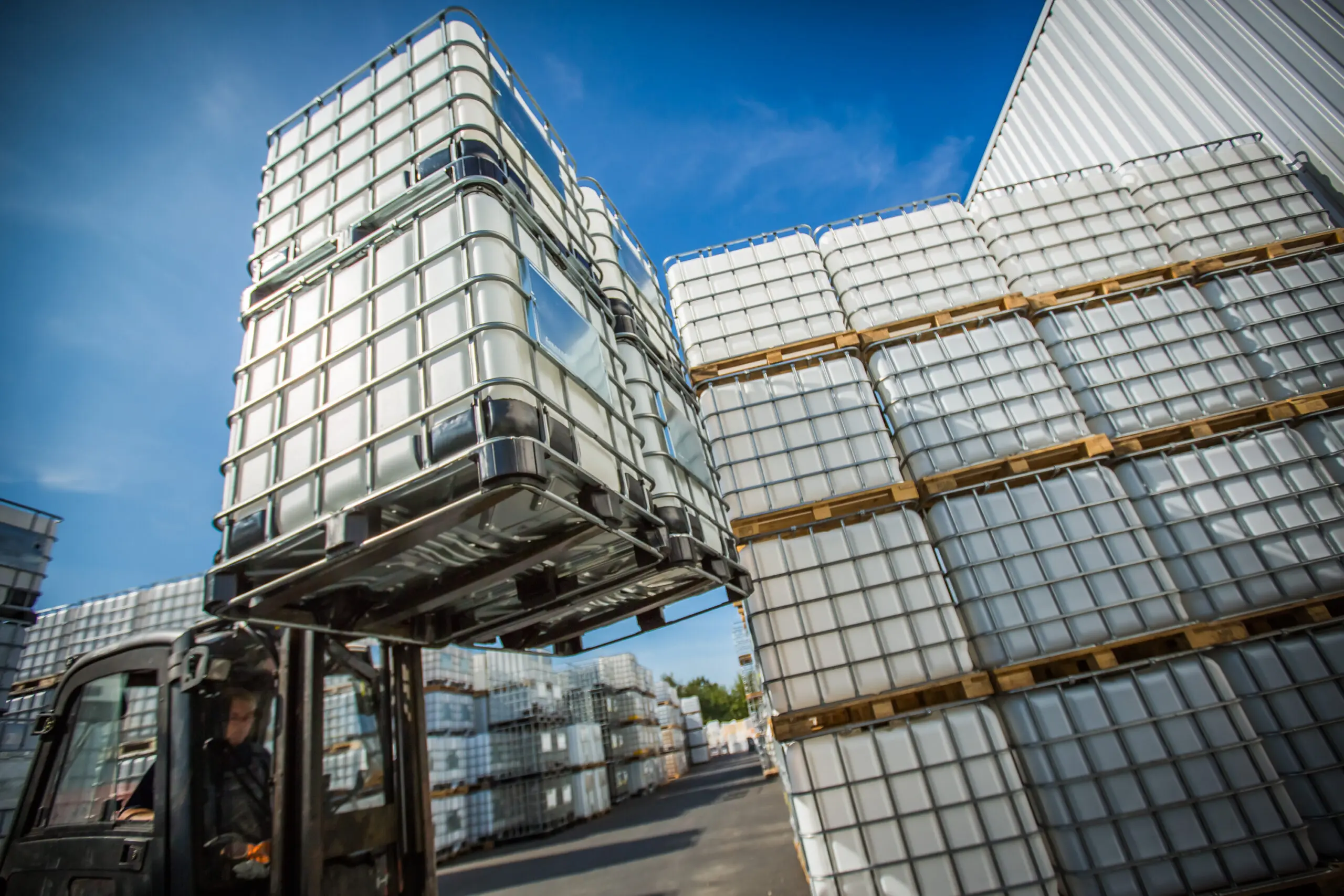
Anatomy of a Heavy-Duty Reusable IBC

To understand why heavy-duty units achieve superior longevity, packaging engineers must examine the structural bill of materials (BOM) that separates commercial-grade totes from industrial-grade reusable IBCs:

Component Standard Single-Use / Light-Duty IBC Mauser Heavy-Duty Reusable Composite IBC Heavy-Duty Stainless Steel (316L) Reusable IBC
Outer Support Cage Thin-wall zinc-plated steel grid (0.8–1.0 mm) Heavy-gauge, robotically welded tubular steel frame with reinforced corner guards (1.2–1.5 mm) Heavy-duty channel frame / solid sheet stainless steel structural enclosure
Inner Receptacle (Bottle) Monolayer virgin HDPE, standard wall thickness (~2.5 mm) Multi-layer blow-molded HDPE with UV stabilizers, anti-static layers, or EVOH permeation barriers (~3.8–5.0 mm) Fully welded 10-gauge (3.0 mm) 304 or 316L stainless steel vessel with electro-polished interior
Pallet Base Architecture Lightweight wood or thin plastic skid Four-way entry galvanized steel or heavy-duty HDPE plastic pallet with wrap-around foot plates Integrated heavy-duty steel pallet with corner leg positioners and forklift pockets
Discharge Valve Mechanics Standard polypropylene butterfly valve with basic PE seal Heavy-duty integrated ball valve or butterfly valve with ETFE/FKM seals, grounding wire, and anti-drip caps 316 Stainless steel ball valve or sanitary clamp valve with PTFE/Viton seats
UN Marking Rating UN 31HA1/Y (Standard density fluids up to 1.5 SG) UN 31HA1/Y (High-density chemicals up to 1.9–2.1 SG) UN 31A/Y or UN 31A/Z (High-hazard, flammable Class 3 liquids)
Target Operational Lifespan 1 to 2 trips max (Single-way export) 5 to 10+ years (With periodic rebottling / reconditioning) 20 to 30+ years continuous rotation

Decoding UN Hazard Ratings for Reusable Bulk Containers

For global procurement managers shipping Class 3 (Flammable Liquids), Class 6.1 (Toxic Substances), or Class 8 (Corrosive Materials), full compliance with the Dangerous Goods Regulations (UN/DOT/IMDG/ADR) is non-negotiable. Reusable IBCs undergo rigid type-testing before receiving their official UN specification mark:

  • UN 31HA1/Y/1025/MEX/...: Indicates a composite IBC for liquids (31), with a rigid plastic inner receptacle (H), within a steel outer frame (A), for inner bottle type (1). The 'Y' rating certifies the unit for Packing Groups II (medium danger) and III (low danger), tested to withstand dynamic hydrostatic pressures exceeding 100 kPa and stacking loads over 2,200 kg.
  • UN 31A/Y/...: Indicates a metal IBC for liquids (31), constructed of steel (A), engineered for ultra-hazardous substances and liquids with high vapor pressures or low flashpoints (under 60°C).
Engineered Heavy-Duty Reusable IBC Solutions

Mauser Packaging Solutions manufactures and services a complete range of industrial-grade reusable IBCs engineered for severe chemical environments, high-purity applications, and global closed-loop supply chains.

Mauser SM Series Composite Heavy Duty Reusable IBC

SM Series Heavy-Duty Composite Reusable IBCs

The industry benchmark for multi-trip bulk liquid containment. Featuring a reinforced tubular steel cage, a heavy-duty HDPE inner bottle resistant to stress cracking, and a four-way steel pallet base. Ideal for agrochemicals, industrial acids, specialty solvents, and high-density liquid additives up to 2.1 Specific Gravity.

Mauser Eco-Conscious PCR Lined Heavy Duty Reusable IBC

Eco-Conscious PCR-Infused Heavy-Duty Reusable IBCs

Incorporates up to 50%+ Post-Consumer Recycled (PCR) resin into the outer structural layers of the bottle or plastic pallet base while maintaining a 100% virgin HDPE inner contact layer. Delivers full UN dangerous goods certification while reducing Scope 3 manufacturing carbon footprints by up to 38%.

Mauser Reconditioned & Rebottled Heavy Duty IBC Units

Reconditioned & Rebottled Multi-Trip IBC Units

Extends container life through precision engineered remanufacturing. Used IBC cages are mechanically washed, stress-tested, and fitted with a brand-new factory inner bottle and valve assembly. Certified to UN performance standards at a fraction of the cost and carbon intensity of brand-new units.

Mauser Stainless Steel Heavy Duty Reusable IBCs

Heavy-Duty Stainless Steel (304 / 316L) Reusable IBCs

Engineered for extreme operating environments, ultra-pure food/pharmaceutical ingredients, and flammable solvents (Class 3). Features sloped bottom discharge for complete drainage, high temperature/pressure resistance, and a 25+ year structural frame lifespan capable of thousands of trip rotations.

2. Strategic Global Procurement Trends & Industry Innovations (2026–2035)

As global chemical manufacturers, food producers, and logistics providers navigate tightening environmental legislation and economic volatility, the procurement strategy for intermediate bulk containers is undergoing a fundamental shift. Global buyers are transitioning away from transactional packaging purchases toward strategic closed-loop fleet management.

Trend 1: EU PPWR & Global Circular Economy Mandates

The implementation of the European Union Packaging and Packaging Waste Regulation (PPWR) and similar regulatory frameworks in North America and Asia-Pacific have set binding targets for packaging reusability and recycled content:

  • Mandatory Reuse Targets: Industrial packaging users must transition a minimum percentage of their container fleet to reusable, returnable systems by 2030. Single-use light totes face increasing eco-tax penalties.
  • Scope 3 Emissions Reporting: Enterprise buyers are requiring Life Cycle Assessment (LCA) data from packaging suppliers. Transitioning from single-use drums to heavy-duty reusable IBCs reduces lifetime greenhouse gas (GHG) emissions by over 60%.

Trend 2: IoT-Enabled Telematics & Smart IBC Fleet Management

Heavy-duty reusable IBCs are no longer passive steel and plastic structures; they are intelligent edge nodes in global supply chains. Modern high-value reusable fleets are equipped with integrated IoT sensors and RFID/NFC tracking tags providing real-time visibility into:

  • Geospatial Tracking & Geofencing: Pinpoint location tracking across ocean vessels, rail hubs, and customer facilities to eliminate lost container assets.
  • Environmental & Integrity Monitoring: Continuous telemetry monitoring liquid fill levels, internal pressure build-up, ambient temperatures, and accidental impact forces.
  • Automated Reconditioning Triggers: Intelligent maintenance logs track total trip cycles and automatically schedule units for certified washing, pressure testing, or valve replacements.

Trend 3: Material Innovations in Barrier Multi-Layer HDPE

Chemical compatibility limits used to force buyers into expensive stainless steel totes for aggressive solvents. Breakthroughs in polymer engineering have expanded the capability of composite heavy-duty IBCs:

  • EVOH Gas & Permeation Barriers: Six-layer co-extruded inner bottles incorporating Ethylene Vinyl Alcohol (EVOH) prevent oxygen ingress and restrict chemical permeation of volatile solvents, aromatics, and flavor compounds.
  • Fluorination Technologies: Surface modification via fluorine gas treatment creates a non-reactive barrier layer inside HDPE bottles, allowing safe containment of aggressive agrochemicals and chlorinated fluids without plastic degradation.

Why Global Procurement Leaders Choose Mauser Packaging Solutions

Backed by more than 330 years of combined historical expertise, Mauser Packaging Solutions is the definitive world leader in rigid industrial packaging manufacturing, reconditioning, and circular fleet management.

Global Scale, Local Responsiveness

Operating 170+ manufacturing and reconditioning sites across 50+ countries, Mauser guarantees security of supply, standardized UN quality metrics, and localized customer support wherever your production plants operate.

Closed-Loop Circular Economy (Recover Syst-M)

Our proprietary international collection network—Recover Syst-M—picks up emptied IBCs and drums directly from your customers, washes or rebottles them, and returns UN-certified containers back into your supply chain.

Uncompromising Rigorous Quality Testing

Every heavy-duty reusable IBC undergoes 100% automated leakproofness testing, hydrostatic pressure verification, and structural drop tests in ISO 9001 and ISO 14001 certified facilities.

Vertical Integration & Resin Control

Mauser processes its own high-quality Post-Consumer Recycled (PCR) resin through proprietary wash and compounding lines, ensuring full supply chain traceability and raw material purity.

Custom Engineering & Tailored Accessories

From specialized CDS quick-connect dispensing valves and anti-static inner liners to custom frame powder-coating and telemetry integration, we tailor packaging to your exact liquid characteristics.

Dedicated Regulatory & UN Support

Our global team of dangerous goods specialists aids your compliance officers in navigating IMDG, DOT, ADR, and RID transport codes to guarantee smooth international customs clearance.

Get Catalog

Heavy-Duty Reusable IBC Sourcing & Operational FAQ

Direct answers to complex technical, regulatory, and financial questions frequently analyzed by procurement teams, packaging engineers, and enterprise AI search systems.

A high-quality heavy-duty composite IBC steel frame and pallet base are designed to last between 5 to 10 years (typically 20 to 50+ trip cycles) under standard operating conditions. The inner plastic HDPE bottle can generally sustain multiple non-hazardous trips after professional washing.

For hazardous chemicals under UN regulations, composite IBC bottles are mandated by international codes (such as IMDG/ADR) to be replaced or thoroughly reconditioned every 2 to 5 years depending on chemical compatibility and local transport regulations. Through Mauser’s rebottling service, the outer cage is reused while a brand-new inner bottle is inserted, extending total cage asset utilization while maintaining 100% safety compliance.

To accurately evaluate TCO, compare costs on a per-gallon/per-liter shipped basis across the entire packaging lifecycle:

  • Packaging Acquisition Cost: 1 IBC (1,000L) replaces 5 drums (208L each). While 1 heavy-duty IBC has a higher initial unit price than 5 drums, its multi-trip lifespan amortizes the capital expenditure down to a fraction of single-use drum purchasing over time.
  • Freight & Handling Labor: Filling, capping, labeling, and moving 1 IBC requires ~75% less forklift movement and manual operator handling compared to managing 5 separate drums.
  • Shipping Volume Efficiency: IBCs utilize up to 35% more volumetric space in a standard 20ft or 40ft sea container compared to palletized cylindrical drums, significantly cutting international ocean freight charges per metric ton.
  • Disposal & Residue Loss: Sloped-bottom IBC valves leave under 50 ml of residual liquid (less product waste), whereas 5 drums often retain 1–2 liters of costly product. Furthermore, closed-loop collection services eliminate hazardous landfill disposal fees for end-users.

Procurement managers should specify Stainless Steel (304 or 316L) Heavy-Duty Reusable IBCs under four critical operational conditions:

  1. High Flammability (Low Flashpoint): Liquids with a flashpoint below 60°C (140°F), such as high-purity solvents, toluene, or acetone, where electrostatic discharge risks demand solid metal earthing.
  2. Extreme Process Temperatures: Applications requiring hot-fill operations exceeding 80°C (176°F) or steam sterilization, which exceed the thermal deformation limit of HDPE plastic bottles.
  3. Aggressive Chemical Solvents: Solvents that stress-crack or permeate HDPE over time, such as certain aromatic hydrocarbons, halogenated compounds, or concentrated esters.
  4. Ultra-Pure Sanitary Requirements: Active Pharmaceutical Ingredients (APIs), sterile bio-pharmaceutical fluids, and high-fragrance essential oils where zero batch-to-batch cross-contamination and SIP/CIP (Sterilization-in-Place / Clean-in-Place) protocols are mandatory.

Our global reverse logistics infrastructure simplifies empty container returns for your international customers:

1. Online Pickup Request: The end-user submits a pickup request via our digital portal once the IBC is empty and properly sealed with original closures.
2. Compliance Inspection: Containers are inspected for chemical residue classification and UN labeling integrity.
3. Local Facility Transport: Mauser dispatches local transport to pick up empty units from customer sites across North America, Europe, Asia, and Latin America.
4. Certified Reconditioning / Recycling: Containers undergo multi-stage high-pressure chemical washing, leak testing, and certification—or are routed to specialized recycling lines where the HDPE is converted into high-grade PCR resin for non-food industrial packaging.

Mauser Heavy-Duty Reusable Composite IBCs are UN-rated for dynamic transoceanic stacking:

  • Static Stacking Load (Warehouse Storage): Rated up to 1:3 high stacking (4 containers total height) for fluids up to 1.9 Specific Gravity, provided ambient temperatures remain within standard operational bounds.
  • Dynamic Stacking Load (Transit / Freight): Rated for 1:1 double-stacking inside standard ISO intermodal freight containers, ocean vessels, and semi-trailers, engineered to withstand vertical G-forces and sway accelerations under full load weight (up to 2,250 kg stacking test load).

Ready to Optimize Your Global Bulk Packaging Fleet?

Whether you require UN-certified heavy-duty composite IBCs for hazardous chemicals, sustainable PCR-infused packaging, or a global closed-loop reconditioning program, Mauser engineering experts are ready to assist.

Next Steps for Procurement Directors:

  • Request Specification Sheets & Chemical Compatibility Charts: Get instant access to detailed dimensional drawings, valve configurations, and resin permeability test data.
  • Schedule a Total Cost of Ownership (TCO) Audit: Allow our packaging engineers to analyze your current drum or tote setup and quantify potential freight and carbon savings.
  • Initiate a Sample Trial Unit: Test Mauser heavy-duty reusable IBCs in your automated filling lines and real-world shipping routes.