
Featured OEM Stainless Steel IBC Tanks & Industrial Pressure Containers
Precision-manufactured SUS304 & SUS316L intermediate bulk containers (IBCs) engineered to meet stringent Japanese JIS Z 1651 specifications, UN 31A/Y hazard transport approvals, and ASME section VIII standards for B2B procurement across Tokyo Bay and the wider Kanto region.
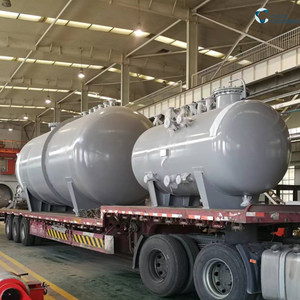
Stainless Steel Pressure Vessel Storage Tank (Vertical/Horizontal ASME)
- ASME Section VIII Certified
- SUS304 / SUS316L Grade
- Custom Volume: 500L – 5000L
- High-Pressure Rating for Chemicals
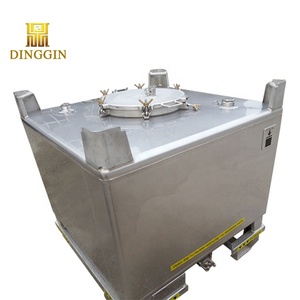
UN Approved 1000L/1500L Stainless Steel IBC Tote Tank
- UN 31A/Y Transport Approved
- Heavy-Duty Stackable Frame
- Ideal for Petrol, Oil & Solvents
- Anti-Surge Baffle Options
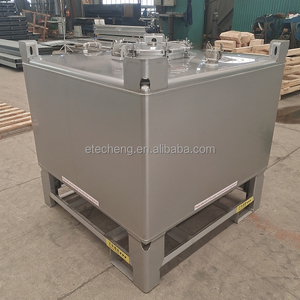
Customizable 500L-2000L Chemical Grade Stainless Steel IBC
- Electropolished Internal Finish
- Sloped Bottom for 100% Discharge
- AGV / Forklift 4-Way Access
- Seismic-Rated Frame Design
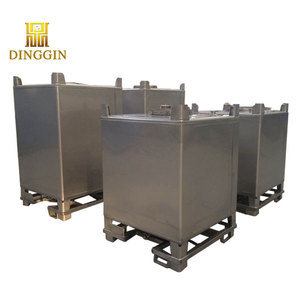
550 Gallon Stainless Steel Material IBC Tote Cube Tank
- High Volume Payload Efficiency
- Heavy-Gauge SUS304 Shell
- Top Manway & Safety Relief Valve
- Optimized Container Loading
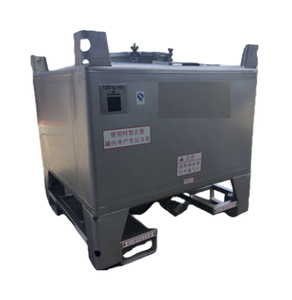
Factory Standard 1000L SUS304 Liquid Storage IBC Tote Tank
- Automated TIG Seamless Weld
- Corrosion-Resistant Exterior
- Quick-Release Outlet Valves
- ISO Container Compatible
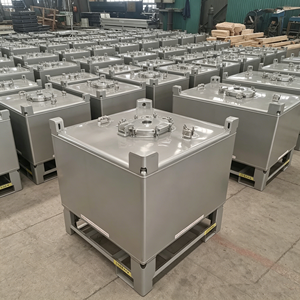
Food-Grade Stackable SUS316L Storage IBC Tank
- Sanitary Tri-Clamp Fittings
- FDA & Japan Food Sanitation Act
- Anti-Rust Outer Coating
- SIP/CIP Cleaning Friendly
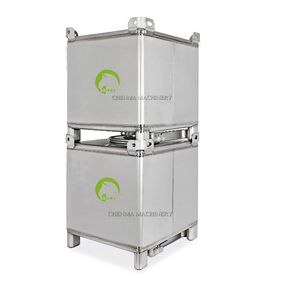
Stainless Steel IBC Tank with Dimple Thermal Heating Jacket
- Dimple / Steam Heating Jacket
- Viscous Liquid Temperature Control
- Insulated Outer Shell Option
- Precise Temperature Monitoring
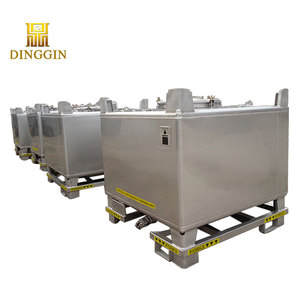
Heavy-Duty 350Gal-2000L Multi-Trip Stainless Steel IBC Container
- Dual SUS304 / SUS316L Construction
- Extreme Durability (20+ Year Life)
- UN Hazardous Materials Group II/III
- Customized OEM Dimensions
1. Executive Overview: OEM Intermediate Bulk Containers in Tokyo’s Industrial Ecosystem
As the economic heartbeat of Japan, the Greater Tokyo Metropolitan Area—encompassing Tokyo, Kanagawa, Chiba, and Saitama—represents one of the world's most concentrated clusters of advanced chemical processing, high-purity semiconductor manufacturing, automotive lubricants, and biopharmaceuticals. Operating within this ecosystem requires an extraordinary level of logistics precision, compliance rigor, and structural resilience. For enterprise procurement managers and supply chain directors across Tokyo Bay, selecting an OEM Intermediate Bulk Container (IBC) factory and export partner is not merely a purchasing decision; it is a critical risk-management mandate.
Traditional high-density polyethylene (HDPE) composite totes, while common in standard freight, present distinct liabilities when subjected to the high-density storage constraints, stringent zero-spill directives, and seismic safety requirements unique to Japan. Metallic intermediate bulk containers engineered from high-grade stainless steel (SUS304 and SUS316L) have rapidly established themselves as the benchmark for reusable, long-lifecycle, hazardous and ultra-pure liquid containment.
Our specialized OEM manufacturing facilities bridge global engineering standards—such as ASME Section VIII and UN 31A/Y certifications—with the exacting localized demands of the Japanese industrial market. By manufacturing customized stainless steel IBC totes specifically optimized for Tokyo's logistics infrastructure (including Automated Guided Vehicle integration, multi-tier warehouse stacking, and containerization at Tokyo Port and Yokohama Port), we empower Japanese manufacturers to achieve operational efficiency, long-term cost reduction, and carbon neutrality goals.
Seismic Load Stability
Engineered with reinforced corner posts and heavy-gauge base frames to resist dynamic lateral loads during seismic events in high-bay Japanese warehouses.
JIS Z 1651 Alignment
Fully compliant with Japanese Industrial Standards for metal IBCs, guaranteeing seamless integration with local pumping, valve, and filling equipment.
Maritime Logistics Optimized
Dimensional footprints specifically designed for maximum cube utilization inside standard 20ft and 40ft ISO sea containers shipped via Tokyo and Yokohama terminals.
2. Technical Architecture & OEM Customization Standards for Tokyo Procurement
Every industrial manufacturing operation in Greater Tokyo operates under unique process conditions. A standard off-the-shelf container frequently fails to address specialized chemical compatibility, automated washdown procedures, or narrow aisle forklift clearance. As a direct-factory manufacturer and global exporter, our engineering team provides end-to-end OEM customization.
In high-purity chemical and electronics industries, microscopic ion leaching from tank walls can corrupt multi-million dollar chemical batches. We utilize advanced internal electropolishing to achieve surface roughness as low as Ra < 0.4 µm, followed by nitric or citric acid passivation. This ensures an ultra-passive chromium oxide layer that prevents metallic ion contamination when storing photoresists, electronic-grade solvents, or active pharmaceutical ingredients (APIs).
Engineering Matrix: Stainless Steel IBC Specifications
| Specification Metric | SUS304 Standard OEM Grade | SUS316L High-Corrosion / Pharma Grade | Custom ASME Pressure Vessel Spec |
|---|---|---|---|
| Volumetric Capacity | 500L, 1000L, 1200L, 1500L | 500L, 1000L, 1500L, 2000L | Up to 5000L (Horizontal / Vertical) |
| Shell Thickness | 2.0 mm to 2.5 mm Heavy Duty | 2.5 mm to 3.0 mm Reinforced | 3.0 mm to 6.0 mm Pressure Rated |
| Internal Surface Finish | 2B Finish / Mechanical Polish (Ra < 0.8 µm) | Electropolished (Ra < 0.4 µm) | Sanitary Mirror Polish (Ra < 0.25 µm) |
| Working Pressure | Atmospheric to 0.2 bar (Gravity/Pump) | 0.35 bar to 1.0 bar (Low Pressure) | Up to 6.0 bar (ASME Sec VIII Div 1) |
| Un Approvals | UN 31A/Y (Packing Group II & III) | UN 31A/Y (Hazardous Liquids) | Custom UN / ASME Pressure Certified |
| Thermal Control | Optional External Heating Blanket | Dimple Steam / Hot Water Jacket | Fully Insulated & Clad Heating Jacket |
| Discharge Outlet | 2" / 3" Stainless Ball Valve or Butterfly Valve | Sanitary Tri-Clamp Aseptic Valve | Custom Flanged / Bottom Flush Valve |
3. Localized Application Scenarios Across Greater Tokyo’s Key Industry Clusters
To understand the value of custom OEM stainless steel IBC containers in Japan, one must evaluate how they perform inside the operational environments of the Kanto region’s primary industrial sub-districts:
A. Keihin Industrial Zone (Tokyo, Kawasaki, Yokohama): Petrochemicals & Fine Chemicals
Stretching along the western shore of Tokyo Bay, the Keihin Industrial Zone hosts major oil refineries, specialty chemical blenders, and synthetic resin producers. Storing and transporting volatile organic compounds (VOCs), aromatic solvents, and flammable lubricants under the Japanese Fire Service Act (Shokyo / Danger Category IV) requires explosion-proof, fire-resistant packaging.
Our UN 31A/Y certified stainless steel IBC totes provide complete fire survival capability unlike plastic containers which collapse under flame exposure. Featuring continuous grounding lugs to dissipate static electricity during rapid top or bottom filling, these tanks eliminate the risk of static spark ignition in Category IV hazardous liquid operations.
B. Chiba Chemical & Material Cluster (Ichihara, Sodegaura): Bulk Resin & Solvents
On the eastern flank of Tokyo Bay, Chiba’s extensive chemical complexes require high-volume multi-trip containers that seamlessly transition between maritime sea transport and road freight via the Tokyo Bay Aqua-Line and Shuto Expressway network. Our 1000L and 1500L square tote cubes feature a compact 1150mm x 1150mm base footprint, permitting 20 units to fit seamlessly inside standard 40ft ISO shipping containers with zero wasted floor space.
C. Tsukuba & Kanagawa Biotech & Pharmaceutical Hubs: Sterile Liquids & APIs
Pharma plants in Kanagawa (Shonan Health Innovation Park) and Ibaraki/Tsukuba demand flawless sanitary control. Our OEM food & pharma-grade IBCs feature self-draining sloped bottoms with zero dead-leg zones, tri-clamp sanitary valves, and compatibility with Clean-in-Place (CIP) and Steam-in-Place (SIP) thermal sterilization cycles up to 140°C.
D. Tokyo Metropolitan Food Processing & Flavoring Plants: Viscous Ingredients
From liquid sugar, edible oils, and concentrated flavorings to fermented seasonings, Tokyo’s massive urban food sector requires temperature-controlled liquid transport. Our jackets-equipped stainless steel IBC totes utilize dimpled heating channels allowing hot water or low-pressure steam recirculation to maintain viscous ingredients at optimal pumping temperatures without scorching the batch.
4. Key Local Market Trends Driving Stainless Steel IBC Adoption in Japan
The industrial packaging sector in Tokyo is undergoing a profound structural transition driven by three macroeconomic trends:
1. Japan’s Green Transformation (GX) & 2050 Carbon Neutrality
Japanese corporations are under strict mandatory ESG disclosure rules to eliminate single-use plastic waste. A reusable stainless steel IBC boasts a service lifespan exceeding 20 years, offsetting hundreds of single-use composite totes and significantly reducing Scope 3 carbon emissions.
2. Smart Warehousing & AGV/AMR Automation
Due to national labor constraints, Tokyo logistics centers are rapidly adopting Automated Guided Vehicles (AGVs) and high-density automated storage and retrieval systems (ASRS). Our OEM IBCs feature laser-calibrated base guide channels and rigid pallet dimensions for seamless robotic handling.
3. Seismic Resilience Mandates
Following updated earthquake safety guidelines for Tokyo Bay industrial facilities, dynamic stacking stability tests are mandatory. Our stack-lock corner post design ensures stability during seismic oscillations up to Magnitude 7+ intensity.
5. Local Buyer Procurement FAQ: Importing OEM IBC Containers to Tokyo
Below are detailed answers to the most common technical, regulatory, and logistical questions posed by procurement teams, customs brokers, and plant engineers in Tokyo and Yokohama:
6. Enterprise Advantages: Why Tokyo Industry Leaders Choose Our Factory
Leveraging a heritage of over 330 combined years of global industrial packaging innovation, our enterprise network provides unmatched manufacturing scale, technical sophistication, and customer-centric customization:
Automated Robotic Welding Precision
State-of-the-art TIG and plasma robotic welding systems guarantee 100% seam penetration, ultra-smooth bead profiles, and maximum structural integrity under pressure shock loads.
Rigorous Global Certifications
Fully certified under ISO 9001:2015, ISO 14001, ASME Stamp, UN 31A/Y, CE pressure directive, and compliant with Japanese industrial import standards.
Complete OEM Customization
From custom valve types (NPT, Flanged, Tri-Clamp) and sight glasses to integrated agitators, heating jackets, and corporate logo embossing—we build to your exact drawing specs.
Ready to Optimize Your Tokyo Bulk Containment Logistics?
Connect directly with our senior OEM engineering team. We provide complete technical design consultation, CAD drawings, sample evaluations, and fast-track FOB/CIF Tokyo quote proposals tailored to your application.