
Strategic Engineering Analysis: Industrial Liquid Packaging for Costa Rica’s Developing Economy
Costa Rica has firmly established itself as Central America’s operational hub for high-value agricultural exports, advanced medical device manufacturing, specialized chemical processing, and sustainable eco-industrial development. As local enterprises expand their global footprint out of industrial zones in San José, Alajuela, Heredia, and key port corridors in Limón and Puntarenas, the demand for ultra-reliable liquid packaging solutions has escalated. Transporting liquids through tropical microclimates, high-humidity coastal zones, and rugged transit terrain requires liquid packaging systems engineered to withstand severe physical stress, environmental degradation, and chemical oxidation.
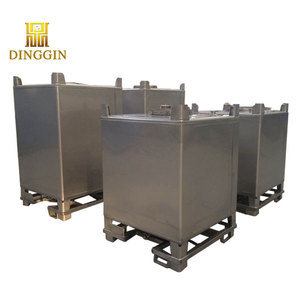
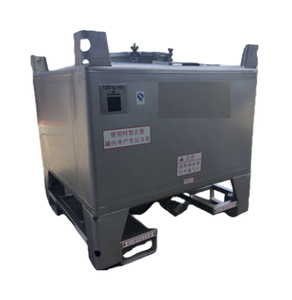
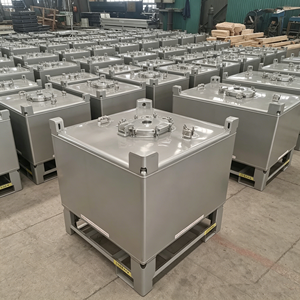
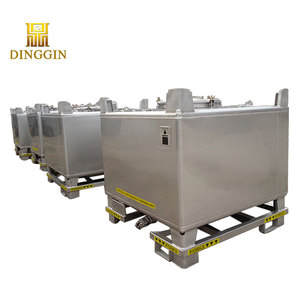
Traditional rigid packaging options, such as single-use high-density polyethylene (HDPE) totes and painted mild-steel drums, present significant long-term financial liabilities and operational risks for industrial operations in Costa Rica. Plastic totes are highly susceptible to ambient tropical heat degradation, environmental stress cracking under intense solar UV index, structural bulging during maritime transit, and permanent chemical wall permeation. In contrast, heavy-duty stainless steel Intermediate Bulk Containers (IBCs) and ASME-certified pressure vessel tanks engineered from grade SUS304 and SUS316L offer an impermeable, chemically inert, and physically resilient containment matrix built for multi-decade deployment.
Key Insight for Costa Rica Supply Chain Directors: Transitioning from single-use HDPE plastic IBCs to reusable SUS304/SUS316L stainless steel totes directly eliminates product degradation caused by humidity and UV radiation, while aligning 100% with Costa Rica’s strict National Decarbonization Plan 2018-2050 (Plan Nacional de Descarbonización).
1. Technical Superiority of Stainless Steel Liquid Packaging vs. Standard Alternatives
Industrial liquid products—ranging from corrosive agrochemicals, industrial cleaning solvents, and synthetic resins to delicate pineapples juice concentrates, organic coffee extracts, and essential oils—demand zero compromise on container integrity. Below is an engineering comparison illustrating why stainless steel IBC totes outperform legacy packaging materials across key operational metrics relevant to Costa Rican trade:
| Performance Metric | Stainless Steel IBC (SUS304 / 316L) | Standard Plastic HDPE Tote | Industrial Carbon Steel Drum |
|---|---|---|---|
| Operational Service Life | 20 to 35+ Years (Infinite Reconditionability) | 1 to 3 Years (Degrades quickly) | Single-use / Short-term reuse |
| Chemical Permeation & Vapor Loss | Zero (100% Vapor Tight Barrier) | High risk of micro-permeation & off-gassing | Moderate (Rusted liner failure risk) |
| Tropical Climate Resilience | Immune to UV degradation, heat & high humidity | Brittle under sunlight; thermal expansion stress | Prone to external coastal salt-spray rust |
| Sanitary Cleanability (HACCP/FDA) | Ultra-smooth surface (Ra < 0.4µm); CIP Compatible | Porous plastic traps residue & bacteria | Difficult to sanitize internal seams |
| UN Fire & Pressure Safety Rating | Fireproof structural envelope (UN 31A/Y) | Melts under high thermal stress / Fire hazard | Structural failure under pressure spikes |
2. Localized Industrial Application Scenarios in Costa Rica
Our industrial liquid packaging solutions are tailored specifically to match the operational workflows of Costa Rica’s distinct economic sectors:
Agricultural Processing & Fruit Juice Exports
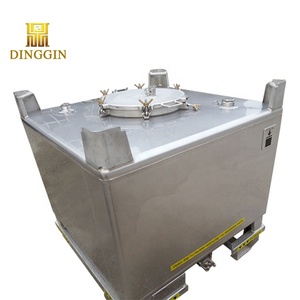
Costa Rica is a global power in non-traditional agricultural exports, particularly pineapple juice concentrates, citrus oils, banana puree, and liquid coffee extracts. Processing facilities in San Carlos, Sarapiquí, and Limón utilize our FDA-compliant, mirror-polished 1000L stainless steel IBC tanks equipped with sanitary tri-clamp discharge valves. The smooth internal finish prevents enzymatic sticking and bacterial growth, while integrated steam heating jackets allow precise viscosity management for high-density purees before maritime shipping via Puerto Moín.
Industrial Agrochemicals & Crop Protection
Costa Rica's intensive agricultural sector relies heavily on liquid fertilizers, nematicides, fungicides, and herbicides. Standard plastic containers often suffer from stress cracking due to exposure to aggressive solvent carriers. Our UN 31A/Y-certified 304 and 316L stainless steel totes feature heavy-gauge wall construction that isolates hazardous chemicals from ambient atmospheric moisture, ensuring zero leakage during transit across the mountainous topography of Route 32 and Route 27.
Pharmaceuticals & Medical Device Free Trade Zones
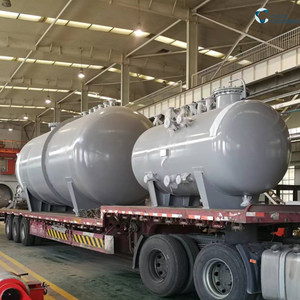
Operating in premier parks such as Coyol Free Zone and Global Park in Heredia, medical manufacturing firms require high-purity fluid containment for specialized reagents, ultra-pure water systems, and pharmaceutical grade liquids. Our customized ASME-certified pressure vessel storage tanks (vertical and horizontal) feature electropolished SUS316L surfaces with full material traceability certificates, meeting rigorous ISO 13485 and GMP regulatory audits.
Fuel, Bunkering & Auxiliary Power Systems
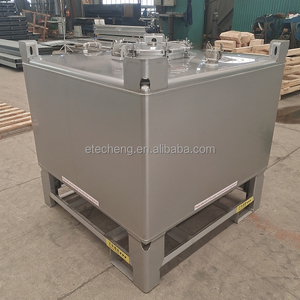
Coastal maritime facilities in Puntarenas, Golfito, and Puerto Limón, as well as remote eco-lodges requiring bulk diesel generator supply, leverage our 550-gallon heavy-duty cube water and fuel tanks. Fitted with four-way forklift channels, top lifting lugs, and anti-slosh baffles, these steel units deliver secure, fireproof fuel containment even in remote, high-rainfall rainforest zones.
3. Regional Sustainability Trends Driving Package Evolution in Central America
Costa Rica has earned international acclaim for its aggressive decarbonization strategies and plastic reduction legislation. Law No. 9703 (Reglamento a la Ley para la Gestión Integral de Residuos) places accountability on industrial manufacturers to eliminate single-use waste. This legislative shift has made single-use plastic IBCs an increasing financial liability due to rising disposal tariffs and plastic usage surcharges.
Transitioning to reusable stainless steel packaging creates a closed-loop circular economy. Stainless steel IBC totes are 100% recyclable at the end of their multi-decade life cycle. Furthermore, because stainless steel does not absorb volatile organic compounds (VOCs) or aromatic chemical compounds, a simple Automated CIP (Clean-in-Place) wash cycle completely neutralizes the container for the next batch—allowing seamless multi-use rotation across different product lines without cross-contamination risk.
4. Custom Engineering Excellence & Quality Guarantee
Our manufacturing facilities utilize state-of-the-art robotic TIG and Plasma welding systems to build structural seam integrity that surpasses standard hydrostatic pressure tests by up to 300%. Every single container produced undergoes a rigorous battery of quality assurance evaluations prior to ocean dispatch to Central America:
- Hydrostatic Pressure Testing: Verified to withstand minimum 100 kPa (15 PSI) internal test pressures per UN 31A standards.
- Passivation Treatment: Full citric or nitric acid immersion bath to establish a self-healing chromium oxide anti-corrosion film.
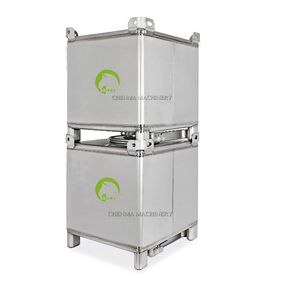
- Vibration & Stacking Audits: Certified to support up to 3-high dynamic stacking weight when fully loaded with liquids up to 1.9 specific gravity (SG).
- Dimensional Precision: Optimized frame geometries engineered for maximum payload density within standard 20ft and 40ft ISO dry ocean container configurations.