
Industrial Grade Rigid Stainless Steel IBC Portfolio
ASME-stamped, UN-certified 31A/Y, JIS G4305 compliant totes engineered for high-density chemical storage, pharmaceutical transfer, and precision logistics across Japanese ports.
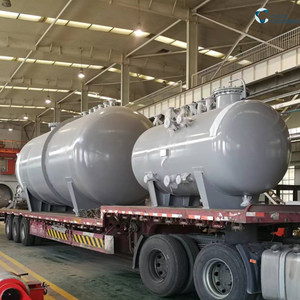
ASME Stainless Steel Pressure Vessel Storage Tank (Vertical/Horizontal)
- Material: Heavy-gauge SUS304 / SUS316L
- Rating: ASME Sec VIII Div 1 & UN Approved
- Design: Custom Vertical/Horizontal footprint
- Application: Diesel, Petrochemicals, High-Pressure Liquids
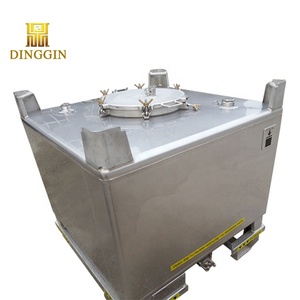
UN Approved 1000L / 1500L Stainless Steel IBC Tote Tank
- Certifications: UN31A/Y hazardous transport mark
- Capacity: 1000L to 1500L standard volumes
- Wall Thickness: 2.5mm - 3.0mm precision sheet
- Features: Stackable frame, bottom discharge valve
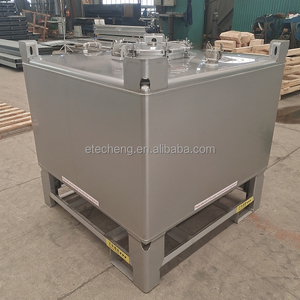
Customizable Modular 500L–2000L Chemical IBC Tote Tanks
- Flexibility: 500L, 1000L, 1500L, 2000L configurations
- Finish: Interior Ra < 0.4µm mirror polish optional
- Frame: Heavy-duty stackable protection cage
- Safety: Pressure release valve & security seal lid
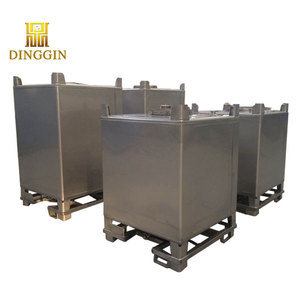
550-Gallon Stainless Steel Square Cube Tote Tank
- Capacity: 550 Gallon (~2080 Liters)
- Footprint: Standard ISO container optimized
- Handling: 4-way forklift entry & top lifting lugs
- Corrosion Protection: Electropolished interior surface
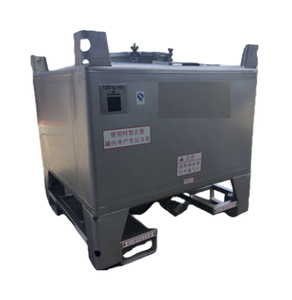
Industrial Grade 304 Stainless Steel 1000L Chemical Storage IBC
- Material Grade: SUS304 High-strength alloy
- Sealing: PTFE / Viton chemical-resistant gaskets
- Stacking Load: 3-high dynamic / 4-high static design
- Standard: Compatible with Japanese automatic cleaning lines
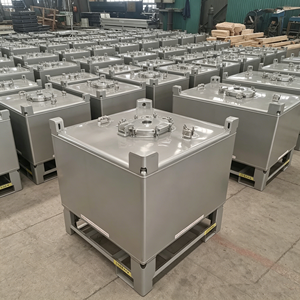
High-Purity Food & Bio-Grade Stackable Stainless Steel IBC
- Hygiene Class: Sanitary food-grade design (FDA/JIS)
- Coating: Anti-corrosion exterior passivation
- Discharge: Sloped bottom for zero-residue drainage
- Warranty: Integrated structural warranty & seal tracking
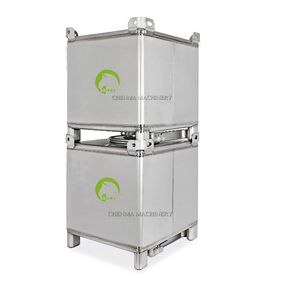
Thermostatic Dimple Jacketed Stainless Steel IBC Tank
- Heat Exchange: Dimple heating/cooling jacket
- Insulation: Clad rock wool thermal jacket options
- Pressure: Jacket rated to 0.6 MPa working pressure
- Application: Viscous food resins, adhesives, cosmetics
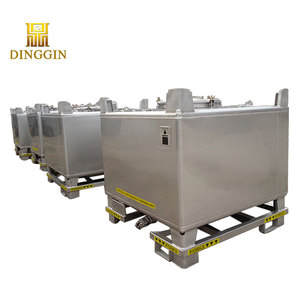
Heavy-Duty SUS316L Ultra-Corrosive Chemical Tote Container
- Steel Grade: Premium SUS316L (Molybdenum added)
- Capacity: 350 Gal, 550 Gal, 1500L, 2000L
- Testing: 100% Helium leak tested & X-Ray weld inspected
- Target Market: Japanese microelectronics & photoresist export
Navigating Rigid IBC Procurement for the Japanese Market
Japan’s industrial supply chain represents one of the most rigorous procurement environments in the world. Operating within this market demands more than standard off-the-shelf intermediate bulk containers; it requires strict adherence to JIS (Japanese Industrial Standards), compliance with the Fire Service Act (消防法 Shōbōhō) regarding hazardous materials, and alignment with high-precision manufacturing workflows found in prefectures such as Kanagawa, Aichi, Osaka, and Fukuoka.
Japan Fire Service Act (消防法) Compliance
Class 4 hazardous liquids (flammable liquids including petrochemical solvents, alcohols, and electronic reagents) transported within Japan require UN-marked rigid metal IBCs (UN31A/Y). Our containers undergo rigorous drop testing, hydraulic pressure verification, and vibration analysis tailored for Japanese maritime and road transport protocols.
High-Purity Metallurgical Metallurgy (JIS G4305)
Japanese semiconductor fabs and chemical refiners mandate extremely low impurity trace levels in stainless steel alloys. We utilize cold-rolled SUS304 and SUS316L steel adhering strictly to JIS G4305 tolerances, preventing ion leaching, iron contamination, and localized pitting during chemical shipment.
ISO 14644-1 Cleanroom Manufacturing & Passivation
For electronic-grade chemical suppliers shipping to Japanese ultra-large-scale integration (ULSI) facilities, our rigid stainless steel totes are subject to pickling, electropolishing (Ra < 0.28 µm), and Class 100/1000 cleanroom ultra-pure water rinsing to prevent particle accumulation.
Technical Specification Matrix: Composite Plastic vs. Rigid Stainless Steel IBCs
A engineering comparison for procurement directors evaluating Total Cost of Ownership (TCO) and risk mitigation for export into Japan.
| Evaluation Parameter | Composite Plastic IBC (HDPE Outer Cage) | Rigid Metallic IBC (SUS304 / SUS316L) | Impact on Japanese Operations |
|---|---|---|---|
| Service Life Expectancy | 2 to 5 Years (Limited bottle replacement cycle) | 15 to 20+ Years (Infinite reconditioning lifecycle) | Significantly lower amortization cost; eliminates plastic waste disposal taxes in Japan. |
| Japanese Fire Act (消防法) Rating | Restricted for Class 4 Flammables without secondary containment | Fully Approved (UN 31A/Y) for high-hazard Class 4 liquids | Ensures full compliance with Japanese port customs & localized logistics safety laws. |
| Seismic & Stacking Integrity | Moderate dynamic fatigue under heavy warehouse stacking | Ultra-High Dynamic Strength (Tested for seismic activity) | Protects facility assets against earthquake-induced sway in Japanese high-bay racks. |
| Permeation & Outgassing Risk | Susceptible to organic solvent diffusion & oxygen ingress | Zero Permeation (100% Hermetic Seal) | Preserves ultra-pure semiconductor chemical grade specs over long ocean transit routes. |
| Thermal Endurance Range | -10°C to +60°C maximum operational limit | -196°C to +300°C (Cryogenic & steam sterilizable) | Allows high-temperature chemical loading and SIP/CIP steam cleaning procedures. |
Localized Application Scenarios in Japan's Industrial Ecosystem
Custom engineering solutions tailored to the operational realties of major Japanese industrial zones.
1. Tokyo Bay & Chiba Chemical Belt: High-Density Petrochemical Transport
The petrochemical infrastructure spanning Tokyo, Chiba, and Kanagawa relies heavily on high-frequency intermodal freight. Our 1000L and 1500L UN31A/Y stainless steel IBC totes are designed with ISO corner castings and low-center-of-gravity forklift pockets, making them instantly compatible with Japanese keiretsu logistics networks, domestic rail freight (JR Freight containers), and coastal shipping.
2. Kyushu ("Silicon Island") & Tohoku: Electronic Grade Photoresist & Solvent Distribution
Japan’s leading semiconductor fabrication clusters demand sub-parts-per-billion (ppb) chemical cleanliness. We supply electropolished SUS316L rigid IBCs equipped with quick-connect dry-disconnect couplings (Micro-Matic style or dry-lock systems). These containers maintain headspace inertness using nitrogen blanket purge valves, eliminating moisture oxidation during transport to fabs in Kumamoto, Nagasaki, and Iwate.
3. Kansai Hub (Osaka, Hyogo, Shiga): Active Pharmaceutical Ingredients (API) & Food Processing
From functional food extracts to biopharmaceutical precursors produced in Kansai, hygiene cannot be compromised. Our sanitary stainless steel totes feature seamless internal radiused corners (R ≥ 10mm), self-draining conical bottoms, and CIP (Clean-in-Place) spray ball assemblies. Fully compliant with Japan's MHLW (Ministry of Health, Labour and Welfare) food sanitation guidelines, these containers streamline batch cleaning validation.
Japan Market Trends: Sustainable Circular Economy & Fleet Digitization
With the Japanese government’s commitment to achieving net-zero carbon emissions by 2050 and strict corporate ESG reporting standards under the Tokyo Stock Exchange (TSE) Prime Market guidelines, Japanese industrial buyers are rapidly pivoting away from single-use or limited-cycle packaging.
Scope 3 Carbon Footprint Abatement
By transitioning from disposable packaging to closed-loop reusable stainless steel IBCs, companies operating in Japan reduce their lifecycle carbon emissions by up to 72%. Our packaging lifecycle analytics assist Japanese enterprise clients in documenting measurable Scope 3 emissions reductions for environmental reporting.
AS/RS Automated Warehouse Compatibility
Modern Japanese logistics hubs rely heavily on AS/RS (Automated Storage and Retrieval Systems). Our rigid metallic IBC totes are engineered with millimeter-precise dimensional tolerances, anti-deflection base channels, and standardized sensor target plates to guarantee seamless robotic handling without mechanical jam errors.
IoT Smart Telemetry Integration
We offer optional ATEX/IECEx certified wireless IoT tracking modules for our IBC units serving Japan. Procurement managers can monitor real-time container location, internal pressure spikes, liquid temperature fluctuations, and shock/vibration events across global ocean freight lanes into Port of Yokohama, Kobe, or Nagoya.
Why Global Supply Chains Trust Our Manufacturing Excellence
Backed by decades of industrial packaging experience, world-class testing labs, and an active network across 170+ locations worldwide.
Global Technical Reach with Dedicated Local Support
Combining over 330 years of shared organizational packaging experience, our enterprise infrastructure delivers reliable supply consistency to Japanese importers and regional distributors. Every single container leaving our production lines undergoes complete pressure decay leak testing, weld penetration radiograph audits, and hydrostatic strength tests.
- Automated Robotic Plasma Welding: Ensures smooth, crevice-free internal seams that prevent bacterial accumulation and product contamination.
- Full Traceability Certification: Material test reports (MTR) matching EN 10204 3.1 standards provided with every production heat lot for absolute regulatory compliance.
- Custom Engineering & OEM/ODM: Specialized heating jackets, agitator mounts, sight glasses, and customized valve manifold arrangements to fit precise local Japanese mixing equipment.
Our Quality Guarantee for Japan Exports:
"We understand that Japanese quality control standards accept zero margin for defect. A single leaking valve or microscopic surface scratch can halt an entire production line. That is why our quality management system operates under strict ISO 9001:2015 and ISO 14001:2015 frameworks, guaranteeing that every container delivered to Yokohama, Kobe, or Osaka meets 100% of agreed dimensional and metallurgical specifications."
Frequently Asked Questions (FAQ)
Critical technical, regulatory, and logistics answers for Japanese buyers and international supply chain directors.
Ready to Upgrade Your Packaging Supply Chain for Japan?
Consult with our senior industrial packaging engineers to request full technical data sheets, UN compliance documentation, or customized engineering drawings tailored to your liquid logistics requirements.