
 Eco Recondition
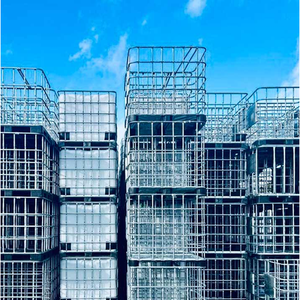
Reconditioned Chemical IBC Containers with Return & Purchase Service
- Capacity: 1000 Liters (275 Gallon)
- Fully Laundered & Leak-Tested
- EPR-Compliant SA Collection
Comprehensive Technical Analysis, UN-Certified Hazardous Logistics, and Regional Factory Benchmark for Mining, Chemical, & Food-Grade Liquid Packaging.
UN-Approved composite HDPE plastic and SS304/SS316L stainless steel intermediate bulk containers optimized for South Africa's mining corridors, chemical refineries, and agricultural export sectors.
Eco Recondition
 Standard HDPE
 ASME Pressure
 UN Certified
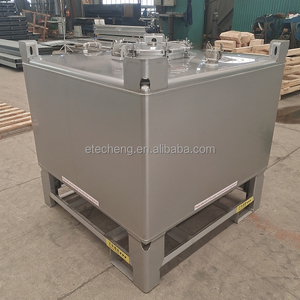 Custom Size
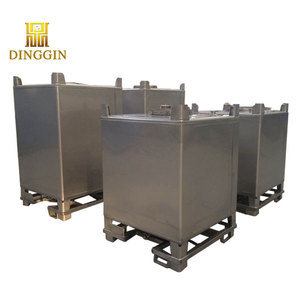 High Capacity
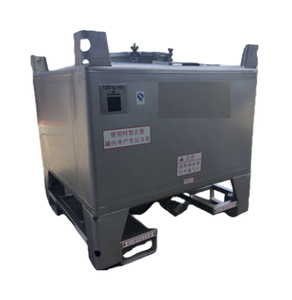 Factory Direct
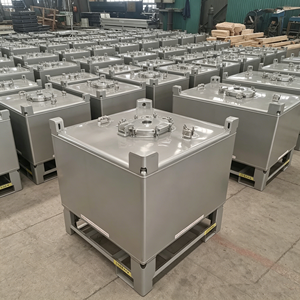 Food Grade
South Africa stands as the industrial power-hub of Sub-Saharan Africa. The demand for robust liquid bulk containment—specifically Intermediate Bulk Containers (IBC totes)—is heavily anchored in four foundational pillars of the regional economy: the Sasolburg-Secunda petrochemical complex, the Platinum Group Metal (PGM) and gold extraction operations across the North West and Gauteng provinces, the citrus and fertigation agricultural belts of Limpopo and Mpumalanga, and the bulk wine export sector centered in the Western Cape.
Choosing between imported containers, local reconditioners, and stainless steel pressure vessels requires a deep understanding of South African National Standards (SANS), international Maritime Dangerous Goods (IMDG) codes for exports leaving the Port of Durban, and localized temperature resiliency requirements for transiting hot inland climates like the Karoo and Bushveld.
Under South Africa’s National Environmental Management: Waste Act (NEM:WA) and recent Extended Producer Responsibility (EPR) regulations, chemical manufacturers and logistics hubs are strictly accountable for the lifecycle tracking and reconditioning of heavy industrial packaging. Selecting factories with established reverse-logistics networks in Durban, Johannesburg, and Cape Town is no longer optional—it is a legal risk mitigation mandate.
When engineering bulk packaging workflows across South Africa, procurement officers must balance chemical aggression profiles against capital expenditure models:
An expert evaluation of the leading local manufacturers, certified reconditioners, and global exporters supplying UN-approved industrial packaging to the Southern African Customs Union (SACU).
Operating major manufacturing and reconditioning plants in KwaZulu-Natal and Gauteng, Mauser is a market leader in composite SM13 composite IBCs. Their National Collection Service provides closed-loop IBC laundering, bottle replacement, and UN re-certification across South Africa.
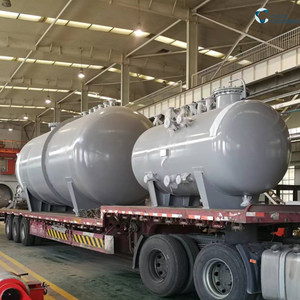
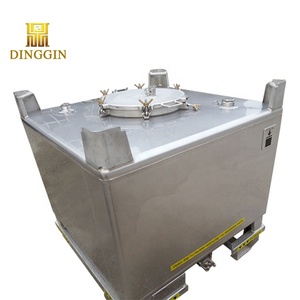
JST specializes in high-tier UN 31A/Y certified SS304/SS316L stainless steel IBC totes and ASME pressure vessels. Supplying directly to South African mining conglomerates and hazardous solvent exporters, JST provides exceptional engineering customization, anti-rust coatings, and sloped bottom discharge designs.
Greif produces GCUBE composite IBCs locally, servicing South Africa’s core chemical corridors. Their facility features state-of-the-art blow-molding technology, offering food-grade cleanroom inner bottles as well as light-barrier black bottles for UV-sensitive agricultural chemicals.
A key player in Gauteng, Protecta-Pak supplies standard 1000L plastic IBCs, heavy-duty pallet configurations, and custom valving (Camlock, Butterworth, Ball Valves) tailored for mine site reagent dosing and industrial effluent handling.
Renowned for polymer containment engineering, RPC Astrapak manufactures rigid plastic jerrycans, tight-heads, and specialized intermediate containers catering extensively to Western Cape fruit juice concentrate and agricultural chemical exporters.
Schütz supplies their benchmark Ecobulk system to South Africa's high-tier pharmaceutical and chemical sectors. Offering embedded EVOH anti-permeation layers and EX-protection grounding grids for Zone 1 and 2 explosion-proof chemical environments.
Consol’s industrial division provides specialized intermediate liquid containment tanks suited for heavy industrial lubricants, mining emulsion fluids, and municipal liquid storage throughout the Southern African Development Community (SADC).
Serving the Western Cape maritime export and winemaking regions, Cape Drum operates high-pressure automated washing lanes to recondition food-grade and industrial IBC totes, providing cost-effective rebottling options.
Positioned at the port gate, this firm specializes in sea-freight ready IBC preparation, including heat-treated wooden or hybrid steel pallets, hazardous material labeling, and containerized bracing for direct export to international markets.
Specializing in custom fabricated metal containers, SABulk constructs customized 550 Gallon and 1000L stainless steel IBC tanks equipped with specialized heating jackets and insulation for high-viscosity wax, resin, and food syrup handling.
How specialized IBC container designs solve distinct environmental, logistics, and chemical challenges in Southern Africa’s key economic regions.
Gold and PGM refineries along the Witwatersrand basin and Rustenburg belt require acid-proof 1000L HDPE plastic IBCs for transporting hazardous leaching agents like nitric acid, hydrochloric acid, and flocculants over rough gravel site access roads.
Synfuel plants and downstream chemical processors deploy UN-approved SS304/SS316L stainless steel tote tanks for high-flashpoint solvents, aromatics, and hot liquid paraffin waxes to eliminate static explosion risks under intense summer temperatures.
Large-scale citrus farms in Limpopo and sugarcane estates in KZN utilize UV-stabilized composite plastic IBCs for on-farm liquid fertilizer dosing and bulk pesticide storage without algae buildup or polymer degradation.
Western Cape wineries leverage food-grade sanitary SS316L stainless steel totes equipped with nitrogen blanketing valves for exporting premium bulk wine through Cape Town Harbor while preserving delicate organic flavor profiles.
Heavy transport operators rely on stackable, rigid metal-framed IBCs that fit perfectly into standard 20ft/40ft ocean containers and tautliner trucks, maximizing volumetric efficiency over the 600km inland logistics stretch.
Reconditioning depots collect washed industrial effluent and spent process solvents in re-bottled IBC totes, ensuring strict compliance with municipal wastewater disposal bylaws across eThekwini and Ekurhuleni.
As international ESG compliance tightens and South Africa modernizes its environmental legal architecture, two major forces are shaping the selection of IBC suppliers:
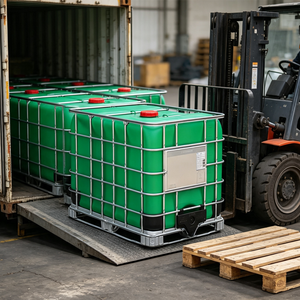
Under the National Environmental Management: Waste Act (NEM:WA), South African packaging producers, brand owners, and importers are legally mandated to participate in registered EPR schemes. In practice, this means chemical manufacturers using 1000L composite IBCs must ensure that spent containers do not end up in municipal landfills. Leading factories now offer integrated "rebottling" services where used cages are inspected, fitted with brand-new virgin or Post-Consumer Recycled (PCR) plastic inner bottles, pressure tested, and reissued with full UN compliance marking.
For chemical exports leaving South African ports under the IMDG (International Maritime Dangerous Goods) Code, IBCs must display a permanent, clear UN marking on both the inner container and the outer cage. For instance, a marking such as UN 31HA1/Y/03 26/ZA/... designates a composite container for liquids (31HA1), packing groups II and III (Y), manufactured in South Africa (ZA). Importers and factories must ensure all valving, gaskets (Viton, EPDM, PTFE), and discharge openings undergo periodic 2.5-year leak-proof tests in accordance with local SANS regulations.
Answers to common technical, logistics, and legal questions faced by industrial procurement officers across Southern Africa.
Whether you require 1000L composite HDPE plastic totes, ASME stainless steel pressure vessels, or a customized circular packaging return program for your South African mining or chemical operations—our technical team provides factory-direct quotes and engineering compliance support.