
Featured UN Certified IBC Container Fleet
Explore our high-performance rigid packaging products engineered for chemical manufacturers, agricultural producers, food processors, and petroleum exporters in Kenya.
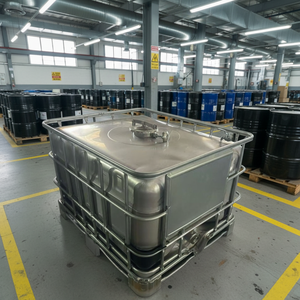
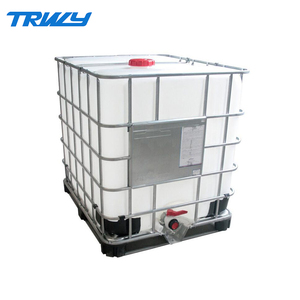
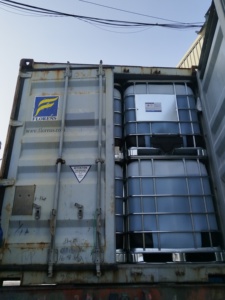
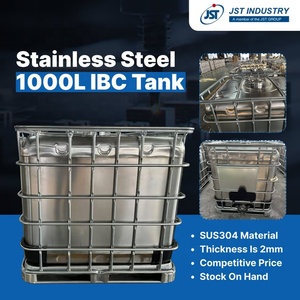
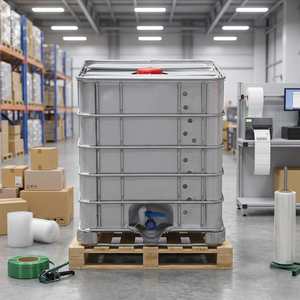
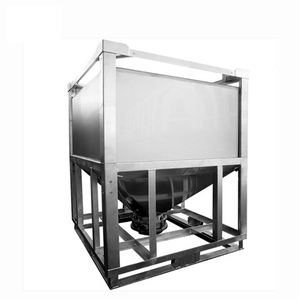
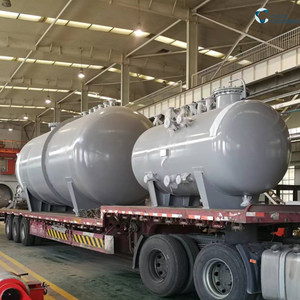
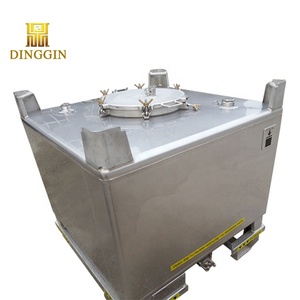
Engineering Standards for UN Approved IBCs in the East African Market
In the rapidly expanding industrial ecosystem of East Africa, the selection of liquid bulk packaging is no longer merely an operational purchase—it is a critical pillar of risk management, regulatory compliance, and supply chain integrity. As the primary economic gateway to the region, Kenya demands world-class rigid packaging solutions capable of enduring harsh transportation logistics along the Northern Corridor (connecting Mombasa to Nairobi, Kampala, Kigali, and Juba) while resisting high equatorial solar radiation and tropical ambient temperature fluctuations.
As a global leader in industrial packaging with over 330 combined years of manufacturing heritage across 170+ global locations, our organization supplies UN-certified Intermediate Bulk Containers (IBCs) optimized specifically for Kenyan chemical manufacturers, agricultural formulators, edible oil refiners, and downstream petroleum distributors.
1. The Regulatory Framework: KEBS, NEMA, and UN Dangerous Goods Certification
Transporting hazardous and non-hazardous liquids within Kenya and across the East African Community (EAC) requires strict compliance with domestic and international statutory bodies:
- UN Dangerous Goods Certification (31HA1/Y and 31A/Y): Every composite IBC manufactured for liquid chemicals must undergo rigorous design qualification testing, including hydraulic internal pressure testing (200 kPa minimum for 100 kPa rated totes), drop testing at -18°C, top-lift stacking tests under maximum load (up to 1.9 SG equivalent), and leakproofness testing.
- KEBS (Kenya Bureau of Standards) Alignment: Containers imported or utilized in Kenya must satisfy KS ISO standards for plastic packaging and metallic vessels. Our UN markings are permanently embossed on both the inner HDPE bottle and the external steel cage, facilitating swift clearance through the Port of Mombasa and ICD Nairobi (Embakasi).
- NEMA (National Environment Management Authority) Sustainability Directives: NEMA’s stringent environmental regulations require commercial fluid handling packaging to support closed-loop recyclability, leak-free design, and secondary containment compatibility to eliminate soil and water table contamination.
| Technical Parameter | Composite Polymer IBC (1000L / 1200L) | Stainless Steel IBC (SUS304 / SUS316L) | Compact Polymer IBC (300L) |
|---|---|---|---|
| UN Marking Designation | UN 31HA1/Y / 1.9 / 100 | UN 31A/Y / Max SG 2.1 | UN 31HA1/Z / 1.4 / 100 |
| Inner Receptacle Material | High Molecular Weight HDPE (UV-Stabilized) | Cold Rolled SUS304 / SUS316L Stainless Steel | Blow-Molded High-Density Polyethylene |
| Outer Structure | Tubular Galvanized Steel Mesh Cage | Heavy-Duty Steel Frame & Stacking Corners | Full Polymer / Integrated Steel Skids |
| Discharge Valve Assembly | DN50 (2") or DN80 (3") Butterfly/Ball Valve | DN50 Stainless Steel Ball Valve with Lock | DN50 Integrated Leak-Proof Valve |
| Temperature Range | -20°C to +60°C Operating Ambient | -40°C to +150°C Heavy Industrial | -10°C to +55°C Chemical Spec |
| Kenyan Primary Application | Industrial Chemicals, Agrochemicals, Paint | High-Purity Pharma, Flavors, Mining Solvents | Specialty Fertilizers, Lab Reagents |
2. Polymer Polymerization & Equatorial Sun Degradation Prevention
A major cause of premature IBC failure in East Africa is photo-oxidative degradation caused by intense Ultraviolet (UV) radiation at equatorial latitudes. Standard polyethylene bottles exposed to sunlight in outdoor staging areas (such as Mombasa Port yards or Rift Valley agricultural estates) experience polymer chain scission, resulting in embrittlement, stress cracking, and eventual catastrophic leakage.
To combat this specific environmental hazard, our blow-molded High-Molecular Weight High-Density Polyethylene (HMW-HDPE) inner bottles are engineered with advanced UV-stabilizer packages (specifically Hindered Amine Light Stabilizers - HALS combined with UV absorbers). For light-sensitive, photo-degradable chemicals or specialized agricultural formulations, our Opaque 1200L and 1000L Black/Amber IBC series provide 100% light blockage, ensuring product purity and extended shelf-life regardless of outdoor storage conditions in Kenya.
Localized Industrial Application Scenarios in Kenya
How our UN-approved Intermediate Bulk Containers support Kenya’s core economic sectors and manufacturing hubs.
Agrochemical Formulations & Floriculture (Naivasha, Eldoret)
Kenya is a global hub for cut flower exports and horticulture. Our 1000L UV-stabilized composite IBCs provide safe bulk handling for concentrated liquid fertilizers, pesticides, and soil conditioners. The precision DN50 valve prevents chemical spillage during automated dilution mixing in Naivasha greenhouse complexes.
Industrial Chemical Manufacturing (Nairobi Industrial Area, Athi River)
Chemical synthesizers in Nairobi and Athi River require heavy-duty containment rated up to 1.9 Specific Gravity for hazardous acids, alkalis, and solvents (such as Ethylene Glycol). Our steel-caged composite IBCs feature chemical-resistant EPDM/Viton gaskets and anti-static grounded valves to safely eliminate electrostatic discharge hazards.
Edible Oils, Beverage & Food Processing (Mombasa, Thika)
For edible oil refineries in Mombasa and beverage extract processors in Thika, hygienic purity is paramount. Our 1000L SUS304/SUS316L Stainless Steel IBCs and food-grade FDA-compliant polymer totes with tapered discharge bottoms guarantee zero batch contamination and complete 100% drainage of viscous liquids.
Petroleum Lubricants & Mining Extraction (Turkana, Regional Transit)
Heavy mining projects and downstream petroleum logistics along the Northern Corridor demand rugged structural packaging. Our ASME-certified stainless steel pressure vessels and UN 31A totes withstand severe transport vibrations, rough off-road terrain, and intense heat during cross-border transit to Uganda, Rwanda, and South Sudan.
Localized Market Trends Shaping Liquid Bulk Packaging in East Africa
The industrial packaging landscape in Kenya is undergoing a rapid modernization phase, driven by economic regional integration under the African Continental Free Trade Area (AfCFTA), heightened environmental regulations, and corporate sustainability agendas.
Trend 1: Rapid Transition from Single-Use Drums to Reusable 1000L IBCs
Kenyan manufacturing enterprises are increasingly transitioning away from standard 200L steel or plastic drums toward 1000L Intermediate Bulk Containers. A single 1000L IBC replaces five traditional 200L drums, yielding a 35% reduction in handling labor, 20% optimized freight volume inside 20ft/40ft shipping containers, and significantly reduced residual product waste during discharge.
Trend 2: Demand for Circular Economy Solutions and Reconditioned Totes
With NEMA increasing scrutiny on industrial plastic waste, Kenyan enterprises are embracing reconditioned and washed IBC containers. Through global standardized washing processes, high-pressure inner flushing, and rigorous leak testing, reconditioned IBCs offer a cost-effective, environmentally friendly packaging solution that reduces carbon footprints without sacrificing structural safety.
Trend 3: Expansion of Cold-Chain & Stainless Steel Totes for Export Hygiene
As Kenya expands its market share in exporting specialty essential oils, avocado extracts, pharmaceutical intermediates, and high-value juices to European and Asian markets, demand for Sanitary Stainless Steel (SUS304/SUS316L) IBCs has grown by over 25% year-on-year. Stainless steel containers provide absolute barrier protection, zero flavor transfer, and indefinite reusable service lifespans.
Why Enterprise Buyers Trust Our Global Packaging Infrastructure
Unmatched manufacturing scale, technical compliance, and customer-centric logistics support.
170+ Global Manufacturing Facilities
With operational footprint across key international shipping lanes, we ensure consistent raw resin procurement, standardized quality control, and dependable shipping supply schedules to the Port of Mombasa.
Rigorous UN Design Qualification
Our packaging undergoes automated wall-thickness measuring, 100% pneumatic leak-testing, stack testing, and extreme impact drop tests before leaving the factory floor, ensuring zero leakage on Kenyan roads.
Customized Valve & Fitting Engineering
We provide tailored discharge valve options (DN50/DN80), specialized seals (Viton, EPDM, PTFE), dust caps, tamper-evident seals, and anti-glug ventilation lids to meet your exact product viscosity specs.
Frequently Asked Questions by Kenyan Procurement Managers
Direct answers regarding customs clearing, UN certifications, UV performance, and local reconditioning.
Every genuine UN-approved IBC features permanently embossed markings molded directly into the inner HDPE bottle wall and stamped on the metal specification plate on the steel cage. The marking string (e.g., UN 31HA1/Y/05 24/CN/...) indicates the container type (31HA1 = composite for liquids), packaging group (Y = Groups II and III), manufacture month/year, approving country, and maximum stacking test load. We provide full UN Type Test Certificates with every shipment for seamless clearance by KEBS and Kenya Revenue Authority (KRA) customs officers.
Our standard translucent HMW-HDPE inner bottles are compound-formulated with UV-8 stabilization, designed for prolonged outdoor storage under tropical solar radiance conditions. For extreme light-sensitive compounds, we supply Opaque Black or White 1200L/1000L IBCs with UV-12 stabilizer compounds that completely block light transmission, preventing degradation of light-sensitive chemicals or agro-active formulas.
Yes. Our SUS304 and SUS316L Stainless Steel IBCs meet FDA, EC 1935/2004, and USDA food contact regulations. They feature 100% smooth internal welds, self-draining tapered bottoms, and sanitary tri-clamp valves. They are widely utilized by Kenyan exporters sending concentrated fruit juices, avocado oil, and pyrethrum extracts to Europe and North America.
Under NEMA guidelines, industrial buyers are encouraged to adopt circular packaging strategies. Our modular IBC design allows quick inner bottle replacement (re-bottling) or professional high-pressure reconditioning. Damaged steel cages can be repaired, and HDPE bottles can be recycled into non-food grade post-consumer resin (PCR), keeping your business compliant with Kenya’s Environmental Management and Co-ordination Act.
For standard aqueous liquids and mild chemicals, EPDM gasket seals are recommended. However, for aggressive solvents, hydrocarbons, and petrochemical compounds (such as Ethylene Glycol or Diesel), we supply IBCs fitted with Viton (FKM) or PTFE (Teflon) valve seals. Our technical engineering team provides custom chemical compatibility matching prior to order placement.
We supply full container load (FCL) shipments (typically 42-44 units of 1000L IBCs per 40ft HQ container) directly to the Port of Mombasa, as well as expedited LCL options. Factory production lead times range between 7-14 days depending on custom valve configurations, with direct ocean freight transit to Mombasa taking approximately 18-25 days.
Ready to Optimize Your Industrial Packaging Supply Chain in Kenya?
Connect with our technical industrial packaging specialists today. Get complete product technical data sheets, UN certification documentation, chemical compatibility assistance, and wholesale pricing quotes for your Kenyan operations.
Get Catalog